
The Creation Adventures Museum in Arcadia, Florida, was a distinctive educational institution that combined natural history with a faith-based interpretation of science. Founded in 2000 by creationist author and speaker Gary Parker, the museum sought to present the natural world through the lens of biblical creation, offering visitors an alternative perspective to mainstream scientific explanations.
Located in DeSoto County, the museum operated as a small, nonprofit facility supported largely by donations and admission fees. Unlike large, highly commercialized museums, it maintained a modest, hands-on atmosphere, reflecting its grassroots origins. Visitors often encountered not only exhibits but also volunteers and guides who were personally invested in the museum’s mission of education and outreach.
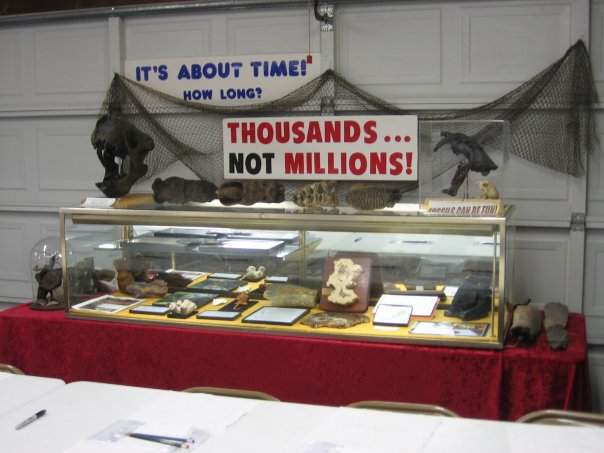
The central theme of the Creation Adventures Museum was the interpretation of scientific evidence—particularly fossils and geological formations—within a biblical framework. Exhibits featured a wide range of artifacts, including dinosaur bones, fossilized animals, and specimens collected from various parts of the world. These items were presented not simply as relics of ancient history, but as evidence supporting the idea of a created world shaped by divine design and catastrophic events such as a global flood.
Among the museum’s most notable features was its extensive fossil collection. Visitors could view remains of prehistoric creatures alongside displays explaining their significance from a creationist standpoint. Some fossils were locally sourced, including specimens recovered from Florida’s Peace River region, giving the exhibits a direct connection to the surrounding landscape. The museum also encouraged tactile learning, allowing guests to handle certain fossils and engage directly with the material—an approach that appealed especially to younger visitors.
In addition to paleontology, the museum included exhibits on biblical archaeology and the broader narrative of Scripture. These displays aimed to illustrate key themes often summarized as “Creation, Corruption, Catastrophe, and Christ,” presenting a unified interpretation of history rooted in the Bible. Through models, diagrams, and written explanations, the museum sought to connect natural history with theological understanding.
Education was a central part of the museum’s mission. It offered guided tours, school programs, and group activities designed to engage students and families. These programs were tailored to different age groups and often emphasized inquiry and discussion, encouraging visitors to think critically about questions of origins, history, and faith. In some cases, the museum also organized outdoor activities such as fossil hunts and excursions, reinforcing its emphasis on experiential learning.
The Creation Adventures Museum was part of a broader movement of creationist museums in the United States, which aim to present scientific topics from a perspective grounded in a literal interpretation of the Bible. What set this museum apart, however, was its intimate scale and its emphasis on personal interaction. Rather than relying on large-scale displays or advanced technology, it focused on direct engagement, storytelling, and the enthusiasm of its founders and volunteers.
In later years, the museum faced challenges common to many small institutions, including limited resources and changing circumstances. By 2024, it had closed its physical location, with its fossil collections being redistributed and used in other educational efforts. Though the building itself is no longer open to the public, its influence continues through these materials and the individuals who were impacted by its programs.
The legacy of the Creation Adventures Museum lies in its commitment to education, its unique interpretive approach, and its role in the local community. For those who visited, it offered more than exhibits—it provided a setting in which faith and science were brought into conversation in a personal and accessible way. In the broader landscape of American religious and educational institutions, it remains a noteworthy example of how deeply held beliefs can shape the presentation and understanding of the natural world.
_____
Image Source/Credit:
• (2) Facebook (www.facebook.com/creationadventuresmuseum/photos/pb.100064906953159.-2207520000/231008124376/?type=3)
Related
Sorry, no records were found. Please adjust your search criteria and try again.
Sorry, unable to load the Maps API.