
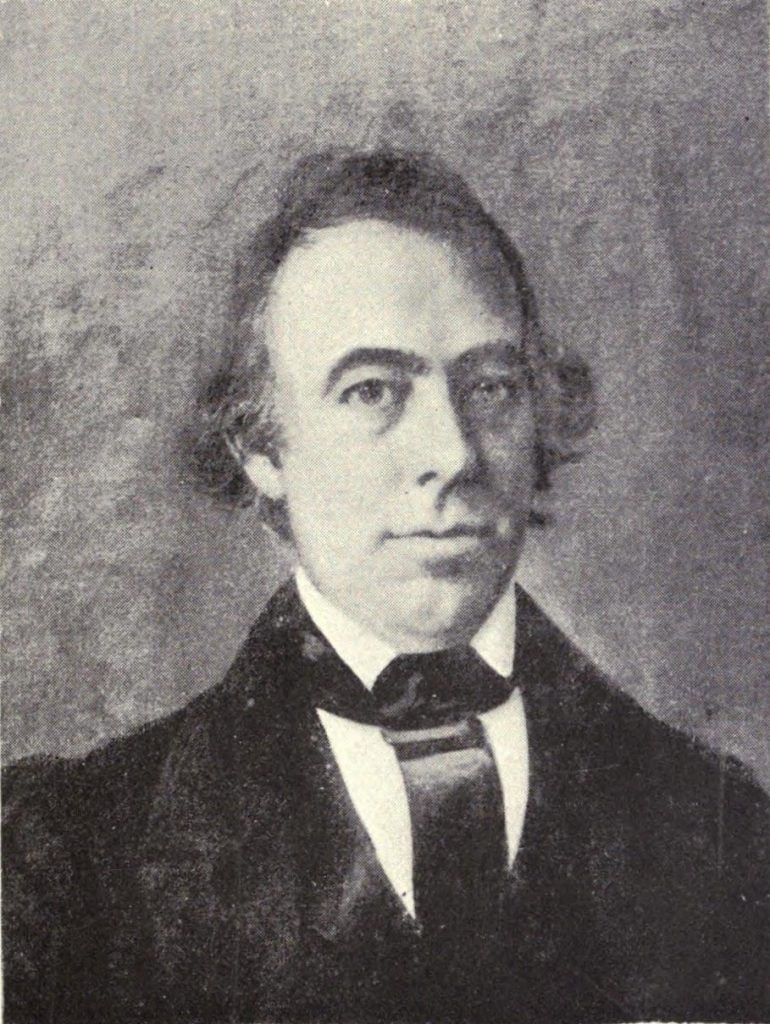
William Richards was a significant figure in the early nineteenth-century missionary movement, remembered for his work in the Hawaiian Islands and his role in shaping both religious and political life during a time of profound change. His life reflects the blend of evangelistic zeal, cultural engagement, and public service that characterized many early Protestant missionaries.
Born in 1793 in Massachusetts, Richards grew up in the environment of post-Revolutionary New England, where religious revival and missionary enthusiasm were on the rise. He was educated at institutions that emphasized both classical learning and Christian commitment, eventually preparing for ministry within the Congregational tradition. Like many of his contemporaries, he felt called not only to preach but to carry the Christian message beyond the borders of the United States.
Richards became associated with the American Board of Commissioners for Foreign Missions, one of the leading missionary societies of the time. In 1822, he was sent as part of a mission to the Hawaiian Islands, then often referred to as the Sandwich Islands. This mission aimed to introduce Christianity, literacy, and Western education to the native population.
Upon arriving in Hawaii, Richards quickly immersed himself in the work of ministry. He learned the Hawaiian language and participated in efforts to translate and teach the Bible. Missionaries of this period placed strong emphasis on literacy, believing that individuals should be able to read Scripture for themselves. Schools were established, and Richards contributed to this educational work, helping to lay a foundation for widespread literacy among the Hawaiian people.
Richards’s role, however, extended beyond the strictly religious sphere. As he became more familiar with Hawaiian society, he developed relationships with members of the royal court. His knowledge of Western political ideas and his ability to communicate them made him a valuable advisor during a period when the Hawaiian Kingdom was seeking to navigate increasing contact with foreign powers.
In 1838, Richards was appointed as an instructor and advisor to King Kamehameha III and other high-ranking chiefs. In this capacity, he taught principles of political economy, governance, and law, drawing on Western models while adapting them to the Hawaiian context. His instruction played a part in the broader movement toward constitutional government in Hawaii, culminating in the adoption of laws and reforms that reshaped the kingdom’s political structure.
One of Richards’s notable contributions was his involvement in the development of the Hawaiian Declaration of Rights and the early constitutional framework. These efforts were aimed at establishing clearer systems of governance and protecting the rights of the people, though they were also influenced by Western legal concepts. Richards’s work in this area illustrates the complex role missionaries often played—not only as religious teachers but also as intermediaries between cultures.
Despite his involvement in political affairs, Richards remained committed to his original calling as a missionary. He continued to preach, teach, and support the growth of the church in Hawaii. His approach combined practical instruction with spiritual guidance, reflecting a belief that faith should influence all aspects of life.
The legacy of William Richards is both significant and complex. On one hand, he contributed to the spread of Christianity and education in Hawaii, helping to establish institutions that would have lasting influence. On the other hand, his role in introducing Western political and cultural ideas has been the subject of reflection and debate, as these changes were part of a broader process that altered Hawaiian society in lasting ways.
Richards died in 1847 while still in Hawaii, leaving behind a body of work that had shaped both church and state. His life serves as an example of the far-reaching impact of early missionaries, whose efforts extended beyond the pulpit into education, governance, and cultural exchange.
Today, William Richards is remembered as a dedicated missionary and a key figure in a pivotal period of Hawaiian history. His legacy invites careful consideration of the ways in which faith, culture, and public life intersect, and of the lasting effects that individuals can have when they step beyond familiar boundaries in pursuit of their calling.
_____
Image Source/Credit:
• Public domain, via Wikimedia Commons
Related
Sorry, no records were found. Please adjust your search criteria and try again.
Sorry, unable to load the Maps API.