
The D. L. Moody Museum, located on the campus of the Moody Bible Institute in Chicago, offers visitors a focused and meaningful glimpse into the life and ministry of one of America’s most influential evangelists. Though modest in size, the museum plays an important role in preserving the legacy of Dwight L. Moody and connecting modern audiences with the spiritual and social impact of his work.
Situated within Smith Hall on the institute’s main campus, the museum is closely tied to the institution Moody founded in 1886. Moody Bible Institute itself grew out of Moody’s desire to train men and women for practical Christian service, particularly in urban environments where poverty and spiritual need were widespread. The museum, therefore, is not an isolated attraction but part of a living educational and ministry environment that continues Moody’s original vision.
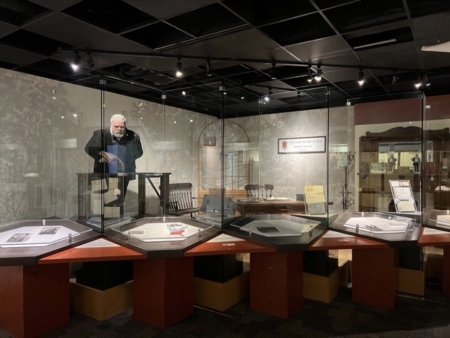
The exhibits within the museum center on Moody’s life story, tracing his journey from humble beginnings to international influence. Visitors learn about his early years as a shoe salesman in Chicago, where he began teaching Sunday school to children in impoverished neighborhoods. This work, carried out in places often neglected by society, became the foundation of his lifelong commitment to evangelism and practical ministry. Artifacts, photographs, and written materials help illustrate how Moody’s simple but earnest faith translated into large-scale impact.
One of the defining features of the museum is its emphasis on authenticity. Rather than relying heavily on modern multimedia displays, it presents historical objects and documents that offer a direct connection to the past. These include personal items, sermon notes, and materials related to Moody’s evangelistic campaigns. The broader archival collections at the institute further preserve thousands of documents, photographs, and pieces of correspondence related to Moody’s life and work. Together, these resources provide a rich and detailed portrait of a man whose influence extended across continents.
The museum also highlights Moody’s role in shaping American evangelicalism during the late nineteenth century. He preached to vast audiences—reaching millions during his lifetime—and emphasized clear, accessible messages centered on personal conversion and practical faith. His efforts helped define a style of ministry that valued simplicity, urgency, and outreach to ordinary people. By presenting these themes, the museum allows visitors to see how Moody’s approach differed from more formal religious traditions of his time and why it proved so effective.
Another important aspect of the museum is its connection to the founding of the Moody Bible Institute. Exhibits explain how Moody, along with collaborators like Emma Dryer, envisioned a training school that would equip believers for ministry work. This educational mission continues today, making the museum not only a historical site but also a reminder of an ongoing legacy.
Visitors to the museum often remark on its reflective atmosphere. Unlike larger, more commercial institutions, it invites quiet consideration rather than hurried observation. The setting encourages individuals to think about the broader implications of Moody’s life—his dedication, his faith, and his practical concern for others. In this way, the museum serves both educational and inspirational purposes.
In the context of Illinois history, the D. L. Moody Museum holds a unique place. Chicago was the primary stage for much of Moody’s ministry, and it was here that his work among the urban poor took root and expanded. By preserving this connection, the museum anchors his global influence in a specific local setting, reminding visitors that great movements often begin in ordinary places.
In conclusion, the D. L. Moody Museum in Illinois is a modest yet significant institution that preserves the memory of a remarkable life. Through its exhibits and its connection to the Moody Bible Institute, it continues to tell the story of a man whose faith, determination, and vision left a lasting mark on both American religion and global evangelicalism.
_____
Image Source/Credit:
• Cooke, Tony, and Tony Cooke. “Visit to D. L. Moody Museum.” Tony Cooke Ministries | Articles for Church Leaders | Ministry & Leadership Resources, 16 Oct. 2023 (tonycooke.org/articles-by-tony-cooke/visit-to-d-l-moody-museum)
Related
Sorry, no records were found. Please adjust your search criteria and try again.
Sorry, unable to load the Maps API.