The G. Herbert Livingston Archaeology and Israel Studies Learning Lab, located at Southwestern Baptist Theological Seminary in Fort Worth, Texas, is a specialized educational facility dedicated to the study of biblical archaeology and the historical context of the ancient Near East. Designed to support both academic instruction and public engagement, the lab provides students and visitors with a hands-on opportunity to explore the material culture of the Bible.
Named after G. Herbert Livingston, the learning lab honors a scholar known for his contributions to Old Testament studies and his interest in archaeology as a tool for understanding Scripture. Livingston’s work emphasized the importance of examining the physical and historical background of the biblical world, and the lab continues that mission by making archaeological study accessible and practical.
The facility is part of Southwestern Baptist Theological Seminary, one of the largest seminaries in the United States. Within this academic setting, the learning lab serves as a bridge between classroom instruction and real-world artifacts. It is designed not merely as a display space but as an interactive environment where students can engage directly with objects similar to those used in ancient times.
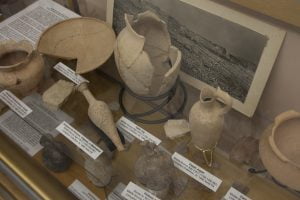
The collection housed in the lab includes a range of artifacts and replicas representing daily life in the ancient Near East. These may include pottery, tools, inscriptions, and other items that illustrate the cultural and historical background of biblical narratives. By examining such objects, students gain a clearer understanding of how people lived, worked, and worshiped in the regions described in Scripture.
One of the key purposes of the learning lab is to enhance the study of the Bible through historical context. Archaeology provides valuable insights into the settings of biblical events, shedding light on geography, social customs, and political structures. While archaeology does not replace textual study, it complements it by offering tangible evidence that helps bring ancient accounts to life.
The lab also reflects a broader interest in Israel studies, focusing on the history, culture, and geography of the land central to the Bible. Through maps, models, and teaching materials, students can explore the physical landscape of ancient Israel and better understand the significance of locations mentioned in Scripture. This approach helps connect abstract study with concrete reality, making the subject more engaging and meaningful.
In addition to serving seminary students, the learning lab is often used for educational tours and special programs. Church groups, visiting scholars, and members of the public may have the opportunity to view the exhibits and learn about the role of archaeology in biblical studies. These outreach efforts extend the lab’s impact beyond the classroom, fostering greater appreciation for the historical foundations of the Bible.
The G. Herbert Livingston Archaeology and Israel Studies Learning Lab represents a practical approach to theological education. By incorporating physical artifacts and interactive learning, it encourages a deeper and more informed engagement with Scripture. It also highlights the importance of careful study and the use of multiple disciplines in understanding ancient texts.
In conclusion, the G. Herbert Livingston Archaeology and Israel Studies Learning Lab serves as a valuable resource for exploring the world of the Bible. Through its collections and educational programs, it connects students and visitors with the history and culture of the ancient Near East. In doing so, it continues the legacy of G. Herbert Livingston, promoting a thoughtful and informed approach to the study of Scripture and its historical context.
_____
Image Source/Credit:
• “G. Herbert Livingston Archaeology and Israel Studies Learning Lab – Asbury Theological Seminary.” Asbury Theological Seminary, 1 Nov. 2016 (asburyseminary.edu/elink/g-herbert-livingston-archaeology-israel-studies-learning-lab)
Related
Sorry, no records were found. Please adjust your search criteria and try again.
Sorry, unable to load the Maps API.