
Francis Asbury (1745–1816) was one of the most influential religious leaders in early American history and a central figure in the rise of Methodism in the United States. As a tireless circuit rider, organizer, and bishop, Asbury helped transform a small movement into one of the largest Protestant denominations in the young nation.
Born in Staffordshire, England, Asbury was raised in a humble working-class family. His early life was shaped by the Methodist revival led by John Wesley, whose emphasis on personal holiness, disciplined Christian living, and evangelistic zeal left a lasting impression on the young Asbury. Converted in his youth, he quickly became active in Methodist societies and demonstrated a strong sense of calling to preach.
In 1771, at Wesley’s urging, Asbury traveled to the American colonies as a missionary. At the time, Methodism in America was still in its infancy, with only a handful of preachers and scattered societies. Asbury arrived just a few years before the outbreak of the American Revolution, a conflict that would test both his commitment and his leadership.
During the war, many Methodist preachers returned to England, but Asbury chose to remain in America despite the dangers and uncertainties. His decision proved crucial. By staying with the fledgling movement, he provided continuity and stability at a time when it might otherwise have collapsed. Though he often faced suspicion because of his English background, he gradually earned the trust of American Methodists through his dedication and humility.
After the war, Methodism in America entered a new phase of organization and growth. In 1784, at the Christmas Conference in Baltimore, the Methodist Episcopal Church was formally established. At this gathering, Asbury was ordained and elected as one of its first bishops. Unlike many leaders of his time, he insisted that his authority rest not on appointment alone but on the consent of American preachers, a principle that reflected the democratic spirit of the new nation.
Asbury’s leadership was marked by an extraordinary commitment to travel and personal oversight. He is best remembered as a circuit rider, journeying thousands of miles each year on horseback to visit Methodist societies scattered across the frontier. Over the course of his ministry, it is estimated that he traveled more than 250,000 miles, preaching thousands of sermons and organizing churches in both rural and urban areas.
His approach to ministry was practical and disciplined. He emphasized regular preaching, accountability among ministers, and the establishment of structured circuits that ensured consistent pastoral care. This system allowed Methodism to expand rapidly, particularly on the American frontier, where other denominations often struggled to maintain a presence.
Asbury also played a significant role in shaping the character of American Methodism. He encouraged simplicity in worship, a strong emphasis on personal holiness, and a commitment to evangelism. Under his leadership, Methodism became known for its accessibility, reaching people from a wide range of social backgrounds, including those often overlooked by more established churches.
In addition to his evangelistic work, Asbury supported educational efforts and the training of ministers. He recognized that the long-term strength of the church depended on both spiritual vitality and intellectual development. Though his own formal education was limited, he valued learning and encouraged others to pursue it.
The impact of Francis Asbury on American religious life was profound. At the time of his arrival in 1771, there were only a few hundred Methodists in the colonies. By the time of his death in 1816, the number had grown to well over 200,000, making Methodism one of the largest and most dynamic denominations in the United States. His leadership helped lay the foundation for this remarkable expansion.
Asbury died in 1816 after more than four decades of nearly continuous travel and service. His life was marked by sacrifice, perseverance, and a singular focus on his mission. He left behind not only a thriving church but also a model of leadership characterized by humility, diligence, and devotion.
In sum, Francis Asbury stands as a towering figure in the history of American Christianity. Through his tireless efforts, he helped bring the message of Methodism to countless individuals and communities, shaping the spiritual landscape of the nation. His legacy endures in the continued strength of the Methodist tradition and in the example of a life wholly devoted to the service of God and others.
_____
Image Source/Credit:
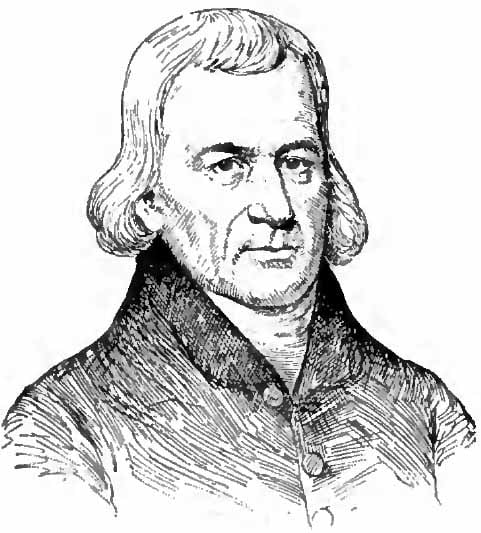
• Jacques Reich (undoubtedly based on the work of another artist), Public domain, via Wikimedia Commons
Related
Sorry, no records were found. Please adjust your search criteria and try again.
Sorry, unable to load the Maps API.