
Watch our interview on J. Gresham Machen
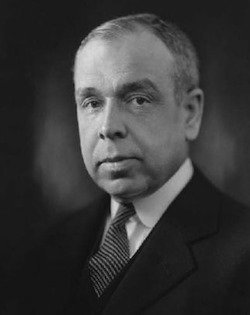
J. Gresham Machen was one of the most important defenders of historic Christian orthodoxy in the early twentieth century. A scholar, pastor, and church leader, he stood firmly for traditional doctrines at a time when theological modernism was gaining influence in American churches. His life and work left a lasting imprint on Presbyterianism and on conservative Protestant thought more broadly.
Born in 1881 in Baltimore, Machen grew up in a cultured and educated household. His family valued both intellectual achievement and religious commitment, influences that would shape his later career. He attended Johns Hopkins University, where he received a strong academic foundation before continuing his studies at Princeton Theological Seminary.
At Princeton, Machen came under the influence of leading theologians who emphasized the authority of Scripture and the importance of historic Christian doctrine. He also spent time studying in Germany, where he encountered the rising tide of liberal theology. This movement often sought to reinterpret or downplay traditional doctrines such as the virgin birth, the atonement, and the resurrection. While Machen appreciated the academic rigor of German scholarship, he rejected its theological conclusions, becoming convinced that such views departed from the core teachings of Christianity.
Machen’s concern over these developments found its clearest expression in his 1923 book Christianity and Liberalism. In this work, he argued that liberal theology was not merely a different interpretation of Christianity but an entirely different religion. He maintained that true Christianity was rooted in historical events and doctrinal truths revealed in Scripture, whereas liberalism reduced the faith to moral ideals and personal experience. The book became a defining statement of the fundamentalist-modernist controversy that shaped American Protestantism during that era.
As a professor at Princeton Theological Seminary, Machen was known for his careful scholarship and his commitment to the original languages of the New Testament. He believed that serious study of Scripture was essential for maintaining doctrinal integrity. However, changes within the Presbyterian Church and at Princeton itself led to growing tensions. In 1929, the seminary was reorganized in a way that broadened its theological direction, prompting Machen and several colleagues to leave.
That same year, Machen helped found Westminster Theological Seminary in Philadelphia. The new institution was established to continue the theological tradition of old Princeton, emphasizing biblical authority and Reformed doctrine. Westminster quickly became a center for conservative theological education and remains influential to this day.
Machen’s commitment to orthodoxy also led him into conflict with the governing bodies of his denomination. He opposed the direction of the Presbyterian Church’s mission boards, which he believed were tolerating or promoting liberal theology. In response, he helped establish an independent mission organization to support what he considered faithful gospel work. This action resulted in ecclesiastical charges, and in 1935 he was suspended from the ministry of the Presbyterian Church.
Undeterred, Machen continued his work and, in 1936, was instrumental in the formation of Orthodox Presbyterian Church. This new denomination sought to uphold traditional Presbyterian doctrine and practice, providing a home for those who shared his convictions.
Despite his public controversies, those who knew Machen often spoke of his personal humility and sincerity. He was not driven by a desire for conflict but by a deep concern for the truth of the Christian faith. His writings and actions reflected a belief that doctrine mattered and that the integrity of the church depended on faithfulness to Scripture.
Machen died in 1937 at the age of fifty-five, leaving behind a legacy that continues to influence theological education and church life. His defense of orthodox Christianity during a time of significant change helped preserve a tradition that might otherwise have been lost or diluted.
Today, J. Gresham Machen is remembered as a scholar of conviction and courage. His life serves as a reminder that ideas have consequences and that the preservation of deeply held beliefs often requires both intellectual clarity and personal sacrifice. Through his writings, institutions, and example, he remains a significant voice in the ongoing conversation about faith, truth, and the role of the church in the modern world.
_____
Image Source/Credit:
• Banner of Truth UK. “J. Gresham Machen – Banner of Truth UK.” Banner of Truth UK, 24 July 2018 (banneroftruth.org/uk/about/banner-authors/j-gresham-machen)
Related
Sorry, no records were found. Please adjust your search criteria and try again.
Sorry, unable to load the Maps API.