
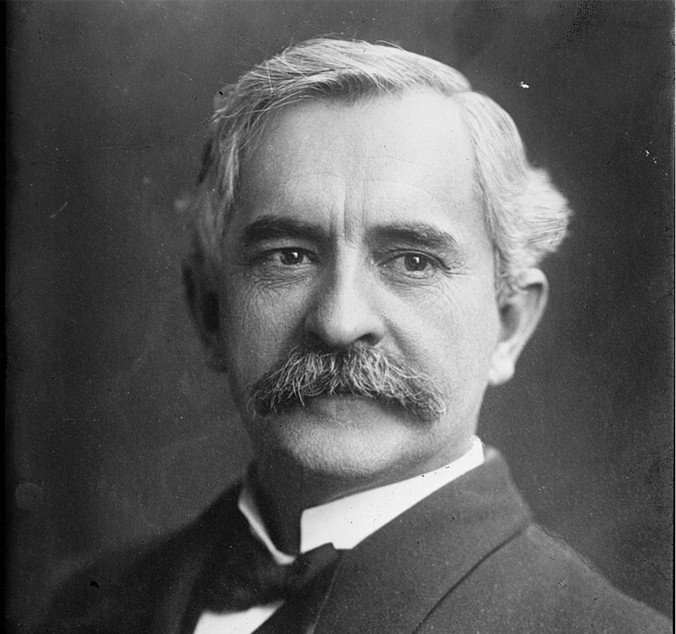
Amzi Clarence Dixon was a prominent figure in late nineteenth- and early twentieth-century Protestantism, known for his powerful preaching, editorial leadership, and firm defense of traditional Christian doctrine. His ministry spanned both the United States and Great Britain, and he played a significant role in shaping what came to be known as the fundamentalist movement.
Born in 1854 in North Carolina, Dixon grew up in a religious home that emphasized Scripture and moral discipline. He pursued higher education at Wake Forest College and later at Johns Hopkins University. These studies provided him with both a classical education and exposure to the intellectual currents of his day, including the rise of modern biblical criticism and scientific challenges to traditional beliefs.
Dixon entered the Baptist ministry and quickly became known for his eloquence and conviction. He served in several prominent pastorates, including churches in Boston, Chicago, and New York City. In each setting, his preaching attracted large audiences. He spoke with clarity and urgency, emphasizing the authority of the Bible, the necessity of personal conversion, and the importance of moral living.
One of the defining features of Dixon’s ministry was his strong opposition to theological liberalism. At a time when some theologians were reinterpreting traditional doctrines in light of modern thought, Dixon stood firmly for what he understood to be the historic Christian faith. He believed that core teachings such as the inspiration of Scripture, the deity of Christ, and the reality of salvation were non-negotiable. His sermons and writings often addressed these issues directly, urging believers to remain steadfast.
Dixon’s influence extended beyond the pulpit through his editorial work. He was one of the key figures behind the publication of a series of essays known as The Fundamentals. These volumes, published between 1910 and 1915, brought together contributions from various conservative scholars and pastors who sought to defend orthodox Christianity against modernist interpretations. The series was widely distributed and became a cornerstone of the fundamentalist movement, helping to define its beliefs and priorities.
In addition to his work in the United States, Dixon also ministered in Great Britain. He served as pastor of the Metropolitan Tabernacle in London, succeeding the renowned preacher Charles Haddon Spurgeon. This position placed him in a historic pulpit with a global reputation. During his time there, Dixon continued to emphasize biblical preaching and evangelical conviction, maintaining the strong doctrinal stance associated with his predecessor.
Dixon was also an active evangelist, conducting revival meetings and speaking at conferences. His messages were marked by a sense of urgency and a call to decision. He believed that Christianity required not only intellectual assent but also personal commitment, and he urged his listeners to respond actively to the message of the gospel.
Despite his firm convictions, Dixon’s ministry was not without controversy. His outspoken criticism of liberal theology and certain social trends sometimes brought opposition. Yet he remained consistent in his views, believing that faithfulness to Scripture required clarity and courage, even when it led to disagreement.
Amzi Clarence Dixon died in 1925, leaving behind a legacy of preaching, writing, and leadership. His role in shaping the fundamentalist movement ensured that his influence would continue beyond his lifetime. The issues he addressed—the authority of Scripture, the nature of Christian doctrine, and the challenges of modern thought—remain subjects of discussion to this day.
In reflecting on Dixon’s life, one sees a man deeply committed to his understanding of truth and determined to communicate it clearly. His work helped define a movement that sought to preserve traditional beliefs in a time of change. Whether through his sermons, his editorial efforts, or his pastoral leadership, Dixon’s legacy endures as part of the broader history of modern Christianity, reminding us of the importance of conviction, clarity, and faithful witness.
_____
Image Source/Credit:
• A.C. Dixon LCCN2014685940.jpg.” Wikimedia Commons. 4 Feb 2025, 21:16 UTC. 25 Feb 2025, 23:05
Related
Sorry, no records were found. Please adjust your search criteria and try again.
Sorry, unable to load the Maps API.