
The life of John Lathrop (also spelled Lothrop) stands as a meaningful example of conviction, sacrifice, and pastoral leadership in the early 17th century. His journey from England to New England reflects the broader struggle for religious liberty that helped shape both Congregational and Baptist traditions in the English-speaking world.
John Lathrop was born around 1584 in Etton Yorkshire and educated at Queens’ College Cambridge, one of England’s respected centers of learning. After completing his studies, he initially served within the Church of England. However, as he became increasingly convinced that the established church had departed from New Testament patterns, Lathrop aligned himself with the growing movement of Independents—those who believed each congregation should govern itself apart from state control.
By the 1620s, Lathrop had become pastor of an Independent congregation in London, following the leadership of Henry Jacob and then John Canne. This group was notable for its commitment to congregational governance and religious liberty, ideas that would later influence both Congregationalists and Baptists. Because such gatherings were illegal under English law at the time, the church met secretly to avoid detection.
In 1632, their activities were discovered by authorities, leading to a dramatic turning point in Lathrop’s life. During a clandestine service, officers of the crown raided the meeting and arrested many of those present. Lathrop himself was imprisoned in Clink Prison, where he remained for approximately two years. Conditions were difficult, and while he was confined, several of his children were left without proper care. Accounts from the time describe the emotional strain on his family, which became widely known among sympathizers.
Eventually, Lathrop was released—reportedly on the condition that he would leave England. In 1634, he emigrated to New England, joining the wave of Puritan settlers seeking freedom to practice their faith according to conscience. He first settled in Scituate Massachusetts, where he became pastor of the local church. There, he helped establish a stable congregation and provided spiritual leadership to a growing community.
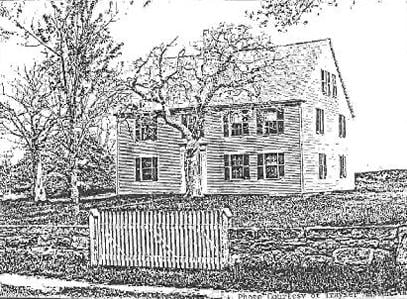
In 1639, Lathrop and a portion of his congregation relocated to Barnstable Massachusetts, where they founded what became one of the earliest churches on Cape Cod. His work in Barnstable proved especially influential. As pastor, he guided the church in both doctrine and daily life, reinforcing the importance of disciplined, Scripture-centered worship and strong community ties. His leadership helped lay a firm foundation for religious life in the region, one that would endure for generations.
Though Lathrop himself remained within the Congregational tradition, his earlier association with Separatist and Independent movements placed him close to the currents that gave rise to Baptist thought. Some members of his London congregation eventually became Baptists, and his emphasis on the autonomy of the local church and the authority of Scripture resonated strongly with Baptist principles. In this way, his influence extended beyond a single denomination.
Lathrop’s legacy is also evident in his family. Several of his descendants became prominent figures in American history, including ministers, civic leaders, and participants in the development of colonial society. Through them, his impact spread into many areas of public and private life.
He died in 1653 in Barnstable, having spent nearly two decades shaping the spiritual character of the community. His life reflects the cost of religious conviction in a time of intolerance, as well as the opportunities that arose in the New World for those willing to endure hardship for the sake of conscience.
In the broader sweep of history, John Lathrop represents a bridge between Old World struggles and New World beginnings. His steadfast commitment to the independence of the church, his pastoral care for his people, and his willingness to suffer for his beliefs contributed to the gradual emergence of religious liberty in America. His influence, though rooted in a specific time and place, continues to be felt in the principles of church life and freedom of worship that many hold dear today.
_____
Image Source/Credit:
• Eldridge, View All Posts by Tk. “52 Ancestors #25: Reverend John Lothrop.” Of Loons and Lady Slippers, 23 Mar. 2015 (kessgen.wordpress.com/2014/07/12/52-ancestors-25-reverend-john-lothrop)
Related
Sorry, no records were found. Please adjust your search criteria and try again.
Sorry, unable to load the Maps API.