
The First Baptist Church of Swansea holds an important place in the early history of Baptist life in New England. Founded in the seventeenth century, it reflects the spread of Baptist principles from Rhode Island into neighboring Massachusetts and stands as a testament to the struggle for religious liberty in colonial America.
The church traces its origins to 1663, making it one of the oldest Baptist congregations in the United States. Its founding is closely connected with the influence of John Myles, a minister who had previously pastored a Baptist church in Wales. Myles came to New England seeking greater freedom to practice his faith, bringing with him a group of like-minded believers. Initially settling in Rehoboth, Massachusetts, the congregation soon relocated to nearby Swansea, where they could worship with fewer restrictions.
At the time of the church’s founding, Massachusetts was dominated by Congregationalist establishments that imposed legal and social pressures on dissenting groups. Baptists, in particular, were often viewed with suspicion because of their rejection of infant baptism and their insistence on the independence of the local church. The formation of the Swansea congregation represented a bold step toward religious freedom, as its members sought to establish a community grounded in voluntary faith and biblical conviction.
John Myles played a central role in shaping the early character of the church. His leadership emphasized adherence to Baptist distinctives, including believer’s baptism, congregational governance, and the authority of Scripture. Under his guidance, the church became a model for other Baptist congregations in the region, helping to extend Baptist influence beyond Rhode Island, where greater religious liberty had already been established through the work of Roger Williams.
The church’s early years were not without difficulty. Its members faced legal challenges and occasional hostility from surrounding communities. Nevertheless, the congregation endured, demonstrating a commitment to its principles that would leave a lasting mark on the religious landscape of New England. Over time, as attitudes toward religious diversity began to change, the church was able to function more openly and contribute to the broader development of Baptist life.
During the eighteenth century, the First Baptist Church of Swansea became part of a growing network of Baptist churches that participated in regional associations. These connections provided mutual support and helped coordinate efforts in preaching, missions, and education. The church thus played a role not only in its local community but also in the wider movement that strengthened Baptist identity in America.
The impact of the Swansea church is closely tied to the broader struggle for religious liberty. By maintaining its witness in a region that initially resisted dissent, it contributed to the gradual acceptance of diverse religious expressions. These developments were part of the larger transformation that would eventually lead to the disestablishment of state-supported churches and the recognition of freedom of conscience, principles later reflected in the United States Constitution First Amendment.
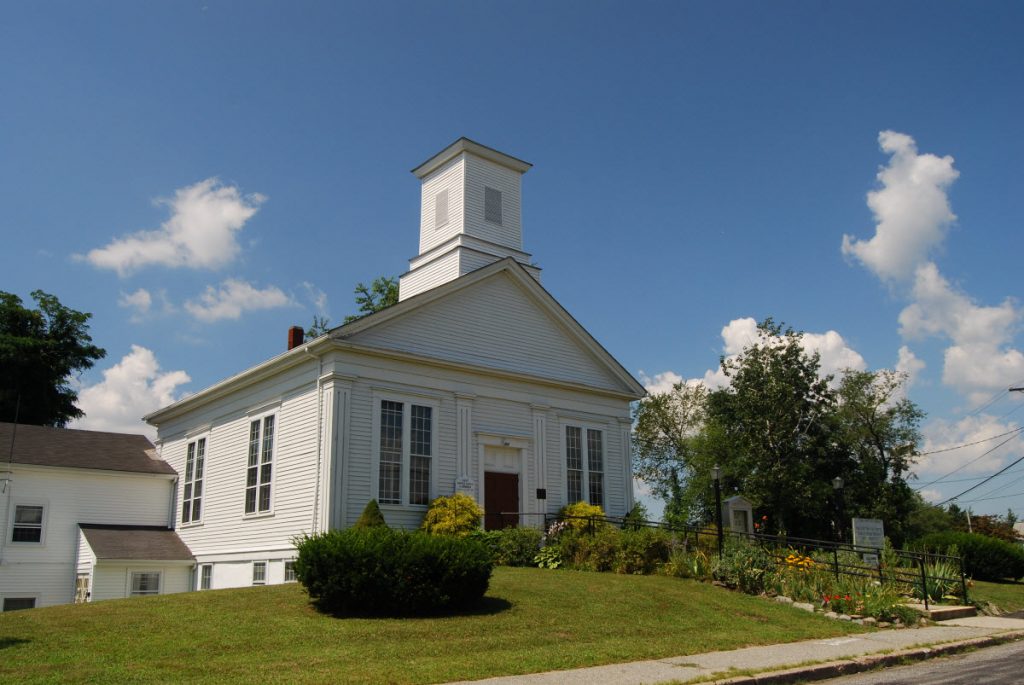
Architecturally, the church has occupied several meetinghouses over the centuries, each reflecting the needs and circumstances of its time. While the physical structures have changed, the continuity of the congregation itself remains a defining feature. Its long history provides a living connection to the early days of Baptist witness in America.
Today, the First Baptist Church of Swansea continues as an active congregation, preserving its heritage while serving its community. Its story is one of perseverance, conviction, and gradual progress toward greater religious freedom.
In sum, the First Baptist Church of Swansea stands as a significant example of early Baptist life in New England. Through its founding, endurance, and influence, it helped shape a tradition that values both faith and liberty, leaving a legacy that continues to be felt in American religious history.
_____
Image Source/Credit:
• Marcbela (Marc N. Belanger), Public domain, via Wikimedia Commons
Related
Sorry, no records were found. Please adjust your search criteria and try again.
Sorry, unable to load the Maps API.