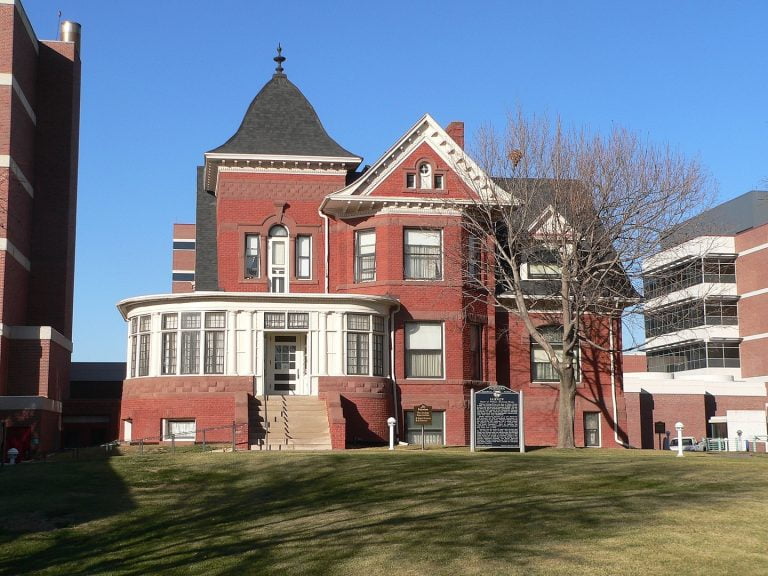
Fairview stands as one of the most meaningful historic residences associated with William Jennings Bryan, a towering figure in American political and religious life at the turn of the twentieth century. Located in Lincoln, Fairview was not only Bryan’s home but also a center of public thought, hospitality, and influence during some of the most formative years of his career.
Bryan purchased the Fairview property in 1900, shortly after his first campaign for the presidency brought him national prominence. Known for his powerful oratory—including the famous “Cross of Gold” speech—Bryan sought a residence that would reflect both his personal values and his public role. The house was designed in a spacious, welcoming style, set on a rise of land that provided a commanding view of the surrounding countryside. Its name, “Fairview,” captured both the literal beauty of the location and Bryan’s vision of a place where ideas could be freely discussed.
From the beginning, Fairview functioned as more than a private dwelling. Bryan used the home as a gathering place for political allies, reformers, religious leaders, and ordinary citizens. Visitors from across the country came to meet him, seek counsel, or simply hear him speak. In many ways, the home served as an informal extension of Bryan’s public life, where conversations about politics, morality, and national direction were carried on in a more personal setting.
The early twentieth century was a period of intense political change in the United States, and Fairview became closely associated with the reform movements of the time. Bryan was a leading voice in causes such as populism, anti-imperialism, and the direct election of senators. From his home in Lincoln, he continued to shape public opinion through speeches, writing, and political organizing. Even after losing three presidential campaigns, Bryan remained a respected and influential figure, and Fairview remained a focal point of his activity.
In addition to his political work, Bryan was deeply committed to his Christian faith. Fairview often hosted religious gatherings, Bible studies, and discussions on moral issues. This blending of faith and public life was characteristic of Bryan, who believed that moral principles should guide national policy. His later involvement in debates over education and religion, including his role in the Scopes Trial, reflected convictions that had long been part of his life at Fairview.
After Bryan’s death in 1925, the property took on a new role as a place of remembrance. In keeping with his wishes, he was buried on the grounds, making Fairview both a historic home and a memorial site. Over time, the house and surrounding land came to be preserved as a public space, allowing visitors to learn about Bryan’s life and legacy. Today, the site is incorporated into a public park, and while the original structure has undergone changes, its historical significance remains intact.
The history of Fairview reflects the life of the man who built it—one marked by public service, strong convictions, and a desire to engage with the pressing issues of his day. It was a place where politics, faith, and community intersected, and where one of America’s most recognizable voices found both rest and opportunity.
In sum, Fairview is more than a historic residence; it is a symbol of an era when leaders often opened their homes as extensions of their public mission. Through its history, it continues to offer insight into the character and influence of William Jennings Bryan, preserving the memory of a man whose impact reached far beyond the walls of his home.
For more information on Fairview, or to schedule a tour, call 402-481-3032. Please schedule tours at least 48 hours in advance.
_____
Image Source/Credit:
• Ammodramus, CC0, via Wikimedia Commons
Related

Sorry, no records were found. Please adjust your search criteria and try again.
Sorry, unable to load the Maps API.