
Shubal Stearns (1706–1771) was one of the most influential figures in the spread of Baptist life in the American South during the eighteenth century. His leadership at Sandy Creek Baptist Church helped spark a powerful revival movement that reshaped the religious landscape of the southern colonies and left a lasting legacy on American Christianity.
Stearns was born in Boston, Massachusetts, and raised in a Congregationalist setting. For much of his early life, he followed the religious patterns common to New England at the time. However, like many of his generation, he was deeply affected by the evangelical fervor of the Great Awakening. Under the preaching of revivalists such as George Whitefield, Stearns experienced a personal conversion that transformed both his beliefs and his sense of calling.
As a result of this spiritual awakening, Stearns eventually embraced Baptist convictions, particularly the practice of believer’s baptism and the emphasis on a personal, experiential faith. He became part of the Separate Baptists, a group distinguished by their revivalistic zeal, emotional preaching, and commitment to spreading the gospel beyond established centers of religion.
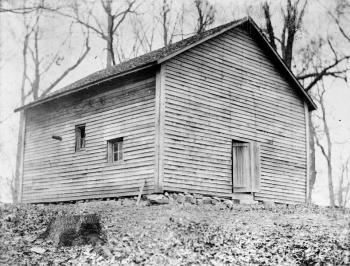
In 1755, Stearns moved south to North Carolina, settling in what was then a sparsely populated frontier region. There he established Sandy Creek Baptist Church, which would become the focal point of a remarkable religious movement. At its founding, the church consisted of only a small group of members, but it quickly grew as Stearns preached with fervor and conviction.
Stearns’ preaching style was notably different from that of many ministers of his day. He spoke with intensity and emotion, often accompanied by gestures and a tone that deeply moved his listeners. This approach resonated strongly with frontier settlers, many of whom had little access to formal religious instruction. His emphasis on personal conversion and heartfelt religion appealed to those seeking a direct and meaningful spiritual experience.
Under Stearns’ leadership, Sandy Creek Baptist Church became more than a local congregation; it was the center of a rapidly expanding network of churches. As new converts responded to the message, they often went out to establish congregations of their own. Within a few years, the influence of Sandy Creek spread throughout North Carolina, Virginia, and beyond.
The growth was so significant that it led to the formation of the Sandy Creek Association in 1758, one of the earliest Baptist associations in the South. This organization provided a means for cooperation among churches while preserving the independence that Baptists valued. Through this network, the revival that began at Sandy Creek continued to expand, shaping the character of Baptist life in the region.
Stearns’ ministry was not without challenges. The Separate Baptists often faced opposition from established churches and local authorities, who viewed their emotional preaching and rapid growth with suspicion. Despite this, Stearns remained committed to his work, continuing to preach and organize churches until his death in 1771.
The impact of Shubal Stearns and Sandy Creek Baptist Church has been described by historians as one of the most important developments in southern religious history. The movement they inspired contributed significantly to the rise of Baptists as a major religious force in the American South. By the time of the American Revolution, Baptists had become one of the largest and most dynamic denominations in the region.
Beyond numerical growth, the Sandy Creek revival helped shape the character of southern Baptist life. Its emphasis on personal conversion, evangelistic zeal, and congregational participation became defining features of the tradition. These qualities continue to influence Baptist churches to this day.
Stearns’ legacy is also evident in the broader American commitment to religious freedom. The growth of Baptist churches in the South, many of which traced their origins to Sandy Creek, contributed to the movement for disestablishment and the separation of church and state.
In the end, the story of Shubal Stearns is one of remarkable influence arising from humble beginnings. From a small gathering on the North Carolina frontier grew a movement that transformed the religious life of an entire region. Sandy Creek Baptist Church stands as a lasting symbol of that revival, and Stearns is remembered as a pioneer whose vision and passion helped shape the course of American Christianity.
_____
Image Source/Credit:
• Reformation. Backwoods North Carolina Anabaptists/Revivalists Rebel Against Crown and Anglicanism: 1771 (reformationanglicanism.blogspot.com/2012/07/backwoods-north-carolina.html)
Related
Sorry, no records were found. Please adjust your search criteria and try again.
Sorry, unable to load the Maps API.