


Hymn History: When the Roll is Called Up Yonder
Author: James Milton Black
“Well, I trust when the roll is called up yonder, she’ll be there.”
(Spoken by James Milton Black when a girl was absent from his Sunday school class)
The Origin of the Hymn “When the Roll is Called Up Yonder”
The hymn When the Roll Is Called Up Yonder stands as one of the most enduring and beloved songs in the tradition of American gospel music. Written by James M. Black in the late nineteenth century, the hymn reflects both a personal pastoral experience and a broader theological emphasis on eternity, accountability, and the hope of heaven.
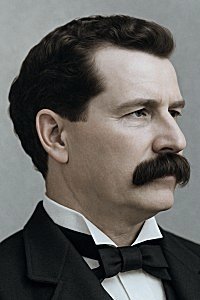
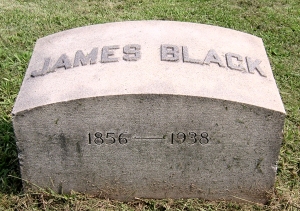
James Milton Black was born in 1856 in South Hill, New York, and later made his home in Williamsport, Pennsylvania. He was deeply involved in church work, particularly in Sunday school ministry, where he taught and worked closely with young people. In addition to his pastoral responsibilities, Black had a strong musical inclination and composed numerous hymns, often drawing inspiration from his everyday experiences in ministry.
The origin of When the Roll Is Called Up Yonder is closely tied to one such experience. According to widely accepted accounts, Black was teaching a Sunday school class when he noticed that a young girl, known to be faithful in attendance, was absent. When he called the roll, her name was unanswered. This simple moment left a lasting impression on him. Later, he learned that the girl had fallen seriously ill and passed away not long afterward. The thought of her absence, combined with the image of a final “roll call” in eternity, stirred Black’s imagination and gave rise to the hymn.
The phrase “roll call” would have been familiar in the context of nineteenth-century church and school life. Attendance was often taken by calling out names, and the response signified presence. Black took this everyday practice and elevated it into a spiritual metaphor. In the hymn, the idea of a heavenly roll call becomes a vivid picture of the final gathering of believers at the end of time. The refrain, with its repeated line “I’ll be there,” expresses both assurance and anticipation.
Theologically, the hymn reflects themes drawn from the New Testament, particularly passages that speak of resurrection, judgment, and eternal life. The imagery of names being recorded and called aligns with biblical references to the “Book of Life,” as found in the Book of Revelation. The song emphasizes readiness, urging believers to live in such a way that they will be present when that final call is made.
Musically, When the Roll Is Called Up Yonder is characteristic of the gospel hymn style that flourished in the late 1800s. It features a straightforward melody, a memorable refrain, and a structure that encourages congregational singing. This style was closely associated with the revival movements of the time, where music played a central role in communicating spiritual truths and inviting personal response.
The hymn gained widespread popularity through its use in evangelistic meetings and church services. It was often included in hymnals and songbooks, making it accessible to congregations across the United States and beyond. Its message, both solemn and hopeful, resonated with audiences who were accustomed to thinking in terms of eternal destiny and personal accountability.
Over the years, the hymn has been recorded and performed by numerous artists and has remained a staple in many traditional church settings. Its enduring appeal lies in its simplicity and clarity. Without elaborate language or complex theology, it presents a straightforward question: will one be present when the final roll is called?
In a broader sense, the background of When the Roll Is Called Up Yonder reflects the values of its time—a period when church attendance, Sunday school, and revival meetings were central to community life. The hymn captures the earnestness of that era, when matters of faith were often expressed in direct and practical terms.
Today, the song continues to be sung, particularly in churches that value traditional gospel music. While musical styles have changed over the years, the themes it expresses remain timeless. The image of a final gathering, where each name is called and answered, still speaks to the human desire for belonging, assurance, and hope beyond this life.
In sum, When the Roll Is Called Up Yonder arose from a simple yet profound moment in a Sunday school classroom. Through the pen of James M. Black, that moment was transformed into a hymn that has comforted, challenged, and inspired generations, reminding listeners of the importance of being ready for the call that one day will come.
♦ _____ ♦
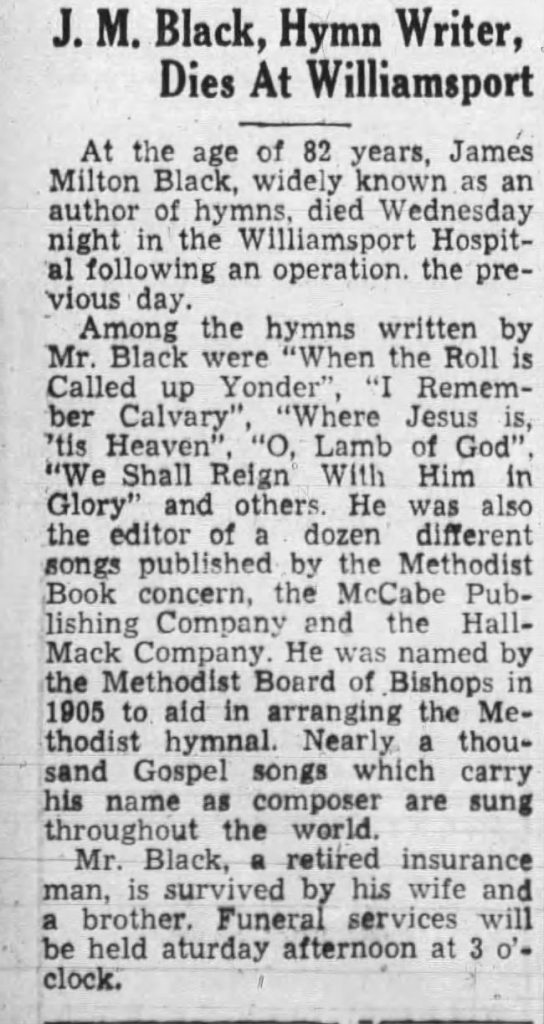
James Milton Black (1856-1938) is widely known as the author of the words and music to the popular gospel song When the Roll is Called Up Yonder. He was, however, a very private person whose failure to leave much documentation about his work has frustrated musicologists for decades. No photograph of him suitable for large-size reproduction in gospel song histories, for example, is known to exist. Every year the United Methodist Archives at Lycoming College expects to get at least one inquiry that begins, “I just discovered that James M. Black was a Methodist layperson from Williamsport, could you please tell me…”
_____
Image Source/Credit (in order):
• James Milton Black (www.hymntime.com/tch/bio/b/l/a/c/black_jm.htm)
• James Milton Black (www.hymntime.com/tch/bio/b/l/a/c/black_jm.htm)
• Newspapers.com, The Daily Item, December 23, 1938 (www.newspapers.com/article/the-daily-item/191614161/)
Related
Sorry, no records were found. Please adjust your search criteria and try again.
Sorry, unable to load the Maps API.