
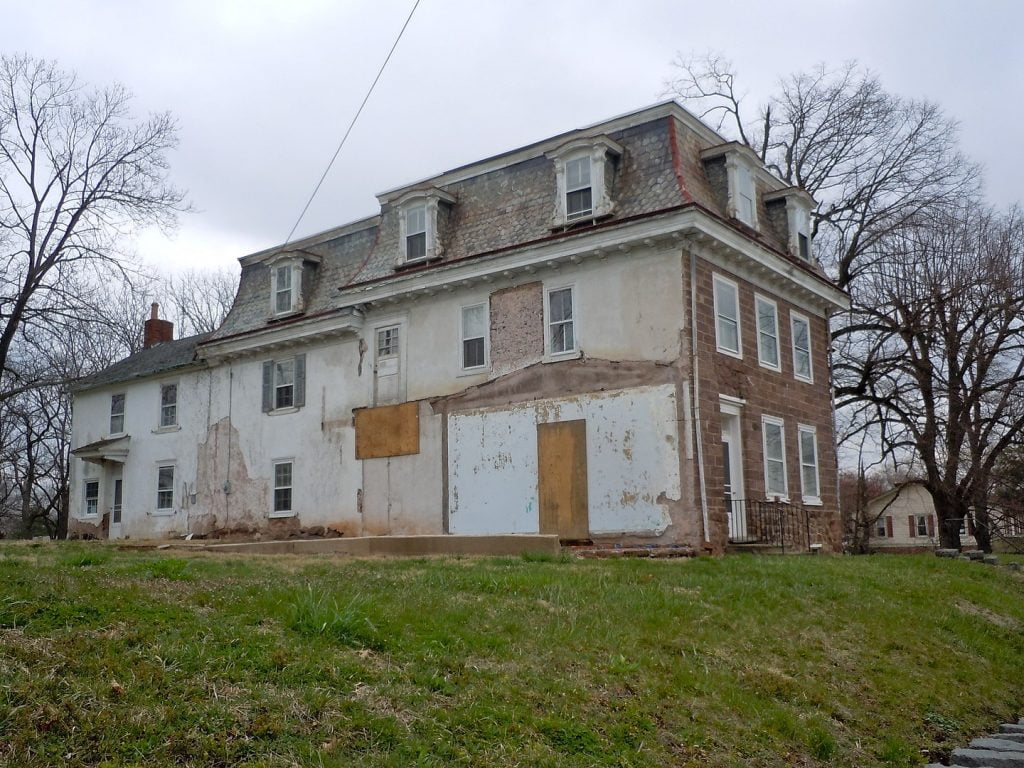
Frederick Muhlenberg House, located in the historic village of Trappe, preserves the memory of Frederick Augustus Muhlenberg, a figure whose life bridged both ministry and the early political development of the United States. The house, constructed in the mid-18th century, reflects the modest yet purposeful lifestyle of a colonial pastor and offers insight into the religious and civic life of early Pennsylvania.
Frederick Muhlenberg was born in 1750, the son of Henry Melchior Muhlenberg, whose influence helped establish the Lutheran Church firmly in the American colonies. The Muhlenberg family home in Trappe became a center not only for religious instruction but also for community life. The house itself, built of local stone in a traditional colonial style, served as both a residence and a place of hospitality, where clergy, travelers, and local residents could gather.
During Muhlenberg’s early years, the home was closely connected to his preparation for ministry. He received his education in part through family guidance and later through formal study in Europe. Upon returning to America, he entered the Lutheran ministry, following in his father’s footsteps. The Trappe home remained an anchor point for the family, reflecting the strong ties between faith, education, and daily living that characterized the period.
The history of the house is intertwined with the broader events of the late 18th century, particularly the American Revolution. Like many clergy of the time, Muhlenberg was influenced by the political upheaval around him. Although he eventually became more widely known for his political career—serving as the first Speaker of the United States House of Representatives—his roots in pastoral life were grounded in the environment of this home. It was here that he developed the discipline, leadership, and moral framework that would later guide his public service.
After his years in active ministry, Muhlenberg transitioned into political life, yet the Trappe residence continued to symbolize his beginnings. The home stood as a reminder of the important role that clergy often played in shaping early American society, not only in spiritual matters but also in civic leadership. Its connection to both church and state gives it a unique place in the historical landscape.
Over time, the Frederick Muhlenberg House has been preserved as a historic site, recognized for its architectural integrity and its association with an influential American family. Efforts to maintain the property have sought to keep its original character intact, allowing visitors to experience something of the setting in which Muhlenberg lived and worked. The interior reflects the simplicity of colonial life, with period furnishings and structural features that illustrate the daily routines of the 18th century.
Today, the house is often included as part of the Trappe Historical Society, which oversees several nearby historic buildings connected to the Muhlenberg family. Together, these sites form a small but significant historical district that highlights the contributions of German-American settlers and the development of religious institutions in Pennsylvania.
In sum, the history of Pastor Frederick Muhlenberg’s home is more than the story of a single building. It represents a way of life rooted in faith, family, and community responsibility. From its colonial origins to its preservation as a historic landmark, the house continues to offer a window into the early American experience, where religious conviction and public service often went hand in hand.
_____
Image Source/Credit:
• Smallbones, CC0, via Wikimedia Commons
Related
Sorry, no records were found. Please adjust your search criteria and try again.
Sorry, unable to load the Maps API.