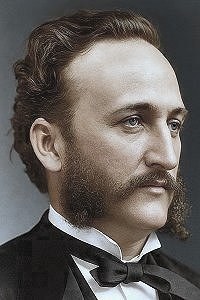
Ira D. Sankey (1840–1908), often remembered as the “sweet singer of Methodism,” experienced a conversion that profoundly shaped not only his own life but also the direction of gospel music in the late nineteenth century. His spiritual turning point was neither dramatic in outward spectacle nor sudden in timing; rather, it was the result of steady influence, personal reflection, and the quiet work of Christian conviction during his youth in Pennsylvania.
Born in Edinburg, Pennsylvania, Sankey was raised in a devout Methodist home. His parents were committed believers who regularly brought him under the influence of Scripture and congregational singing. From an early age, Sankey showed a natural musical ability. He learned to sing hymns in church and developed a strong memory for melody and verse. Yet, like many young men of his time, he passed through a period in which personal faith was not yet fully his own.
The defining moment in Sankey’s conversion came during his late teens, while attending a Sunday school gathering. One evening, he was asked to sing a hymn for the group. As he later recalled, he chose to sing “There Is a Fountain Filled with Blood,” a hymn that speaks directly of Christ’s atoning sacrifice and the cleansing power of grace. As he sang, the words of the hymn began to impress themselves upon him in a deeply personal way. What had once been familiar religious language became, in that moment, a personal call to faith.
Shortly afterward, Sankey responded to that inner conviction and made a personal commitment to Christ. This conversion experience was not marked by public drama, but it was decisive. It gave direction to his life, anchoring his musical talent in a clear sense of spiritual purpose. From that point forward, he understood music not merely as entertainment or art, but as a vehicle for conveying the message of the gospel.
Sankey’s conversion also aligned him with the broader evangelical movement of his era, particularly the revivalist tradition that emphasized heartfelt faith and personal transformation. His life soon intersected with that of Dwight L. Moody, one of the most influential revival preachers of the nineteenth century. Sankey joined Moody in evangelistic campaigns in both the United States and the United Kingdom, where his singing became a central feature of the meetings.
It is important to understand that Sankey’s conversion did not simply change his private beliefs; it redirected his entire vocation. He became one of the pioneers of what would later be called “gospel music,” blending traditional hymnody with a more accessible, emotionally expressive style. His music helped bridge the gap between formal church worship and the growing revival meetings that characterized American Protestantism in the post–Civil War era.
Sankey’s hymn singing had a unique quality that listeners often described as simple yet deeply moving. He did not rely on vocal complexity but on sincerity and clarity. This approach reflected the spirit of his conversion experience: a direct, personal encounter with faith that required no embellishment to be powerful.
The impact of Sankey’s conversion extended far beyond his own life. Through his collaboration with Moody and his extensive publication of hymn collections, he helped shape the musical landscape of evangelical Christianity. His work influenced church singing traditions on both sides of the Atlantic and contributed to the widespread acceptance of gospel music as a distinct genre.
In retrospect, Sankey’s conversion stands as a quiet but pivotal moment in religious history. It illustrates how personal faith experiences, even those that occur in ordinary settings like a Sunday school meeting, can have far-reaching consequences. From that moment of conviction, a young singer became a global voice for gospel music, carrying his message through hymns that continue to be sung long after his lifetime.
Hymns composed by Ira David Sankey found in Great Hymns of the Faith:
#147 – There’ll Be No Dark Valley
#157 – What a Gathering!
#219 – Grace! ‘Tis a Charming Sound
#245 – I Am Praying for You
#262 – Trusting Jesus
#263 – A Shelter in the Time of the Storm
#269 – Under His Wings
#282 – Hiding in Thee
#402 – Faith Is the Victory
_____
Image Source/Credit (in order):
• Ira David Sankey (www.hymntime.com/tch/bio/s/a/n/k/sankey_id.htm)
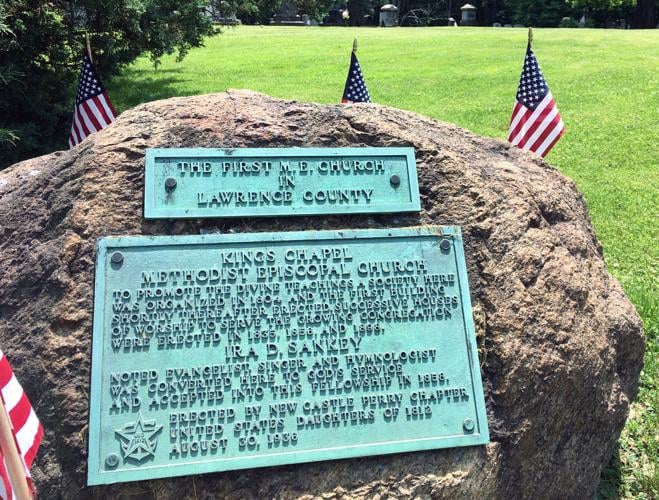
• Dan Irwin New Castle News. “King’s Chapel, County’s Oldest Methodist Church, Closes Its Doors.” New Castle News, 29 June 2020 (www.ncnewsonline.com/news/kings-chapel-countys-oldest-methodist-church-closes-its-doors/article_a0444eba-b9ad-11ea-a139-1fcb5c932865.html)
Related
Sorry, no records were found. Please adjust your search criteria and try again.
Sorry, unable to load the Maps API.