Hymn History: We Three Kings of Orient Are
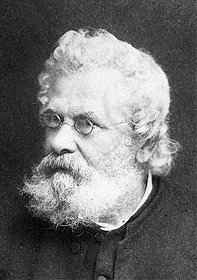
Author: John Henry Hopkins Jr.
“A clergyman who combined literary ability with musical composition, writing both words and tunes for his hymns”
(Wikipedia)
The Origin of the Hymn “We Three Kings of Orient Are”
The Christmas carol We Three Kings of Orient Are is one of the most recognizable and enduring hymns associated with the celebration of Epiphany. Written in the mid-nineteenth century by John Henry Hopkins Jr., the hymn reflects both a creative engagement with the biblical narrative and a distinctive approach to musical storytelling that set it apart from many of its contemporaries.
John Henry Hopkins Jr. was born in 1820 and served as an Episcopal clergyman, educator, and musician. He was connected with the General Theological Seminary in New York, where he taught music and played a role in shaping worship practices. Unlike many hymn writers of his era, Hopkins composed both the words and the music for his hymn, demonstrating a unified artistic vision. “We Three Kings” was written around 1857, reportedly for a Christmas pageant at the seminary, in which Hopkins intended each stanza to be sung by a different participant representing one of the Magi.
The hymn is based on the biblical account found in the Gospel of Matthew, specifically the passage describing the visit of wise men from the East to the Christ child. The Bible does not specify the number of these visitors, nor does it identify them as kings. However, over time, Christian tradition came to associate them with royalty and to fix their number at three, likely influenced by the three gifts they brought: gold, frankincense, and myrrh. Hopkins drew upon this tradition, crafting a narrative that gave each figure a voice and a symbolic role.
One of the most distinctive features of “We Three Kings” is its structure. After the opening verse, which introduces the travelers, each subsequent stanza focuses on a specific gift and its meaning. Gold is presented as a tribute to a king, frankincense as a symbol of divinity and worship, and myrrh as a foreshadowing of suffering and death. This progression gives the hymn a theological depth that moves beyond simple description, guiding the listener through a reflection on the identity and mission of Christ.
Musically, the hymn departs from the bright and celebratory tone often associated with Christmas carols. Instead, it adopts a more contemplative and somewhat solemn melody, particularly in the minor key passages. This choice reinforces the sense of journey and mystery, as well as the deeper themes suggested by the gifts. The refrain, with its rising and falling motion, evokes both wonder and reverence, capturing the sense of awe that surrounds the nativity story.
The historical context in which Hopkins wrote also played a role in shaping the hymn. The nineteenth century saw a renewed interest in liturgical traditions and seasonal observances within many Christian denominations. Epiphany, which commemorates the visit of the Magi, gained greater prominence, and hymns like We Three Kings helped to give musical expression to this observance. By focusing on the Magi, Hopkins provided a way to extend the celebration of Christ’s birth beyond Christmas Day itself.
In addition, the hymn reflects the broader cultural fascination of the time with the “Orient,” a term then used to describe the lands of the East. While modern readers may recognize the limitations and generalizations inherent in such language, it was common in nineteenth-century literature and hymnody. Hopkins used this imagery to evoke a sense of distance and pilgrimage, emphasizing the long journey undertaken by the wise men in their search for the newborn King.
Since its publication, We Three Kings has become a staple of Christmas and Epiphany services, as well as concerts and community celebrations. Its memorable melody and vivid imagery have ensured its continued popularity. It has been included in numerous hymnals and has been performed in a wide variety of musical styles, from traditional choral arrangements to contemporary interpretations.
The hymn’s lasting appeal lies in its ability to combine storytelling, theology, and music in a way that is both accessible and meaningful. It invites singers not only to recall the journey of the Magi but also to consider the significance of their gifts and the identity of the one they came to honor.
In sum, We Three Kings of Orient Are emerged from a specific moment in nineteenth-century church life but has transcended its origins to become a timeless expression of the Epiphany story. Through the creative work of John Henry Hopkins Jr., a brief biblical account was transformed into a rich and enduring hymn that continues to guide worshippers in reflection on the mystery of Christ’s birth and revelation to the world.
♦ _____ ♦
Our journey fittingly begins considering the birth of Jesus. The words and music to this popular Christmas carol were composed by John Henry Hopkins Jr. in 1857, and they have been included in Methodist hymnals since 1935. Geographically, we begin at Christ Episcopal Church at Fourth and Mulberry Streets in Williamsport, where Hopkins served as pastor for 11 years — from 1876 to 1887.
Born in Pittsburgh, this son of an Episcopal bishop worked as a reporter and studied law at the University of Vermont before entering General Theological Seminary in New York City. After graduation, he remained at the seminary to become its first instructor in church music and wrote We Three Kings of Orient Are while teaching music there. Ordained a priest late in life, in 1872, Hopkins only ever pastored at two churches — briefly at Trinity Church in Plattsburg NY and Williamsport’s Christ Episcopal, which maintains an archives of his musical works
and other personal artifacts.
Hopkins was a scholarly man of many talents. He published two books of poems, from one of which, Poems by the Wayside, 1883, several hymns have been taken. The companion to the 1940 Episcopal Hymnal describes him as “one of the great leaders in the development of hymnody in the Episcopal church during the midnineteenth century.”
This particular hymn is more than beautiful words with an inspiring tune, and it typifies Hopkins’ careful style. The first stanza sets the stage, stanzas 2-4 describe the significance of the three gifts, and the last stanza majestically proclaims Jesus to be “King and God and sacrifice.” The next time you sing this hymn, remember that its author was for over ten years the Episcopal rector in Williamsport.
THREE KINGS OF ORIENT
1. We Three Kings of Orient are,
Bearing gifts we traverse afar,
Field and fountain,
Moor and mountain,
Following yonder Star.
CHORUS.
O Star of Wonder, Star of Night,
Star with Royal Beauty bright,
Westward leading,
Still proceeding,
Guide us to Thy perfect Light.
Gaspard.
2. Born a King on Bethlehem plain,
Gold I bring to crown Him again,
King for ever,
Ceasing never
Over us all to reign.
O Star, &c.
Melchior.
3. Frankincense to offer have I,
Incense owns a Deity nigh:
Prayer and praising
All men raising,
Worship Him God on High.
O Star, &c.
Balthazar.
4. Myrrh is mine; its bitter perfume
Breathes a life of gathering gloom;—
Sorrowing, sighing,
Bleeding, dying,
Sealed in the stone-cold tomb.
O Star, &c.
5. Glorious now behold Him arise,
King, and God, and Sacrifice;
Heav’n sings Hallelujah:
Hallelujah the earth replies.
O Star, &c.
_____
Image Source/Credit:
• John H. Hopkins | Hymnary.org (hymnary.org/person/Hopkins_JohnHJr1820)
Related
Sorry, no records were found. Please adjust your search criteria and try again.
Sorry, unable to load the Maps API.