George Whitefield, the renowned eighteenth-century preacher and leading figure of the First Great Awakening, was known not only for his powerful sermons but also for his willingness to confront what he believed were moral and spiritual dangers in everyday life. Among the many stories that circulated about his ministry is the account of his interrupting—or “breaking up”—a public dance, an episode that reflects both his zeal and the broader spirit of the revival movement.
During Whitefield’s time, dancing was a common form of social entertainment in both England and the American colonies. While many people saw it as harmless recreation, revival preachers like Whitefield often regarded such gatherings with suspicion. They believed that worldly amusements could distract individuals from serious reflection on their spiritual condition and, in some cases, lead to moral excess. Whitefield, in particular, emphasized the urgency of conversion and the fleeting nature of life, which left little room, in his view, for frivolity.
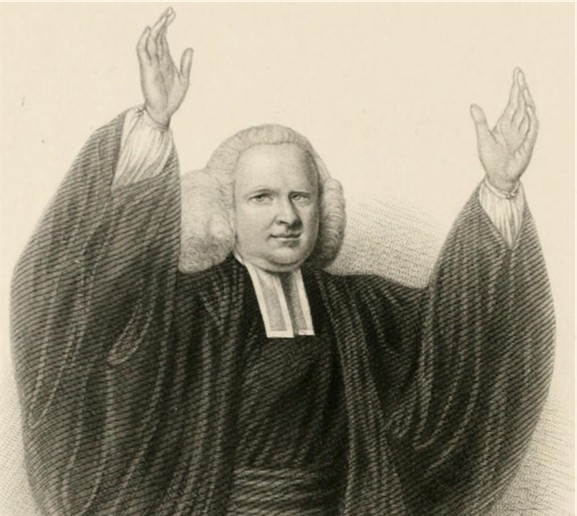
According to accounts drawn from his ministry, Whitefield came upon a group engaged in dancing and felt compelled to intervene. Rather than ignoring the scene, he seized the opportunity to address the crowd directly. With the same commanding presence he brought to his open-air sermons, he began to speak about the state of the soul, the reality of judgment, and the need for repentance. His voice and manner, already famous for their emotional power, quickly drew attention away from the music and movement of the dance.
The effect was striking. As Whitefield spoke, the mood of the gathering reportedly shifted. Laughter and lightheartedness gave way to seriousness, and some in attendance were visibly moved. In certain retellings of the event, individuals who had come for entertainment left in deep conviction, while others lingered to hear more of his message. Whether every detail can be verified or not, the story captures the essence of Whitefield’s approach: he viewed every setting as a potential pulpit and every audience as in need of the gospel.
This incident also illustrates the broader character of the First Great Awakening. Revival preachers often crossed conventional boundaries, taking their message beyond church walls into fields, streets, and public gatherings. They challenged not only theological assumptions but also social habits, calling people to reexamine how they lived their daily lives. In doing so, they sometimes created tension with established customs and authorities.
Whitefield’s interruption of a dance highlights the moral seriousness that marked his ministry. To modern readers, his actions may seem overly severe, reflecting a time when religious leaders took a stricter view of leisure activities. Yet within his historical context, such interventions were part of a larger effort to awaken spiritual concern in a society many believed had grown complacent.
At the same time, the story underscores Whitefield’s remarkable ability to connect with people in unexpected places. He did not confine his message to formal settings but carried it wherever he found an audience. This willingness to engage directly with everyday life contributed to his effectiveness as a preacher and to the widespread impact of his ministry.
In sum, the account of George Whitefield breaking up a dance serves as a vivid example of his zeal, his convictions, and his method. It reveals a preacher who believed deeply in the urgency of his message and who was prepared to speak it at any moment. Whether viewed as a bold act of moral courage or a reflection of the stricter sensibilities of his age, the episode remains a telling illustration of the spirit that fueled the Great Awakening and helped shape its enduring legacy.
♦ _____ ♦
From HorryCounty.org
On Jan. 1, 1740, George Whitefield, a fiery disciple of Methodists John and Charles Wesley, preached at a tavern near here. Observing patrons dancing, Whitefield exhorted them against that vice. Soon the dancers stopped and allowed Whitefield to baptize one of the children. After Whitefield had retired for the evening, the New Year’s spirit prevailed, and the dancing resumed.
_____
Image Source/Credit:
• Ortlund, Ray. “My Soul, as a Blank.” The Gospel Coalition, 6 Apr. 2016 (www.thegospelcoalition.org/blogs/ray-ortlund/my-soul-as-a-blank)
Related
Sorry, no records were found. Please adjust your search criteria and try again.
Sorry, unable to load the Maps API.