
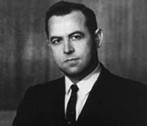
Jack Hyles (1926–2001) was one of the most prominent and controversial figures in twentieth-century American fundamentalist Christianity. As longtime pastor of the First Baptist Church of Hammond, Indiana, Hyles became known for building one of the largest independent Baptist congregations in the United States, as well as for his emphasis on evangelism, bus ministry, and aggressive church growth. His life and ministry left a lasting imprint on a segment of American evangelicalism, though his legacy remains deeply debated.
Born in Italy, Texas, Hyles grew up in modest circumstances and experienced a conversion to Christianity during his youth. He attended East Texas Baptist College, where he prepared for ministry. Early in his career, he pastored small churches in Texas, gradually gaining a reputation as a dynamic and determined preacher. His ability to connect with ordinary people and his strong emphasis on soul-winning became defining characteristics of his ministry.
In 1959, Hyles became pastor of First Baptist Church of Hammond. At the time, the congregation was relatively small, but under his leadership it experienced extraordinary growth. Through a combination of energetic preaching, extensive outreach programs, and a strong organizational structure, the church expanded rapidly, eventually claiming tens of thousands of members. It became a flagship institution within the independent Baptist movement.
One of Hyles’s most notable contributions was his promotion of the bus ministry. This program involved sending church-operated buses into surrounding communities to bring children and families to church services. At its height, the bus ministry of First Baptist Church of Hammond was one of the largest in the nation, bringing thousands of attendees each week. Hyles viewed this approach as a practical means of reaching those who might otherwise never attend church.
In addition to his pastoral work, Hyles founded Hyles-Anderson College in 1972. The college was established to train pastors, missionaries, and church workers in the principles he advocated. It became an influential institution within independent Baptist circles, sending graduates across the United States and abroad. Through the college, Hyles extended his influence far beyond his own congregation.
Hyles was also a prolific author and speaker. He wrote numerous books on topics such as evangelism, church growth, leadership, and personal Christian living. His speaking engagements at conferences and revival meetings drew large audiences, and his sermons were widely distributed through recordings and publications. His style was direct, energetic, and often forceful, reflecting his conviction that urgent action was needed to reach people with the Christian message.
However, Hyles’s ministry was not without controversy. Over the years, critics raised concerns about aspects of his leadership style, including what some described as authoritarian tendencies and a highly centralized structure of authority within the church and college. Additionally, serious allegations of misconduct—both personal and institutional—emerged, particularly in the later years of his ministry and after his death. These issues have led to ongoing debate about his legacy and the systems he helped establish.
Despite these controversies, Hyles’s impact on the independent Baptist movement is undeniable. He played a key role in shaping a model of church growth that emphasized numerical expansion, active outreach, and strong pastoral leadership. Many pastors and churches adopted elements of his approach, particularly the focus on bus ministry and organized soul-winning efforts.
Hyles’s legacy also reflects broader trends within American Christianity during the latter half of the twentieth century. His emphasis on large congregations and measurable results mirrored a wider interest in church growth strategies. At the same time, the controversies associated with his ministry have contributed to discussions about accountability, leadership, and the responsibilities of religious institutions.
For supporters, Hyles is remembered as a tireless evangelist and a builder of institutions that reached countless individuals. For critics, his legacy serves as a cautionary example of the potential dangers of unchecked authority and the importance of transparency and oversight. Both perspectives are part of the historical record and contribute to a fuller understanding of his life and influence.
In conclusion, Jack Hyles was a figure of considerable influence whose life and ministry left a complex and lasting mark on American religious life. His achievements in building a large and active church, training leaders, and promoting evangelism are significant, yet they are intertwined with serious questions about leadership and accountability. As a result, his legacy continues to be examined and debated, reflecting both the impact he had and the challenges associated with it.
_____
Image Source/Credit:
• Wikipedia contributors. File:Pastorjackhyles.jpg – Wikipedia (en.wikipedia.org/wiki/File:Pastorjackhyles.jpg)
Related
Sorry, no records were found. Please adjust your search criteria and try again.
Sorry, unable to load the Maps API.