The Life, Legacy, and Impact of William Jennings Bryan
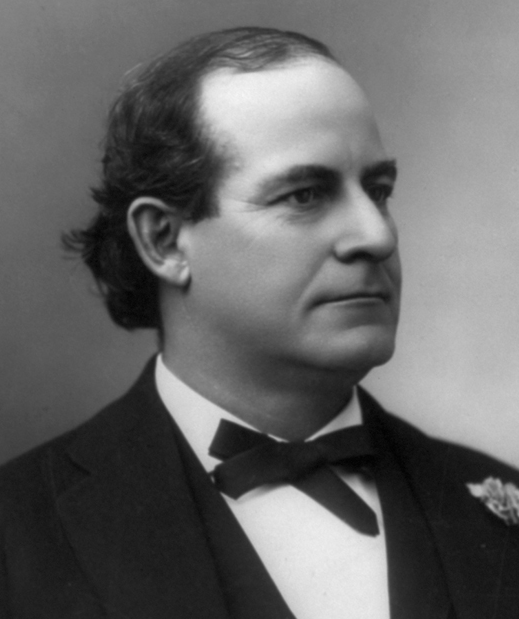
William Jennings Bryan (1860–1925) was one of the most influential American political figures and public speakers of the late nineteenth and early twentieth centuries. Known as “The Great Commoner,” Bryan rose from modest beginnings in Illinois to become a three-time presidential candidate, a leading voice in the Democratic Party, and a central figure in debates over economics, religion, and education in American life. His career reflected both the aspirations and tensions of a nation undergoing rapid industrial and cultural change.
Bryan was born in Salem, Illinois, into a devout and politically engaged family. His father was a judge and local politician, and Bryan was raised with a strong sense of civic duty and Protestant Christian faith. He attended Illinois College and later studied law, eventually establishing a legal practice in Nebraska. His natural talent for public speaking quickly became evident, and he soon entered politics, where his eloquence and moral conviction distinguished him from many contemporaries.
Bryan’s national breakthrough came during the 1896 Democratic National Convention, where he delivered his famous “Cross of Gold” speech. In this address, he defended the interests of farmers and laborers against what he viewed as the harmful effects of the gold standard. His powerful closing line—declaring that humanity should not be “crucified on a cross of gold”—electrified the audience and secured him the Democratic nomination for president. Though he ultimately lost the election to William McKinley, Bryan became a national political figure almost overnight.
He ran for president two more times, in 1900 and 1908, but was defeated on both occasions. Despite these losses, Bryan remained a dominant voice within the Democratic Party, advocating for progressive reforms such as income tax legislation, direct election of senators, and greater regulation of corporations. His populist message emphasized the dignity of ordinary citizens and the need to protect them from concentrated economic power.
Beyond economics, Bryan was deeply committed to moral and religious issues. A devout Presbyterian, he believed that public life should reflect Christian ethics. This conviction later placed him at the center of one of the most famous legal and cultural confrontations in American history: the Scopes Trial.
The Scopes Trial, formally known as The State of Tennessee v. John Thomas Scopes, took place in Dayton, Tennessee, in 1925. It concerned a law that prohibited the teaching of evolution in public schools. Bryan joined the prosecution team, arguing that the law protected both biblical truth and moral order. Opposing him was the celebrated defense attorney Clarence Darrow, who challenged the compatibility of the Bible with modern scientific theory.
The trial became a national spectacle, symbolizing the cultural divide between traditional religious values and modern scientific thought. Bryan’s testimony and Darrow’s cross-examination drew intense public attention. Although the prosecution secured a legal victory, Bryan’s performance was widely criticized in the press, and he died only days after the trial concluded. The event marked a turning point in how Americans viewed the relationship between religion and education.
Despite the controversies surrounding the Scopes Trial, Bryan’s broader legacy is complex and significant. In politics, he helped transform the Democratic Party into a vehicle for progressive reform during the early twentieth century. His advocacy for workers, farmers, and ordinary citizens influenced later reforms associated with the Progressive Era and the New Deal.
In addition to his political work, Bryan served as U.S. Secretary of State under President Woodrow Wilson from 1913 to 1915. In this role, he promoted peaceful resolution of international disputes and supported arbitration treaties as alternatives to war. Though he resigned in disagreement over U.S. policy toward World War I, his commitment to peace reflected his broader moral vision for public life.
Bryan was also a prolific lecturer and writer, traveling widely to speak on political and religious topics. His ability to connect with ordinary audiences made him one of the most recognized public figures of his time. He consistently emphasized themes of justice, faith, and equality, seeking to align national policy with ethical principles.
His impact extends beyond politics into American cultural history. Bryan became a symbol of populism, representing both its strengths and limitations. While he championed democratic participation and economic fairness, his opposition to evolutionary theory placed him on the conservative side of a major scientific and educational debate. This dual legacy continues to shape historical interpretations of his life.
William Jennings Bryan remains a figure of enduring significance in American history. His career illustrates the power of oratory in public life, the influence of moral conviction in politics, and the challenges of navigating a rapidly changing society. Whether viewed as a champion of the common man or a defender of traditional values in a modernizing world, his legacy continues to invite reflection on the role of faith, politics, and education in shaping national identity.
_____
Image Source/Credit:
• James E. Purdy, Public domain, via Wikimedia Commons
Related
Sorry, no records were found. Please adjust your search criteria and try again.
Sorry, unable to load the Maps API.