
The story of the Wabash Campground and the life of Robert Sayers Sheffey are closely intertwined, representing a vivid chapter in the religious and cultural history of the Appalachian region. Together, they reflect a time when faith, community, and tradition shaped everyday life in the mountains of southwest Virginia.
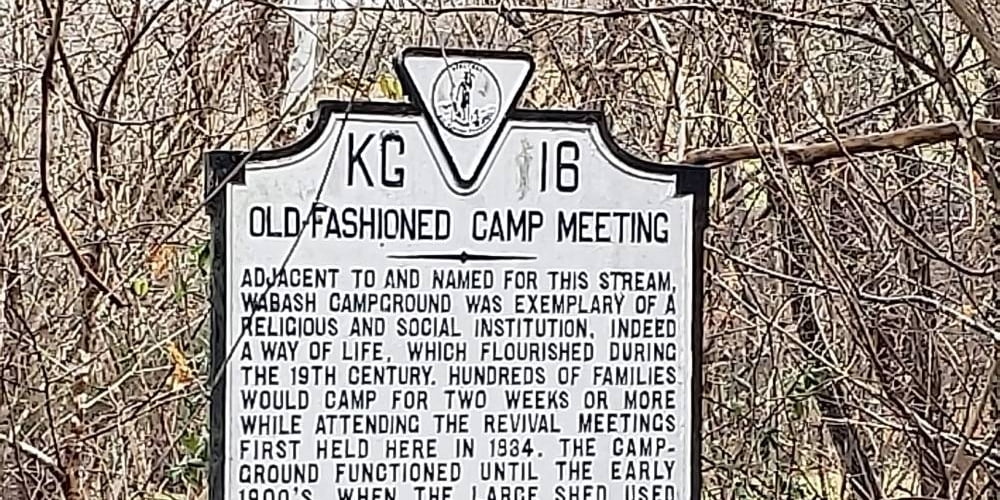
The Wabash Campground, located in Giles County, Virginia, emerged in the late nineteenth century as part of the broader camp meeting movement that swept across rural America. Established around 1884, it became a gathering place where families would travel from miles around, often staying for two weeks or more in tents or simple shelters. These meetings were not only religious revivals but also social events, offering fellowship, music, and a sense of shared purpose. At a time when isolated mountain communities had limited access to churches and clergy, campgrounds like Wabash served as vital centers of spiritual life.
Central to the life of the Wabash Campground was Robert Sayers Sheffey, a Methodist circuit-riding preacher known throughout the region for his deep faith and unconventional personality. Born in 1820, Sheffey traveled extensively across the Appalachian Mountains, ministering to scattered communities in Virginia, West Virginia, and Tennessee. Unlike more polished preachers of his era, Sheffey was often described as eccentric, yet he possessed a remarkable ability to connect with ordinary people. His strength lay not in formal sermons but in his passionate prayers and personal devotion, which left a lasting impression on those who heard him.
Sheffey became a regular and influential presence at the Wabash Camp Meetings. According to tradition, he would sometimes disappear into the mountains for days at a time, praying in solitude before returning to the campground filled with spiritual fervor. His arrival often energized the gatherings, inspiring renewed enthusiasm among attendees. Stories of his compassion and generosity—such as giving away his own clothing or helping strangers in need—further enhanced his reputation as a man of deep conviction and kindness.
The Wabash Campground itself symbolized more than a place of worship; it represented a way of life rooted in faith and community. However, like many such campgrounds, its prominence declined in the early twentieth century. A devastating fire destroyed the main meeting structure and many of the family shelters, bringing an end to its original era.
Despite this loss, the legacy of both the campground and Sheffey endured. In later years, the Robert Sheffey Memorial Camp Meeting was established as a continuation of the Wabash tradition. Held near the original site, it preserves the spirit of those earlier gatherings, drawing people together for worship, music, and fellowship.
Today, the story of Wabash Campground and Robert Sheffey stands as a reminder of a simpler time when faith played a central role in community life. Through enduring traditions and local memory, their influence continues to echo across the Appalachian landscape.
_____
Image Source/Credit:
• Old-Fashioned Camp Meeting Historical Marker. 3 Nov. 2024 (www.hmdb.org/m.asp?m=41429)
Related
Sorry, no records were found. Please adjust your search criteria and try again.
Sorry, unable to load the Maps API.