Home of the composer Joseph Philbrick Webster, who wrote the music for the song
“In the Sweet By and By”
There’s a land that is fairer than day,
And by faith we can see it afar;
For the Father waits over the way
To prepare us a dwelling place there.
Refrain:
In the sweet by and by,
We shall meet on that beautiful shore;
In the sweet by and by,
We shall meet on that beautiful shore.
We shall sing on that beautiful shore
The melodious songs of the blessed;
And our spirits shall sorrow no more,
Not a sigh for the blessing of rest.
To our bountiful Father above,
We will offer our tribute of praise
For the glorious gift of His love
And the blessings that hallow our days.
_____
Hymn History: In the Sweet By and By
Authors: Sanford Fillmore Bennett and Joseph Philbrick Webster
“His (Bennett’s) poetry began appearing in [Illinois] newspapers and hymn collections; later he studied medicine while owning a drugstore in Wisconsin.”
(Hymntime.com)
The Origin of the Hymn “In the Sweet By and By”
Among the most enduring and beloved hymns of the 19th century is “In the Sweet By and By.” Its gentle melody and comforting lyrics have offered solace, hope, and encouragement to countless believers, painting a vivid picture of heaven as a place of reunion and joy. This hymn, which has transcended denominational boundaries, is both a product of its era and a timeless reflection of Christian longing for eternal life.
The Authors: Sanford F. Bennett and Joseph P. Webster
“In the Sweet By and By” was created through the collaboration of Sanford Fillmore Bennett (1838–1915) and Joseph Philbrick Webster (1819–1875). Bennett, a native of New York, was a prolific lyricist and poet, while Webster, born in Massachusetts, was an accomplished composer and musician. Both men were deeply involved in the revivalist movement of the 19th century, which emphasized heartfelt, personal expressions of faith and the promise of heaven.
Sanford Bennett wrote the lyrics around 1868, inspired by a desire to comfort those mourning loved ones or facing life’s trials. The text speaks of a future reunion with friends and family in the presence of Christ, a theme that resonated deeply with the post-Civil War American public, who had endured immense loss and suffering. Bennett’s words emphasize hope, encouragement, and the assurance of God’s promises:
“In the sweet by and by, we shall meet on that beautiful shore;
In the sweet by and by, we shall meet on that beautiful shore.”
Joseph P. Webster composed the music shortly afterward, providing a melody that perfectly complemented the lyrics’ gentle optimism. The tune’s soothing rhythm and simple, singable structure made it ideal for congregational singing and family worship. Webster, already well-known for writing the popular Civil War song “The Sweet Hour of Prayer,” brought the same skill and emotional resonance to this composition.
Historical Context and Inspiration
The hymn emerged during a period of both spiritual revival and social upheaval. The American Civil War (1861–1865) had left the nation grieving, with thousands of families mourning lost loved ones. Hymns that addressed death, hope, and the assurance of heaven provided comfort and a sense of peace amid grief. “In the Sweet By and By” became particularly meaningful in this context, offering a vision of reunion in heaven that transcended earthly sorrow.
Bennett’s lyrics were inspired by the Christian hope of eternal life and the desire to see friends and loved ones again. The imagery of a “beautiful shore” evokes a serene and joyful heaven, contrasting with the hardships of mortal life. By focusing on reunion and reward rather than guilt or judgment, the hymn provided solace to both the grieving and the faithful seeking reassurance.
Musical Characteristics
Joseph P. Webster’s melody for “In the Sweet By and By” is a key reason for its enduring popularity. Written in a lilting 6/8 time signature, the tune has a gentle, flowing quality that mirrors the hymn’s message of hope and serenity. Its repetitive structure makes it easy to sing and memorize, which contributed to its widespread adoption in churches, revival meetings, and homes.
The combination of Bennett’s comforting lyrics and Webster’s tender melody creates an emotional resonance that has made the hymn a favorite at funerals, memorial services, and religious gatherings where hope and reassurance are needed. Its musical simplicity ensures that it remains accessible to all congregants, regardless of musical training.
Publication and Early Reception
“In the Sweet By and By” was first published in 1868 in the hymnal Songs of Devotion, edited by William Bradbury. Its immediate popularity was fueled by the hymn’s relatable themes and singable melody. It quickly spread beyond Methodist and Presbyterian circles, appearing in Baptist, Congregationalist, and other Protestant hymnals.
By the late 19th century, the hymn had become a staple of American Christian worship. It was commonly sung in revival meetings, Sunday schools, and domestic devotional settings. Its emphasis on comfort, reunion, and heavenly reward made it appealing across age groups and denominational lines.
Enduring Legacy
More than a century and a half later, “In the Sweet By and By” remains a cherished hymn. Its imagery of heaven, combined with the promise of reunion and eternal joy, continues to resonate with believers worldwide. It has been recorded by countless gospel artists, included in modern hymnals, and even adapted in contemporary worship settings while retaining its original charm.
The hymn’s enduring appeal lies in its simplicity and universality. It offers assurance in times of loss, hope in times of despair, and a vision of eternal life that has comforted generations of Christians. As Bennett and Webster intended, it remains a hymn of faith, hope, and divine promise—a gentle reminder that beyond life’s trials lies a “beautiful shore” where God’s people shall meet in peace.
“In the Sweet By and By” stands as a testament to the power of music and poetry to bring comfort, sustain faith, and inspire hope. Its origin in the post-Civil War era, its creation by two devoted Christian artists, and its enduring relevance make it one of the most treasured hymns in the history of Christian worship.
_____
Mr. Webster, like many musicians, was of an exceedingly nervous and sensitive nature, and subject to periods of depression, in which he looked upon the dark side of all things in life. I had learned his peculiarities so well that on meeting him I could tell at a glance if he was melancholy, and had found that I could rouse him up by giving him a new song to work on.
He came into my place of business [in Elkhorn, Wisconsin], walked down to the stove, and turned his back on me without speaking. I was at my desk. Turning to him, I said, “Webster, what is the matter now?” “It’s no matter,” he replied, “it will be all right by and by.” The idea of the hymn came me like a flash of sunlight, and I replied, “The Sweet By and By! Why would not that make a good hymn?” “Maybe it would,” he said indifferently. Turning to my desk I penned the words of the hymn as fast as I could write. I handed the words to Webster. As he read his eyes kindled, and stepping to the desk he began writing the notes. Taking his violin, he played the melody and then jotted down the notes of the chorus. It was not over thirty minutes from the time I took my pen to write the words before two friends with Webster and myself were singing the hymn.—Sanford Fillmore Bennett (1836-1898)
Ira Sankey, My Life and the Story of the Gospel Hymns, pp. 199-200
The Racine Journal did a story on the composition of the hymn that is featured in the Wisconsin Historical Society.
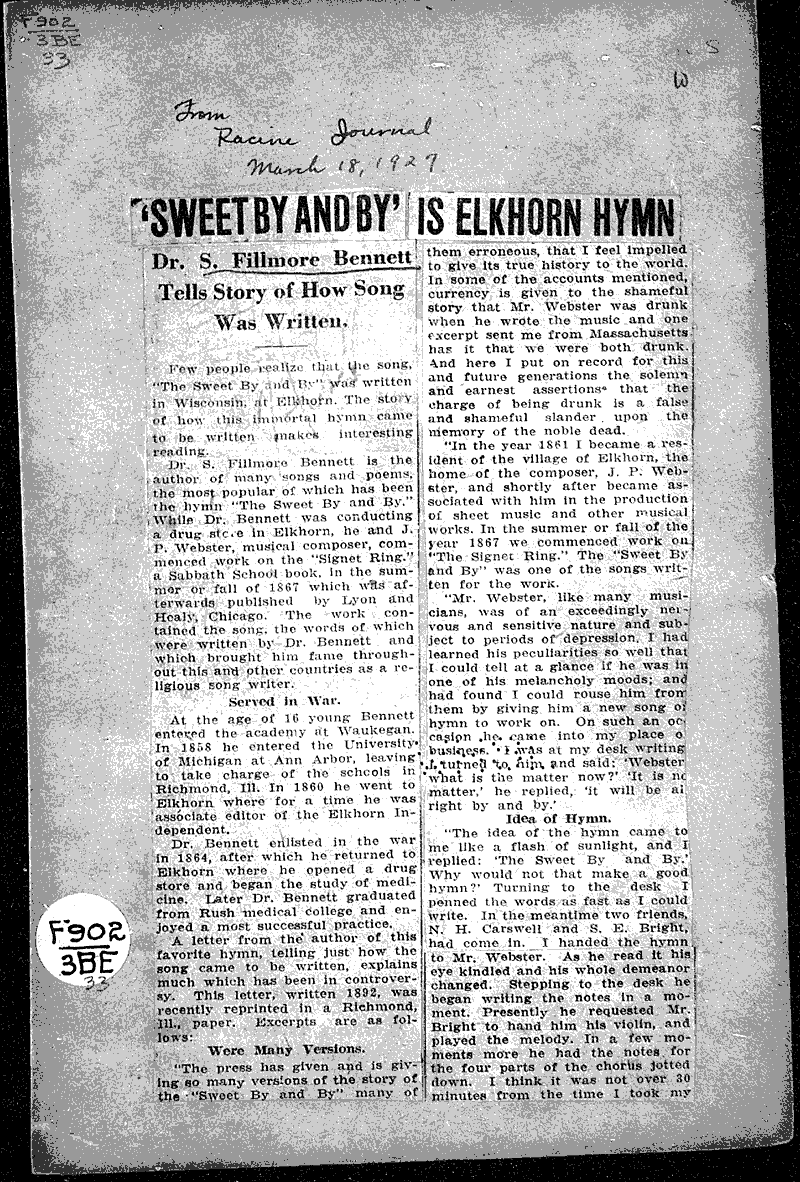
Image Credit: “‘“Sweet by and by”’ Is Elkhorn Hymn | Newspaper Article/Clipping | Wisconsin Historical Society.” Wisconsin Historical Society, 1 Jan. 2012, www.wisconsinhistory.org/Records/Newspaper/BA370.
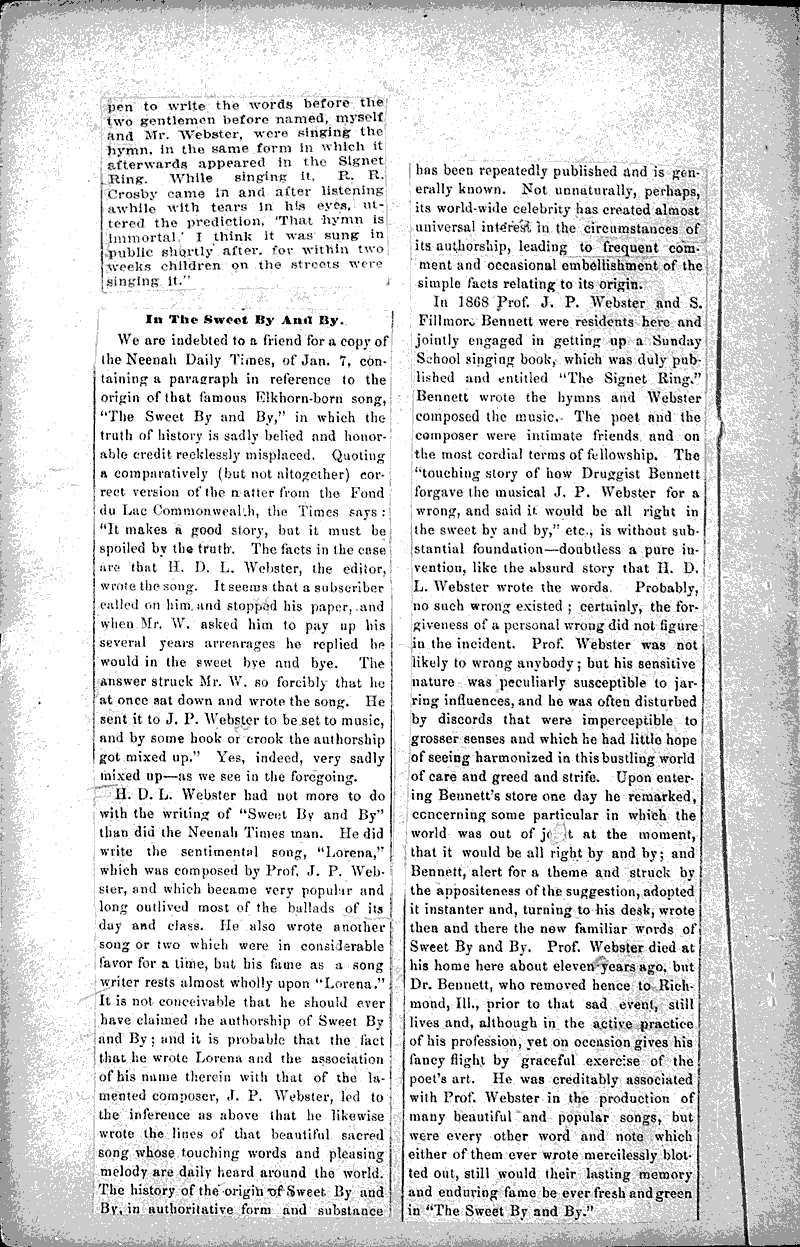
Image Credit: “‘“Sweet by and by”’ Is Elkhorn Hymn | Newspaper Article/Clipping | Wisconsin Historical Society.” Wisconsin Historical Society, 1 Jan. 2012, www.wisconsinhistory.org/Records/Newspaper/BA370.
_____
Image Source/Credit (in order):
- Matt. “Webster House Museum Historic House Museums in America.” Historic House Museums in America, 30 Dec. 2022, www.oldhomefolks.com/directory/webster-house-museum.
