Hymn History: Have I Done My Best for Jesus?
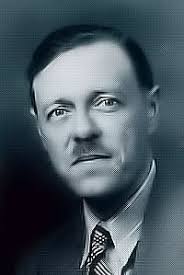
Author: E. Edwin Young
“I wonder, have I done my best for Jesus,
Who died upon the cruel tree?”
(E. Edwin Young)
The Origin of the Hymn “Have I Done My Best for Jesus?”
The hymn “Have I Done My Best for Jesus?” is attributed to E. Edwin Young, a gospel songwriter associated with the revival and missionary movements of the late nineteenth and early twentieth centuries. While not as widely documented as some of his contemporaries, his hymn reflects the spirit and concerns of that era with clarity and conviction.
“Have I Done My Best for Jesus?” belongs to the gospel song tradition that flourished in America during a time of vigorous evangelistic outreach. Camp meetings, revival services, Bible conferences, and missionary rallies were common features of church life. Hymns were expected to be singable, memorable, and direct. Above all, they were meant to call for a response. Young’s hymn does exactly that.
The central theme is personal accountability in light of Christ’s sacrifice. The opening lines set the tone:
Have I done my best for Jesus,
Who died upon the cruel tree?
To think of His great sacrifice at Calv’ry,
I know my Lord expects the best from me.
The hymn begins not with celebration, but with reflection. It places the cross at the forefront—“His great sacrifice at Calv’ry”—and then turns the focus inward. The question is not about others, nor about general faithfulness, but about one’s own devotion and service. This inward examination was characteristic of revival-era hymnody, which often aimed to stir the conscience and prompt renewed consecration.
The America in which Young wrote was shaped by strong missionary zeal. Protestant churches were sending workers overseas in growing numbers while also addressing needs in expanding cities at home. Congregations were frequently urged to consider how they were investing their time, resources, and abilities. A hymn that asked, “Have I done my best?” would have resonated deeply in such a setting.
Musically, the hymn has commonly been paired with a tune by Charles H. Gabriel, one of the most prolific gospel composers of his day. Gabriel’s melodies were designed for congregational singing—clear, steady, and emotionally expressive without being overly ornate. The musical setting supports the reflective mood of the text and reinforces its central question through repetition in the refrain.
Repetition plays an important role in the hymn’s structure. By returning again and again to the same question, the song encourages thoughtful meditation. In revival services, this repetition allowed the message to settle into the heart. As the congregation sang, individuals could quietly measure their lives against the standard set before them.
Theologically, the hymn is straightforward. It rests on two foundational truths long emphasized in evangelical Christianity: Christ gave Himself fully for sinners, and believers are called to give themselves fully in return. The appeal is not grounded in fear, but in gratitude. The cross is the measure. Because Christ withheld nothing, the believer is urged to withhold nothing in service.
Unlike some hymns that focus on corporate worship or doctrinal exposition, this text is intensely personal. The repeated use of “I” underscores individual responsibility. Faith is not merely inherited or assumed; it must be lived out. The hymn invites each singer to pause and consider whether his or her daily life reflects wholehearted devotion.
Though musical styles have shifted over time, “Have I Done My Best for Jesus?” continues to be sung in congregations that value traditional gospel hymns. Its language remains plain and accessible. Its message remains timely. Every generation must wrestle with the same question of stewardship and faithfulness.
What gives the hymn enduring strength is its balance. It does not dwell in self-condemnation, nor does it offer shallow comfort. Instead, it calls for honest evaluation in light of Christ’s sacrifice. It assumes that believers desire to serve well and simply need to be reminded of the standard.
In a world often marked by distraction and divided loyalties, the hymn’s steady question still carries weight. Have we given our best—not for applause, not for recognition, but for the One who gave Himself for us? By framing that question in simple, memorable language, E. Edwin Young contributed a hymn that continues to prompt thoughtful reflection and renewed dedication.
_____
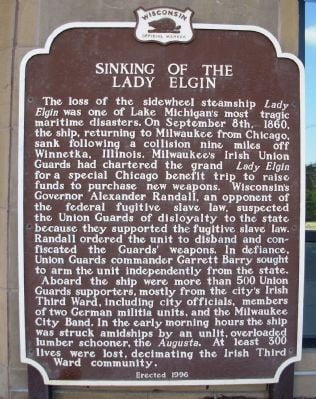
Governor Alexander Randall was afraid Abraham Lincoln might lose the 1860 presidential election. In that case, Wisconsin would secede from the Union to protest the pro-slavery administration.
The Irish Union Guard opposed secession, and as a result the governor confiscated their weapons. To raise money for new weapons, they chartered the PS Lady Elgin on September 6, 1860, for a trip to Chicago.
Early on September 8th, as they returned to Milwaukee, the schooner Augusta rammed the Lady Elgin. Two life boats with just 18 passengers made it safely to shore.
It was the greatest tragedy ever on the Great Lakes. Over 300 souls perished, many just yards from shore.
Edward Spencer, a student at Garrett Biblical Institute, tied a rope around himself and for six hours swam out to rescue 18 of the passengers. Exhausted, he collapsed, and when he came to, he turned to his brother and said, “Will, did I do my full duty — did I do my best?”
A few years later, Ensign Edwin Young, future Dean of Music at a College in Texas, was thinking on Edward Spencer’s words, and wrote these words.
I wonder have I done my best for Jesus,
Who died upon the cruel tree
To think of His great sacrifice at Calvary!
I know my Lord expects the best from me.
Refrain:
How many are the lost that I have lifted?
How many are the chained I’ve helped to free?
I wonder, have I done my best for Jesus,
When He has done so much for me?
_____
Image Source/Credit (in order):
• Ensign Edwin Young (www.hymntime.com/tch/bio/y/o/u/n/young_ee.htm)
• Dori, CC BY-SA 3.0 US <https://creativecommons.org/licenses/by-sa/3.0/us/deed.en>, via Wikimedia Commons
Related
Sorry, no records were found. Please adjust your search criteria and try again.
Sorry, unable to load the Maps API.