Favorite
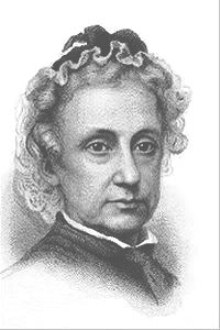
The Big House — Love’s Legacy by Liz Schafer Elizabeth Payson was an accomplished and industrious young woman who began a writing career at the age of 16. George Lewis Prentiss was the son of a prosperous shipmaster who became known as a forceful messenger of God’s Word. The two married in 1845, moving from their native Maine to Read more...
Favorite
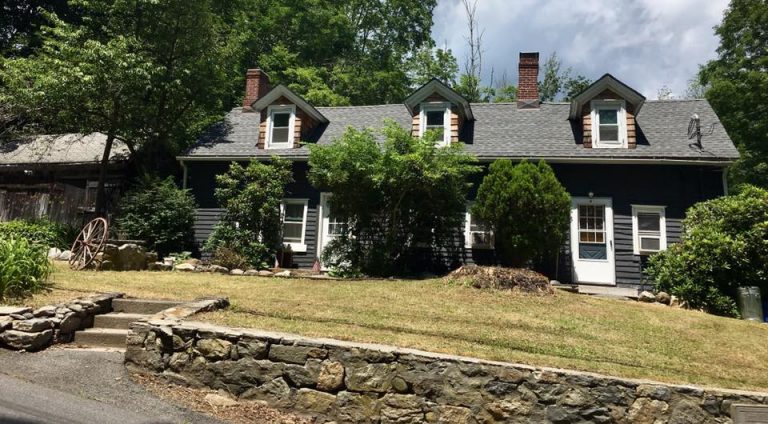
Frances Jane “Fanny” Crosby “Fanny Crosby was not held back at all by her blindness. And probably the words of her poetry and hymns helped more people to see and know and experience Jesus as anybody with two working eyes … That was her passion.” (Rev. Alfred T. Day) The Life and Legacy of Fanny Crosby Few figures in Read more...
Favorite
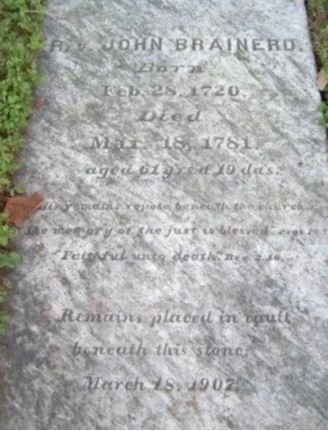
John Brainerd “His humility, his self-denial, his perseverance and his flaming zeal for God, are exemplary in deed.” (Thomas Coke) The Life and Legacy of John Brainerd John Brainerd, often remembered as the steadfast younger brother of the famed missionary David Brainerd, carved out his own quiet but durable place in the story of early American missions. While history Read more...
Favorite
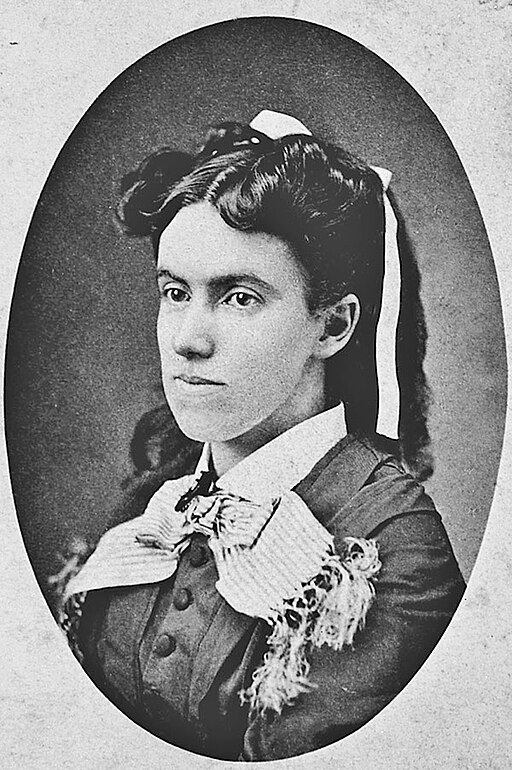
Lottie Moon “I have no doubt … that Miss Lottie would be both amazed and embarrassed at all the fuss that is made about her … Hers was not a perfect life … It was, however, a powerful life … lived for King Jesus.” (Daniel Akin) The Life and Legacy of Lottie Moon Charlotte Digges “Lottie” Moon, born December 12, Read more...
Favorite
The Voice of the Martyrs: A History of Advocacy, Sacrifice, and Global Witness The Voice of the Martyrs (VOM) is an enduring Christian ministry dedicated to defending, encouraging, and supporting persecuted believers around the world. Founded in 1967 by Pastor Richard Wurmbrand, who himself spent fourteen years in Communist Romanian prisons, VOM has grown into a global fellowship of offices Read more...
Favorite
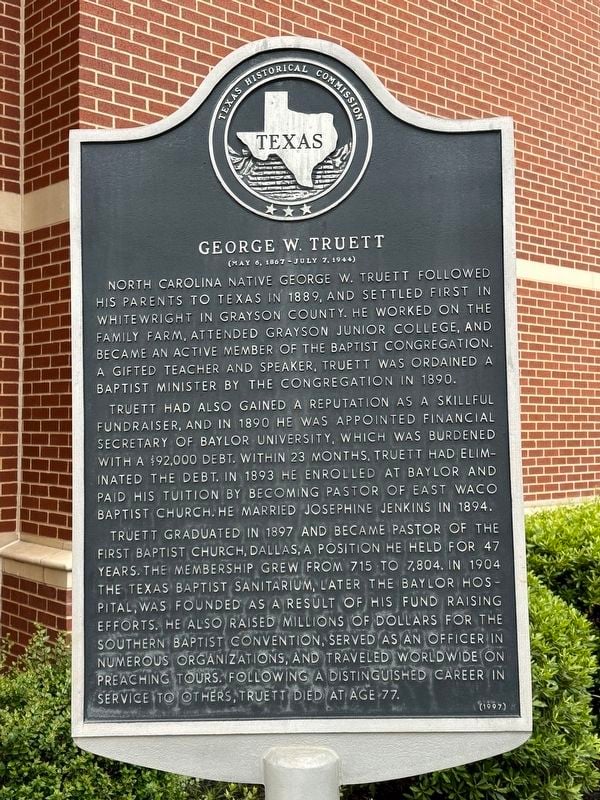
Inscription North Carolina native George W. Truett followed his parents to Texas in 1889, and settled first in Whitewright in Grayson county. He worked on the family farm, attended Grayson Junior College, and became an active member of the Baptist Congregation. A gifted teacher and speaker, Truett was ordained a Baptist minister by the congregation in 1890. Truett had also Read more...
Favorite
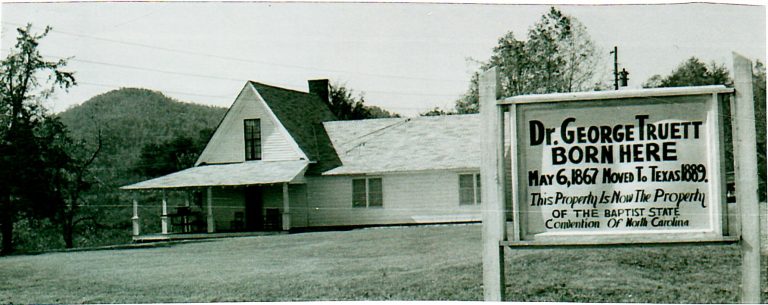
North Carolina Highway Historical Markers Q-37 GEORGE W. TRUETT Pastor First Baptist Church, Dallas, Texas, 1897-1944, president of Baptist World Alliance. His birthplace stands one mile northwest. US 64 southwest of Hayesville. 1950 _____ The Birthplace of George Washington Truett marks the humble beginnings of one of the most influential Baptist leaders in American history. George Washington Truett was Read more...
Favorite
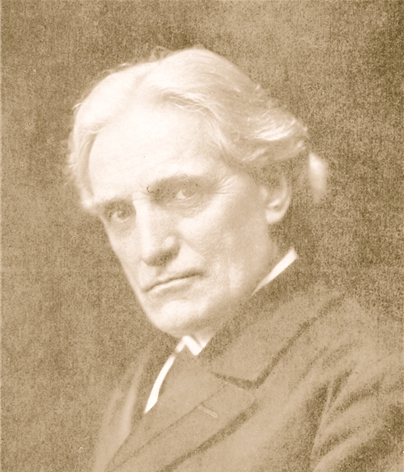
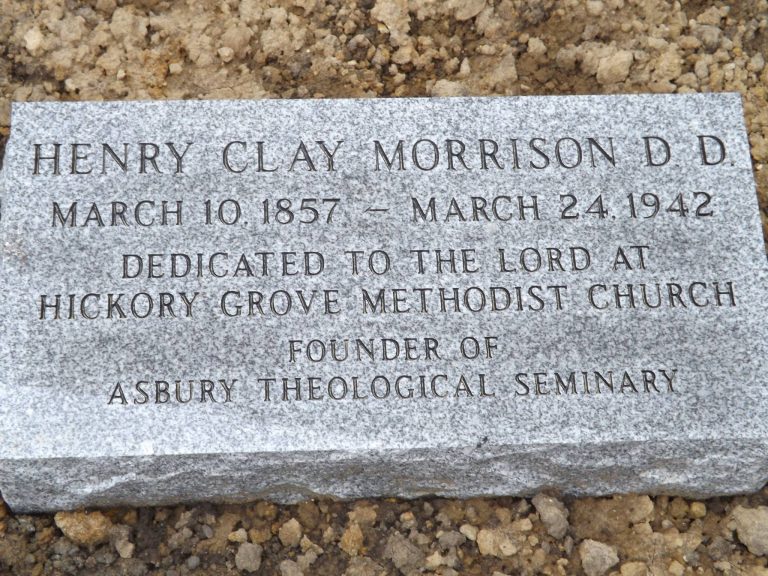
Henry Clay Morrison (1857–1942) was a prominent Methodist preacher, evangelist, educator, and editor whose influence helped shape the holiness movement in the United States during the late nineteenth and early twentieth centuries. Known for his powerful preaching and strong commitment to evangelical Methodism, Morrison spent more than half a century proclaiming the gospel and promoting the message of Christian holiness. Read more...
Favorite
From< Morrison Park Camp Meeting Trimble native, Asbury Seminary founder H.C. Morrison subject of upcoming local events By HILDA PARRISH The Trimble Banner Trimble County native, Dr. Henry Clay Morrison, was born March 10, 1857 and died March 24, 1942. His father, James Morrison married a widow, Emily Durham English of Danville, and they moved to Westport with her daughter, also named Emily. They Read more...
Favorite
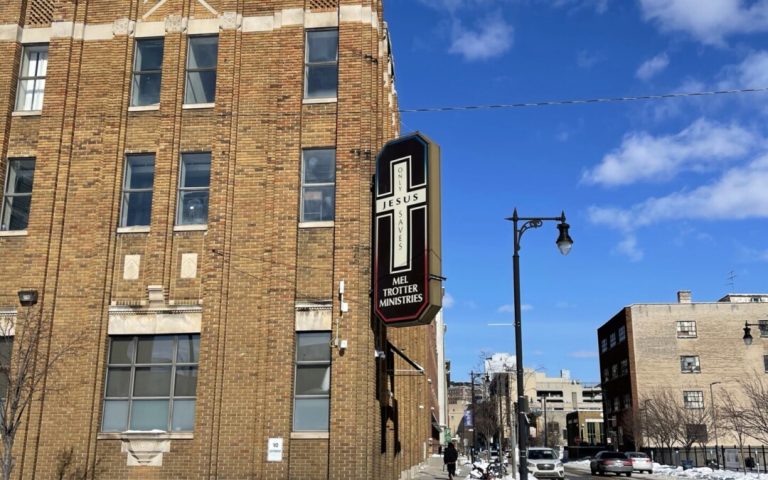
Mel Trotter Ministries is a Christian rescue mission located in Grand Rapids that serves individuals experiencing homelessness, hunger, and addiction. Founded in 1900, the ministry has grown from a small rescue mission into one of the largest faith-based outreach organizations in West Michigan. The ministry traces its origins to the work of Melvin E. Trotter, a former alcoholic whose life Read more...
Favorite
The Biederwolf Evangelical Tabernacle emerged during one of William Edward Biederwolf’s revival campaigns in Ironton, Ohio, and stands as a reminder of how communities once rallied around large evangelistic meetings. Constructed quickly and with the voluntary labor of local citizens, the tabernacle was built to accommodate the thousands who gathered to hear Biederwolf’s stirring preaching. Its simple wooden structure reflected Read more...
Favorite
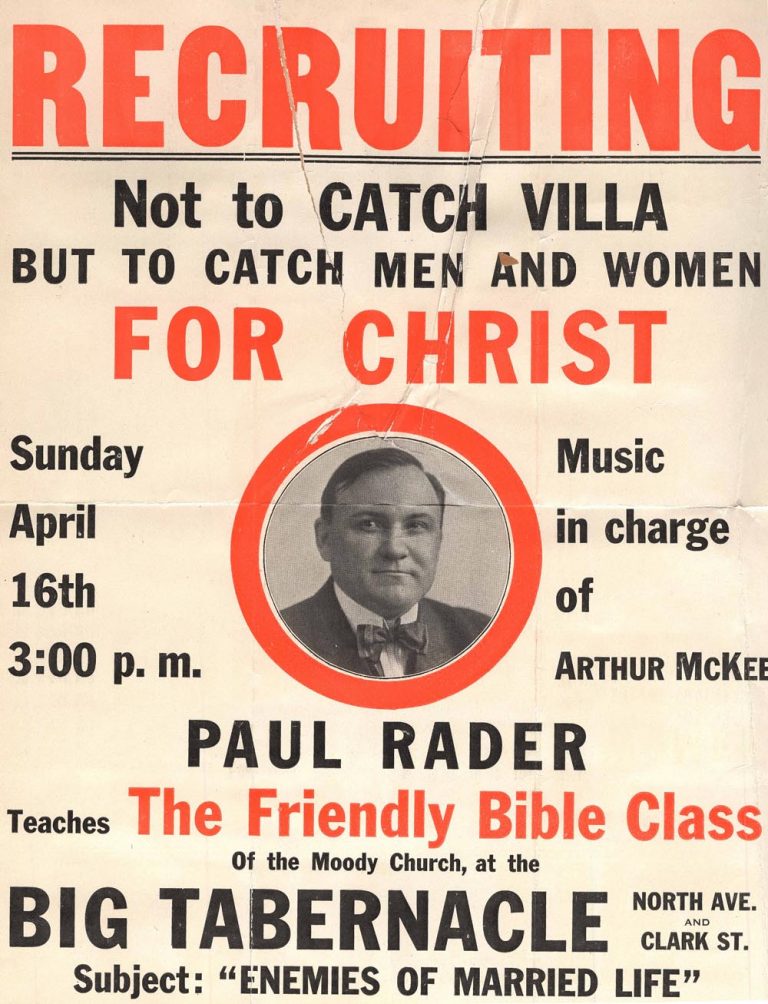
The Chicago Gospel Tabernacle was an evangelical church founded in 1922 by Paul Rader. It was a large, influential center of Christian ministry known for its innovative broadcasting, large evangelistic campaigns, and extensive missionary support during the Jazz Age. The original building, located at Clark, Barry & Halsted, was a temporary structure that became permanent and eventually disbanded in 1979. Today, there Read more...
Favorite
LostNewEngland Despite his influence later in life, Moody came from a humble background. He was born here in this house on February 5, 1837, and was the sixth child of Edwin and Betsey Moody. The house itself was built sometime before 1827 by Simeon Moody, a cousin and brother-in-law of Edwin, and was purchased by Edwin in 1828, the same Read more...
Favorite
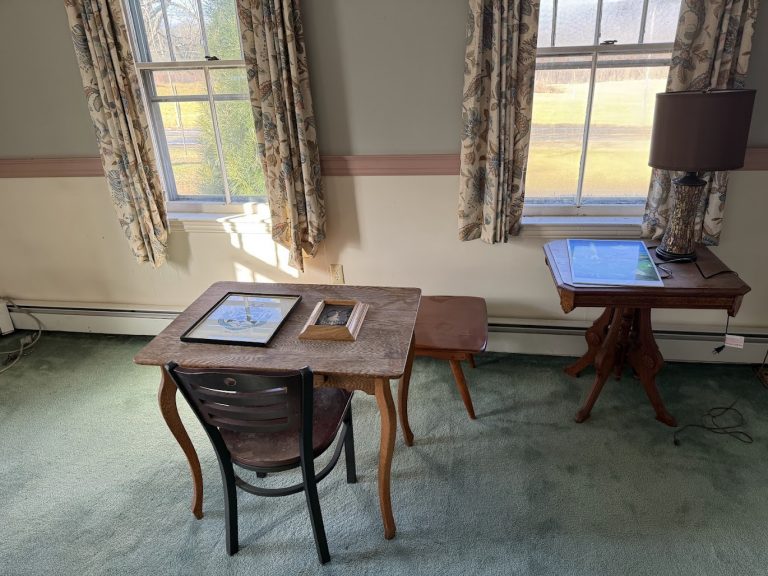
Our Christian Heritage goes to Northfield, Massachusetts to D.L. Moody’s home. Dr. James Spencer of the Moody Center tells us who was D.L. Moody. From Wikipedia: He preached his last sermon on November 16, 1899, in Kansas City, Missouri. Becoming ill, he returned home by train to Northfield. During the preceding several months, friends had observed he had added some Read more...
Favorite
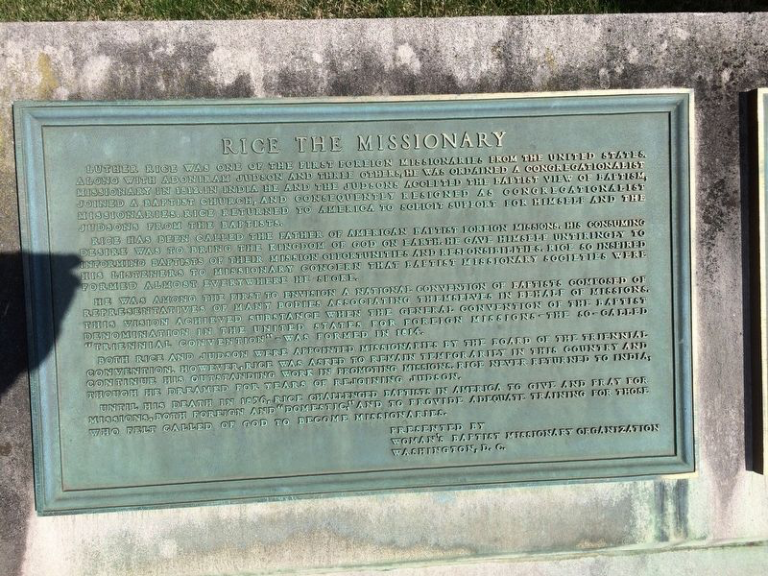
This plaque is located at Luther Rice Memorial Baptist Church, an American Baptist congregation named in honor of Luther Rice. From HMDB: Luther Rice was one of the first foreign missionaries from the United States. Along with Adoniram Judson and three others, he was ordained a Congregationalist missionary in 1812. In India he and the Judsons accepted the Baptist view Read more...
Favorite
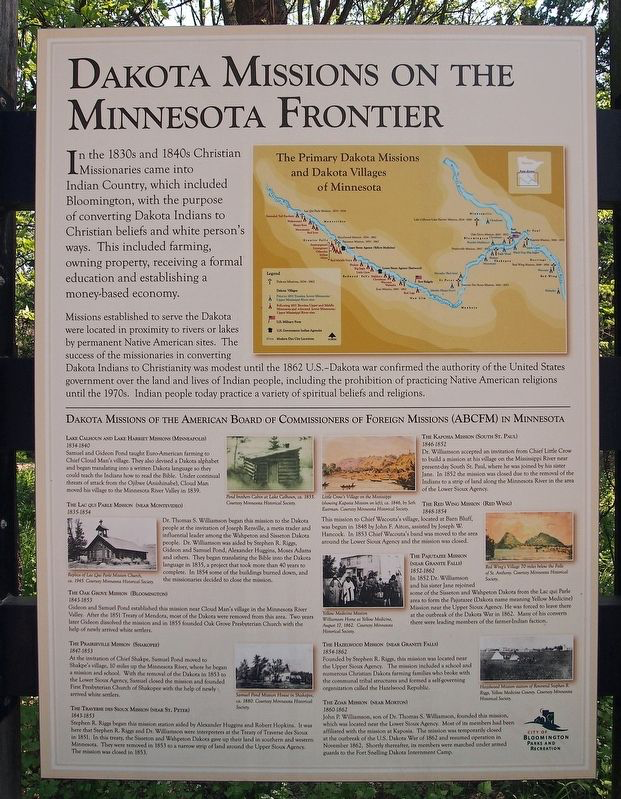
In the 1830s and 1840s Christian Missionaries came into Indian Country, which included Bloomington, with the purpose of converting Dakota Indians to Christian beliefs and white person’s ways. This included farming, owning property, receiving a formal education and establishing a money-based economy. Missions established to serve the Dakota were located in proximity to rivers or lakes by permanent Native American Read more...
Favorite
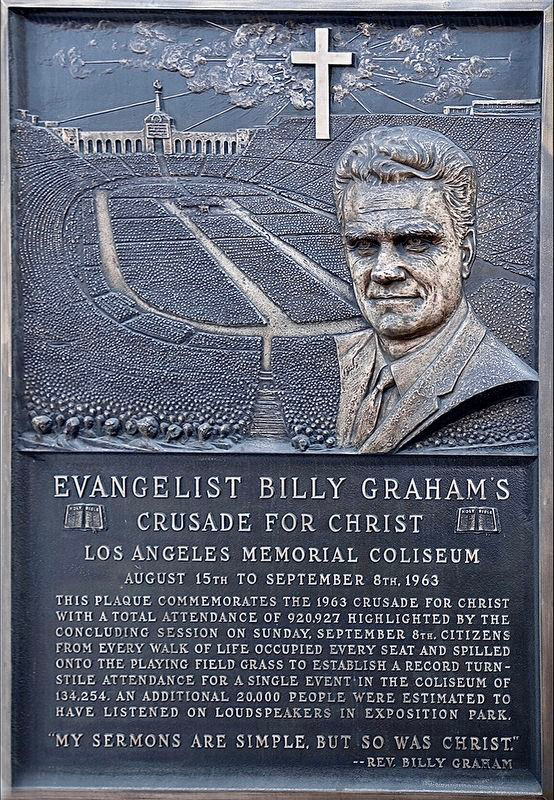
This plaque commemorates the 1963 Crusade for Christ with a total attendance of 920,927 highlighted by the concluding session on Sunday, September 8th. Citizens from every walk of life occupied every seat and spilled onto the playing field grass to establish a record turnstile attendance for a single event in the Coliseum of 134,254. An additional 20,000 people were estimated Read more...
Favorite
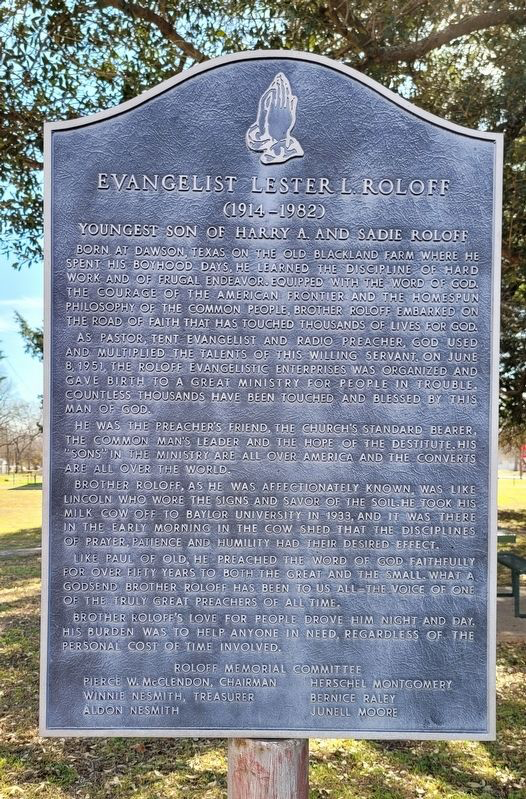
Youngest son of Harry A. and Sadie Roloff born at Dawson, Texas on the old Blackland Farm where he spent his boyhood days, he learned the discipline of hard work and of frugal endeavor. Equipped with the word of God. The courage of the American frontier and the homespun philosophy of the common people, Brother Roloff embarked on the road Read more...
Favorite
Can’t confirm this is THE tavern, but this tavern dates to 1779 and is the oldest surviving building in Abingdon. “In January of [1839] young Sheffey and a group of his drinking buddies, left an Abingdon tavern to go to a small revival meeting being held on an upper floor in Grenway’s Storehouse along Main Street, with the intention of Read more...
Favorite
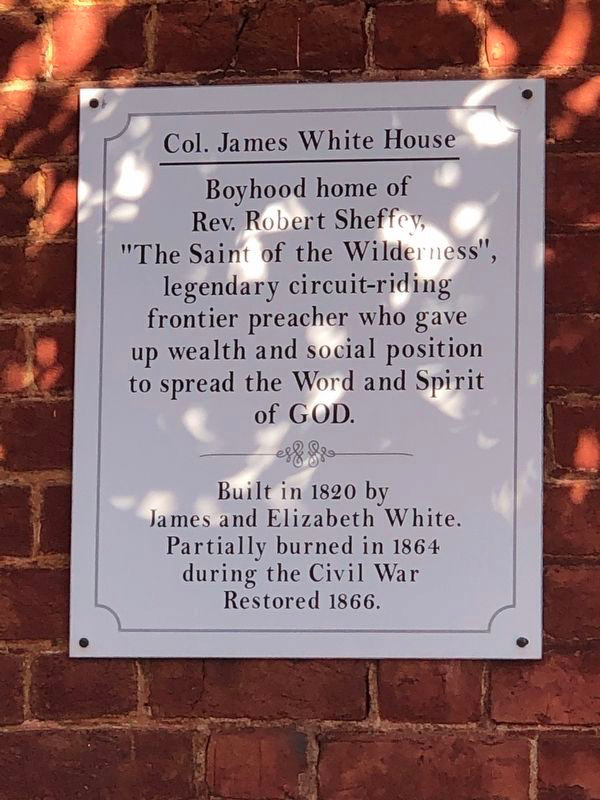
Boyhood home of Rev. Robert Sheffey, “The Saint of the Wilderness”, legendary circuit-riding frontier preacher who gave up wealth and social position to spread the Word and Spirit of God. Built in 1820 by James and Elizabeth White. Partially burned in 1864 during the Civil War. Restored 1866. ♦ _____ ♦ The story of the Colonel James White House Read more...