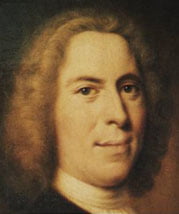
Nikolaus Ludwig von Zinzendorf (1700–1760) stands among the most influential Christian leaders of the eighteenth century, a man whose life blended aristocratic responsibility, deep personal piety, and an enduring passion for missionary work. Known formally as Reichsgraf (Imperial Count) von Zinzendorf und Pottendorf, he played a decisive role in the renewal of the Moravian Church and helped spark one of the earliest Protestant missionary movements.
Zinzendorf was born on May 26, 1700, in Dresden, into a noble Saxon family. His father died when he was very young, and he was raised primarily by his grandmother, Henriette Catharina von Gersdorff, a devout woman strongly influenced by the Pietist movement. Under her guidance, Zinzendorf was introduced early to a heartfelt, personal form of Christianity that emphasized devotion to Christ over mere formal religion.
As a boy, Zinzendorf displayed an unusual spiritual seriousness. He reportedly formed a “Order of the Mustard Seed,” a youthful society dedicated to loving Christ and serving others. His education at University of Halle further exposed him to Pietist thought, though he would later develop his own distinctive theological emphases, particularly centered on the person and wounds of Christ.
In 1722, a turning point came when a group of religious refugees from Moravia sought asylum on his estate in Saxony. Zinzendorf allowed them to settle there, and the community they formed became known as Herrnhut, meaning “the Lord’s Watch.” Though initially marked by internal tensions, Zinzendorf worked tirelessly to guide the settlers toward unity.
In 1727, a profound spiritual renewal swept through Herrnhut, often described as a revival or awakening. This event solidified the community’s identity and gave rise to a remarkable tradition of continuous prayer, known as the “Hourly Intercession,” which reportedly continued unbroken for over a century. Under Zinzendorf’s leadership, Herrnhut became the center of a renewed Moravian movement, characterized by fervent worship, strong community bonds, and a deep commitment to global missions.
One of Zinzendorf’s most lasting contributions was his emphasis on missionary outreach. At a time when Protestant missions were still relatively rare, the Moravians began sending missionaries to distant lands, including the Caribbean, Greenland, North America, and Africa. Their willingness to endure hardship—and in some cases even offer themselves into servitude to reach enslaved peoples—was striking. Zinzendorf himself traveled widely, visiting Moravian communities and encouraging their work.
During his journeys, he made a notable impact in the American colonies, particularly in Pennsylvania, where he sought to unify various German-speaking Christian groups and promote cooperation among believers. Though not all his efforts at unity succeeded, his vision of a Christ-centered fellowship across denominational lines was ahead of its time.
Theologically, Zinzendorf placed strong emphasis on the personal relationship between the believer and Christ. He often spoke of Jesus in deeply affectionate terms, focusing on His sacrifice and love. This approach shaped Moravian worship, which was marked by hymn singing, emotional expression, and a strong sense of community devotion. Zinzendorf himself was a prolific hymn writer, contributing significantly to the movement’s rich musical tradition.
Despite his noble status, Zinzendorf lived a life marked by sacrifice and service. He faced opposition from political authorities and ecclesiastical critics, and at times even went into exile. Yet he remained steadfast in his calling, continuing to lead and nurture the Moravian Church through periods of difficulty.
Zinzendorf died on May 9, 1760, at Herrnhut, the community he had helped to shape into a spiritual center with global influence. By the time of his death, the Moravian Church had established a network of missions that stretched across continents, laying groundwork for the modern missionary movement.
The legacy of Nikolaus Ludwig von Zinzendorf is best seen in the enduring spirit of the Moravian Church: a commitment to Christ-centered faith, heartfelt worship, and sacrificial mission. His life reminds us that true influence is not measured by rank or title, but by the willingness to serve faithfully and to carry the message of hope to the ends of the earth.
♦ _____ ♦
From Wikipedia:
Nikolaus Ludwig, Reichsgraf von Zinzendorf und Pottendorf (26 May 1700 – 9 May 1760) was a German religious and social reformer, bishop of the Moravian Church, founder of the Herrnhuter Brüdergemeine, Christian mission pioneer and a major figure of 18th century Protestantism.
He played a role in starting the Protestant mission movement by supporting two determined Moravian missionaries Johann Leonhard Dober and David Nitschmann to go to the Danish colony of Saint Thomas via Copenhagen to minister to the enslaved population (see Moravian slaves). Zinzendorf was critical of slavery and supported the first Moravian missionaries who in spite of Danish royal support from Charlotte Amalie of Denmark faced discouragement from some Moravians at Herrnhut (including Christian David), the Danish West India Company, Saint Thomas planters, the risk of getting malaria and the slaves themselves.
Born at Dresden, Zinzendorf was often influenced by strong and vehement feelings, and he was easily moved both by sorrow and joy. He was a natural orator, and though his dress was simple his personal appearance gave an impression of distinction and force. His projects were often misunderstood. In 1736, he was banished from Saxony, but in 1749 the government rescinded its decree and begged him to establish within its jurisdiction more settlements like that at Herrnhut.
He was notable for providing shelter for the German-speaking Moravian exiles at Herrnhut. This settlement was influenced by his Pietist ideas from the Lutheran faith he was brought up in. Nowadays, the Moravian Church remains heavily shaped by Zinzendorf, in addition to its Hussite origin. He was called Ludwig or Brother Ludwig by his intimates. He is commemorated as a hymnwriter and a renewer of the church by the Evangelical Lutheran Church in America on their Calendar of Saints and on the liturgical calendar of the Episcopal Church (USA) on 10 May.
_____
Image Source/Credit:
• Balthasar Denner, Public domain, via Wikimedia Commons
Related
Sorry, no records were found. Please adjust your search criteria and try again.
Sorry, unable to load the Maps API.