
The Berthelsdorf Church holds an important place in the history of early Protestant renewal movements in Europe, particularly in connection with the rise of the Moravian Church in the eighteenth century. Situated in the quiet village of Berthelsdorf in Saxony, the church became a spiritual center closely tied to the life and work of Nikolaus Ludwig von Zinzendorf and the beginnings of the Herrnhut community.
The origins of Berthelsdorf Church date back to the early 1700s, when Zinzendorf, a Saxon nobleman with deep religious convictions, assumed responsibility for the estate that included the village. Recognizing the need for a place of worship that reflected the heartfelt devotion he valued, Zinzendorf oversaw the construction of the church, which was completed in 1724. From the beginning, it was intended not merely as a parish church, but as a gathering place for believers seeking a more vibrant and personal expression of faith.
The church quickly became associated with the growing community of religious refugees who had settled nearby on Zinzendorf’s land. These settlers, many of whom came from Moravia, established the village of Herrnhut just a short distance away. While Herrnhut developed as the center of their communal life, Berthelsdorf Church served as the official parish church where they gathered for worship, especially in the early years.
It was within the walls of this church that some of the defining moments of the Moravian renewal took place. Zinzendorf himself frequently preached there, emphasizing a deeply personal relationship with Christ and a life of devotion shaped by love, humility, and unity. His messages, though sometimes unconventional for the time, resonated with many who longed for spiritual renewal beyond formal religious structures.
One of the most significant periods in the church’s history came in 1727, when a spiritual awakening began to stir among the people of Herrnhut and Berthelsdorf. Though the renewal is most often associated with the community at Herrnhut, Berthelsdorf Church played a vital role as a place where believers gathered to hear the Word and experience a deepening sense of spiritual unity. This awakening eventually led to the formation of a disciplined and mission-minded community that would send missionaries across the globe.
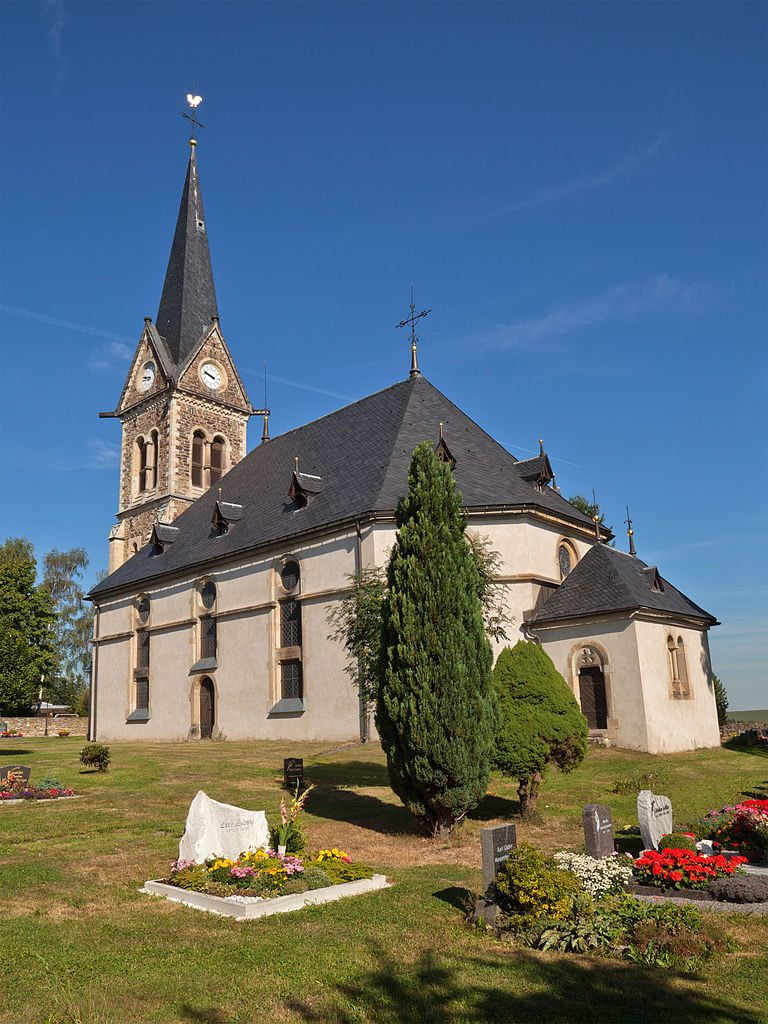
Architecturally, Berthelsdorf Church reflects the simplicity and practicality of early eighteenth-century Protestant design. It is not ornate or imposing, but rather modest and functional, in keeping with the values of the community it served. This simplicity underscores the emphasis placed on the message preached within rather than on outward display.
Over time, as the Moravian Church grew and established its own structures of worship in Herrnhut, Berthelsdorf Church remained an important historical and spiritual landmark. It continued to serve the local parish while also drawing visitors interested in the origins of the Moravian movement.
Today, Berthelsdorf Church stands as a quiet witness to a remarkable chapter in Christian history. It represents a place where faith was renewed, unity was sought, and a global missionary vision began to take shape. For those who visit, it offers more than historical interest; it provides a tangible connection to a movement that emphasized sincere devotion and a willingness to carry the message of Christ far beyond the borders of Europe.
In its simplicity and its history, Berthelsdorf Church remains a lasting symbol of spiritual awakening and faithful service.
_____
Image Source/Credit:
• Unukorno, CC BY-SA 3.0 <https://creativecommons.org/licenses/by-sa/3.0>, via Wikimedia Commons
Related
Sorry, no records were found. Please adjust your search criteria and try again.
Sorry, unable to load the Maps API.