
The Jerusalem Prayer Center is a place of quiet devotion and historical continuity, closely tied to the legacy of the American Colony and the enduring ministry of the Spafford family in the Holy Land. Among its most treasured artifacts is Bertha Spafford’s original Steinway piano, an instrument that reflects both the cultural refinement and the spiritual life of this unique community.
The story begins with Bertha Spafford Vester, daughter of Horatio Spafford, the author of the well-known hymn “It Is Well with My Soul.” After the Spafford family settled in Jerusalem in the late nineteenth century, they became central figures in what came to be known as the American Colony—a Christian community devoted to charitable work, hospitality, and prayer. Bertha, who grew up in this environment, later assumed a leading role in guiding the colony’s activities.
The Jerusalem Prayer Center, associated with the legacy of the American Colony, continues this tradition of worship and service. It serves as a gathering place for prayer, reflection, and fellowship, welcoming visitors from around the world. The center reflects the values that defined the original community: simplicity, hospitality, and a deep commitment to spiritual life. Within its walls, history and devotion meet in a setting that encourages quiet contemplation.
One of the most distinctive features of the center is the presence of Bertha Spafford’s Steinway piano. This instrument, carefully preserved, offers a tangible link to the musical and devotional life of the American Colony. In an era when music played a central role in both worship and community gatherings, the piano would have been used for hymn singing, informal concerts, and moments of shared reflection. Its presence speaks to the importance of music in sustaining the spiritual life of the community.
The piano itself, crafted by the renowned Steinway company, represents a high standard of musical craftsmanship. Its inclusion in the colony’s life suggests that, even in a setting marked by simplicity and service, there was a place for beauty and artistic expression. Music served not merely as entertainment but as a means of worship and encouragement, bringing together residents and visitors alike.
Bertha Spafford’s connection to the piano adds a deeply personal dimension. As a leader of the American Colony, she was known for her grace, strength, and dedication. Her life was shaped by both personal loss and enduring faith, much like that of her father. The piano, therefore, becomes more than an object; it is a symbol of continuity—linking generations of faith, service, and resilience.
Visitors to the Jerusalem Prayer Center often find that the piano enhances the atmosphere of the space. Whether used in small gatherings or simply observed as a historical artifact, it invites reflection on the role of music in spiritual life. It also serves as a reminder of the broader legacy of the American Colony, whose members sought to live out their faith through both practical service and heartfelt worship.
In a city as layered and complex as Jerusalem, places like the Jerusalem Prayer Center offer a quieter perspective. They highlight stories of devotion that are not always found in grand monuments or major historical narratives. The preserved Steinway piano, associated with Bertha Spafford, adds a note of personal history to this setting, reminding visitors of the individuals whose lives shaped the community.
Together, the Prayer Center and the piano form a meaningful connection between past and present. They testify to a tradition of faith expressed not only in words but also in music and daily life. In preserving these elements, the center continues to honor the legacy of Bertha Spafford and the enduring spirit of the American Colony.
♦ _____ ♦
From the website:
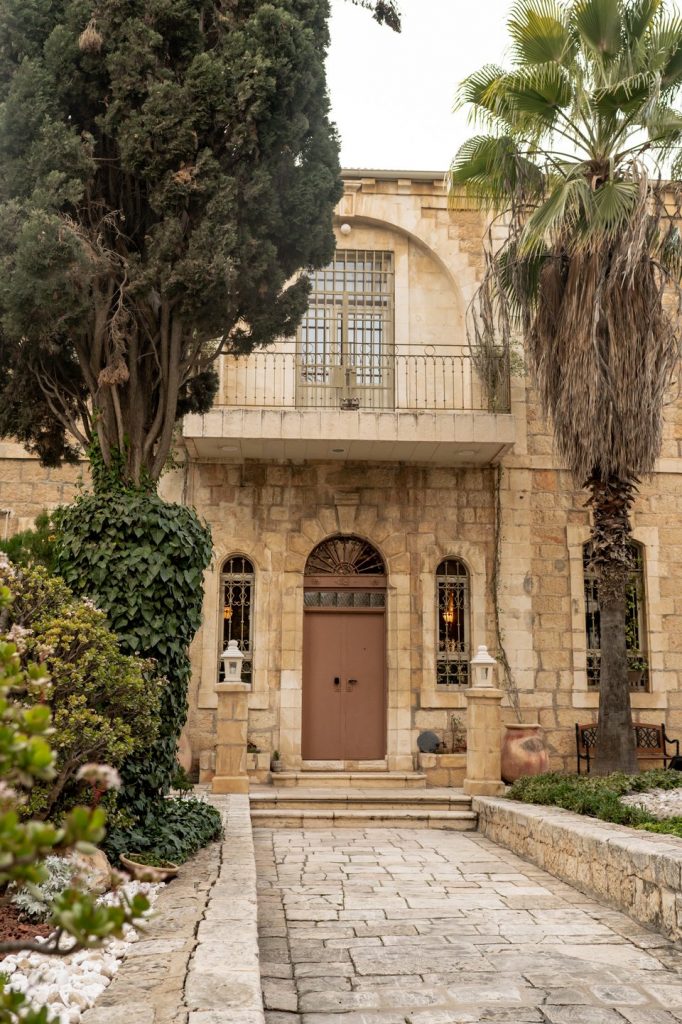
The house was built by an Arab family in 1890, one of the first homes built outside the Jerusalem old city walls near the Damascus Gate, during the Ottoman Turkish Empire. In 1905 it became part of the American Colony as the home of Bertha Spafford Vester, with her husband and children. Bertha’s father was Horatio Spafford, who is often remembered for the hymn, “It is Well with my Soul.” In 1930, it became the home of Lewis Larrson and his wife. Lewis was an accomplished photographer, and also the honorary Consul General of Sweden, making the home, for a time, the Swedish Consulate. At the end of the British Mandate, as the Green Line was drawn, the JPC stood on the Jordanian side of Arab East Jerusalem until 1967. It was sold a final time in 1969 and became a location of various Christian works…culminating in 2008 with the official dedication of the Jerusalem Prayer Center. The JPC property history and location make it a unique and special place to pray for the peace of Jerusalem!
_____
Image Source/Credit:
• Photo – JPC https://jerusalemprayercenter.com/
Related
Sorry, no records were found. Please adjust your search criteria and try again.
Sorry, unable to load the Maps API.