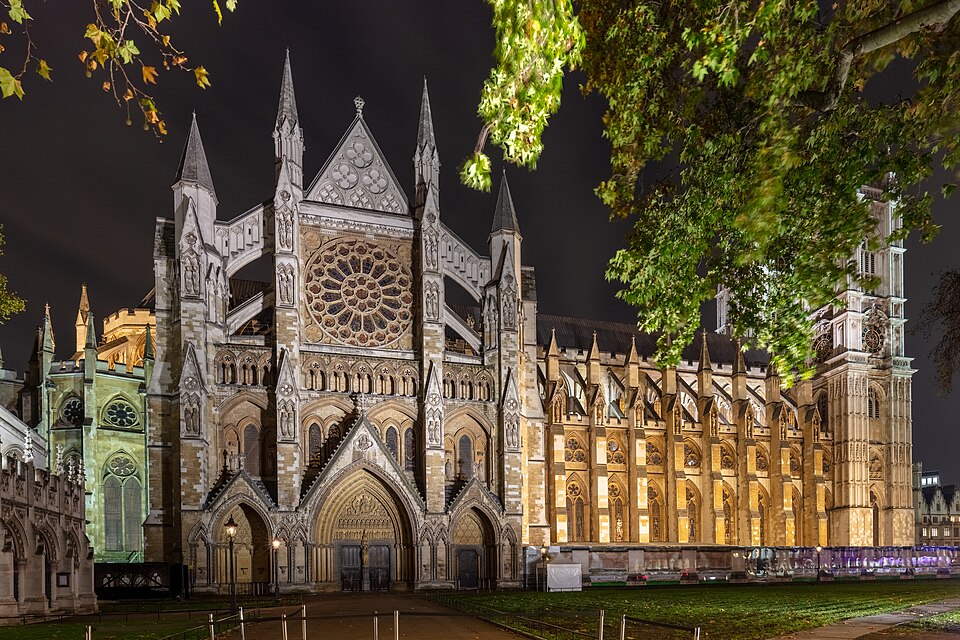
Behind me is Westminster Abbey, and of course, as you know, it has a tremendous history here in England. It’s a graveyard for about a thousand people, and 2,000 others are memorialized here. But someone buried in the Abbey and his burial there caused controversy, was Charles Darwin, who was born in 1809.
He’s the one who wrote The Origin of Species and advocated for evolution, which means that we came up through the animal world. In fact, the statement he made is this. He said that the baboon is our grandfather. Well, let’s think about that. If the baboon is our grandfather, we have no argument against such things as euthanasia, no argument against abortion, or even infanticide, because we do all that with animals.
He himself was a racist. He believed that some of the aborigines were actually closer to monkeys than to human beings. And furthermore, because of survival of the fittest, he gave people the idea, including Hitler, that what we need to do is to speed the evolutionary process along by getting rid of inferior species, which for Hitler, of course, were the Jews.
As we think about Darwin and his impact, we must understand that this had a huge impact upon the church. Because it used to be that one of the great arguments for God’s existence was creation. And now Darwin gave people permission to think about creation without God. A leading scholar said this, Darwinianism was the universal acid that destroyed Christianity. It’s a reminder that ideas have consequences and bad ideas have victims. And even as we go into Westminster Abbey, we are reminded of the fact that what we do may last beyond us. When it comes to Charles Darwin, I would say he has not left us a good legacy.
The History, Legacy, and Impact of Westminster Abbey
Westminster Abbey, located in the heart of London, stands as one of the most important religious and historical buildings in the United Kingdom. With origins stretching back over a thousand years, the Abbey has served as a place of worship, royal ceremony, national remembrance, and cultural heritage. Its enduring presence reflects the continuity of British history and the evolving role of faith and monarchy in national life.
The origins of Westminster Abbey date to the 10th and 11th centuries, when a Benedictine monastery was established on the site known as “Thorney Island.” The Abbey as it is largely seen today began to take shape under King Edward the Confessor in the 1040s and 1050s. Edward ordered the construction of a grand church dedicated to St. Peter, which was consecrated shortly before his death in 1066. Edward’s burial in the church established Westminster Abbey as a royal burial site and place of national significance.
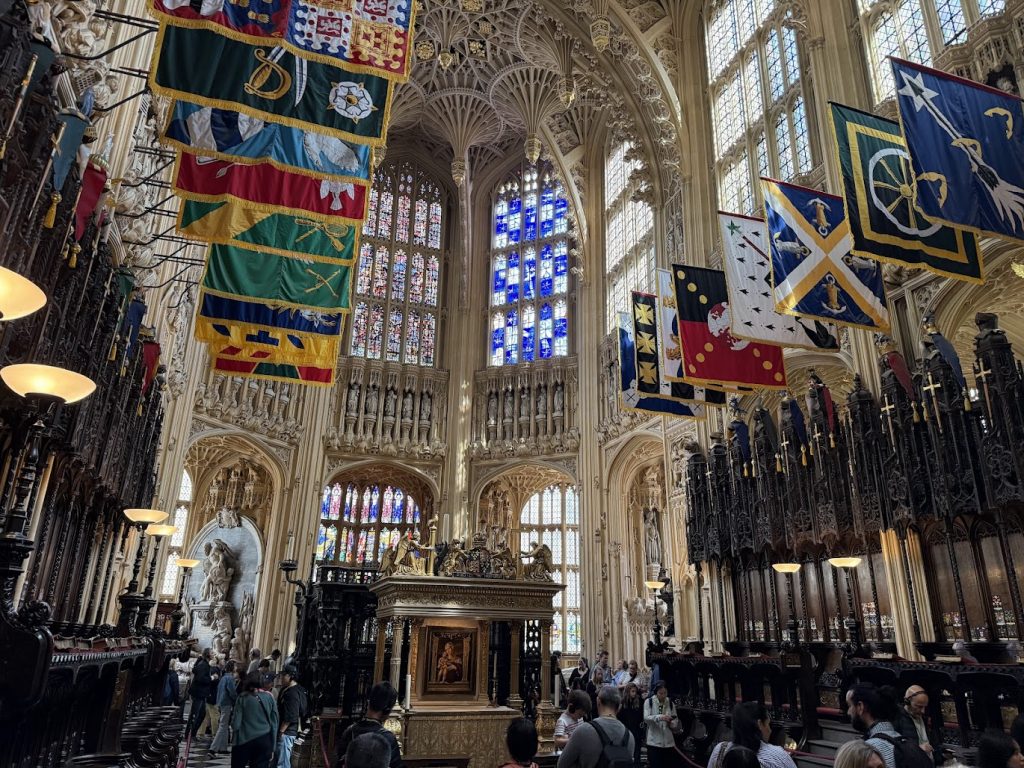
The Abbey was later rebuilt in the Gothic style under King Henry III in the 13th century. This reconstruction gave the building its soaring arches, intricate stonework, and stained-glass windows that define its present appearance. Over the centuries, successive monarchs added chapels, memorials, and structural enhancements, transforming the Abbey into a living record of British architectural and political history.
Westminster Abbey has long been the setting for major royal ceremonies. Since the coronation of King William the Conqueror in 1066, nearly every English and British monarch has been crowned within its walls. The coronation ceremony, rich in symbolism and tradition, underscores the Abbey’s role as a bridge between monarchy, church, and nation. In addition to coronations, the Abbey has hosted royal weddings and funerals, including those of many members of the royal family.
Beyond its royal associations, the Abbey serves as a national mausoleum. It is the final resting place of monarchs, statesmen, military leaders, scientists, poets, and writers. Figures such as Isaac Newton, Charles Darwin, and Geoffrey Chaucer are buried or commemorated in its Poets’ Corner and other sections. This makes Westminster Abbey not only a religious site but also a cultural archive of national achievement.
The Abbey’s role in national remembrance became especially significant in the modern era. It hosts services commemorating major historical events, including wars and national tragedies. The Tomb of the Unknown Warrior, interred in 1920, represents the countless soldiers who died in World War I without identification. This powerful memorial symbolizes collective sacrifice and has become a focal point for remembrance ceremonies.
Architecturally, Westminster Abbey is considered one of the finest examples of Gothic design in the world. Its fan-vaulted ceilings, flying buttresses, and elaborate chapels demonstrate the evolution of medieval and later architecture. The Henry VII Lady Chapel, added in the early 16th century, is particularly renowned for its ornate ceiling and intricate stone carvings. The Abbey’s design reflects both spiritual aspiration and the artistic achievements of successive generations.
Westminster Abbey also plays an important role in education and public engagement. As a UNESCO World Heritage Site, it attracts millions of visitors each year. Guided tours and exhibitions help visitors understand its historical significance, while ongoing worship services maintain its primary function as a church. This dual identity—as both sacred space and historic monument—gives the Abbey a unique place in public life.
The legacy of Westminster Abbey extends beyond its physical structure. It represents continuity in a nation that has undergone profound political, social, and cultural change. Through centuries of monarchy, reform, war, and modernization, the Abbey has remained a constant presence. It reflects the enduring relationship between religion and state, as well as the ways in which societies remember and honor their past.
At the same time, the Abbey’s history is not static. New memorials continue to be added, reflecting contemporary figures and events. This ongoing evolution ensures that Westminster Abbey remains relevant, not only as a monument to history but as a living institution that continues to shape and reflect national identity.
Today, Westminster Abbey stands as both a place of worship and a symbol of British heritage. Its stones tell the story of kings and queens, poets and scientists, war and peace. Through its ceremonies, monuments, and daily life, it continues to connect the past with the present, offering a powerful reminder of the enduring legacy of history in shaping the modern world.
♦ _____ ♦
Burial Place of
- David Livingstone
- William Wilberforce
- John Milton
- King James I (of the King James Bible)
- George Fredric Handel

and more!
In the south choir aisle of Westminster Abbey is a marble mural monument to non-conformist minister and hymn writer Isaac Watts. It shows a relief of Dr Watts seated in his study, with an angel guiding his pen, with his bust above. The monument is signed by sculptor Thomas Banks. The inscription reads: Isaac Watts D.D. [Doctor of Divinity] Born July 17 1674. Dyed Novr. 25 1748
Also home to the Jerusalem Chamber (see the replica at Bob Jones University)
_____
Image Source/Credit (in order):
• Diego Delso, CC BY-SA 4.0 <https://creativecommons.org/licenses/by-sa/4.0>, via Wikimedia Commons
• Photo by author