
From Wikipedia:
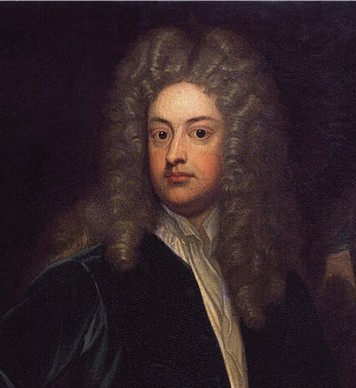
Joseph Addison (1 May 1672 – 17 June 1719) was an English essayist, poet, playwright, and politician. He was the eldest son of The Reverend Lancelot Addison. His name is usually remembered alongside that of his long-standing friend Richard Steele, with whom he founded The Spectator magazine.
♦ _____ ♦
Hymn History: When All Thy Mercies, O My God
Author: Joseph Addison
“Gratitude is a pleasing emotion of the mind, arising from a contemplation of the divine goodness.”
(Joseph Addison)
The Origin of the Hymn “When All Thy Mercies, O My God”
The hymn “When All Thy Mercies, O My God” is a reflective and deeply personal expression of gratitude, rooted in the devotional life of the eighteenth century. Written by Joseph Addison (1672–1719), the hymn stands as one of the finest examples of early English hymnody, combining literary elegance with sincere Christian devotion.
Joseph Addison is better known in literary history as an essayist and co-founder of the influential periodical The Spectator, which he produced alongside his friend Richard Steele. Through The Spectator, Addison sought to shape public morals and manners, often writing essays that encouraged virtue, reflection, and religious seriousness without heavy-handedness. It was within this context that “When All Thy Mercies, O My God” first appeared in 1712, not as a hymn intended for congregational singing, but as a poem for private devotion.
The poem was published in The Spectator (No. 453), where it was presented as a meditation on gratitude. Addison’s aim was to encourage readers to cultivate a habit of thanksgiving by reflecting on the many mercies of God in their daily lives. This emphasis on personal reflection and moral improvement was characteristic of Addison’s broader work, which often sought to bridge the gap between formal religion and everyday conduct.
The opening line, “When all Thy mercies, O my God, my rising soul surveys,” immediately sets the tone of the piece. Rather than focusing on a single act of divine grace, the hymn invites the believer to consider the whole scope of God’s goodness—from the blessings of life and provision to the gift of redemption. Addison’s approach is cumulative, building a sense of overwhelming gratitude as one mercy is added to another.
Throughout the hymn, Addison demonstrates a careful and methodical structure. Each stanza highlights a different aspect of divine kindness: creation, preservation, guidance, and ultimately salvation. One of the most memorable lines captures this progression beautifully: “Through every period of my life Thy goodness I’ll pursue.” Here, the writer expresses not only thankfulness for past mercies but also a commitment to live in continual awareness of God’s care.
Though originally written as a poem, “When All Thy Mercies, O My God” was later adapted for congregational singing. This transition reflects a broader development in English-speaking Christianity during the eighteenth and nineteenth centuries, when hymns increasingly became a central part of public worship. Editors and compilers of hymnals recognized the devotional strength of Addison’s text and set it to music, allowing it to reach a wider audience.
Several tunes have been associated with the hymn over the years, with one of the most common being “St. Peter,” composed by Alexander Reinagle. This tune, dignified and steady, complements the hymn’s reflective tone and has helped secure its place in traditional hymnody. Other tunes have also been used, demonstrating the adaptability of Addison’s words to different musical settings.
The enduring appeal of the hymn lies in its balance of intellect and devotion. Addison was a master of clear and graceful prose, and this skill is evident in his poetry. The language is refined without being obscure, making it accessible to a wide audience while still retaining a sense of dignity. At the same time, the hymn speaks directly to the heart, encouraging believers to pause and consider the many ways in which they have been blessed.
Historically, the hymn also reflects the religious climate of early eighteenth-century England. This was a time when personal piety and moral reflection were highly valued, particularly among those influenced by the Anglican tradition. Addison’s work fits squarely within this context, offering a form of devotion that is thoughtful, measured, and grounded in Scripture.
Over the centuries, “When All Thy Mercies, O My God” has appeared in numerous hymnals across denominational lines, including Anglican, Methodist, and Presbyterian collections. Its message of gratitude has proven timeless, resonating with generations of worshippers who find in its lines a fitting expression of their own thankfulness.
In a modern age often marked by haste and distraction, Addison’s hymn serves as a gentle corrective. It calls the reader—or singer—to slow down and take account of life’s blessings, recognizing in them the hand of a gracious God. By tracing the thread of divine mercy through every stage of life, the hymn fosters a spirit of humility and praise.
Ultimately, “When All Thy Mercies, O My God” endures not because of elaborate imagery or emotional intensity, but because of its quiet sincerity. It is a hymn that teaches gratitude by example, inviting each generation to join in the simple yet profound act of giving thanks.
When all your mercies, O my God,
my rising soul surveys,
transported with the view, I’m lost
in wonder, love, and praise.
Unnumbered comforts to my soul
your tender care bestowed,
before my infant heart conceived
from whom those comforts flowed.
When worn with sickness, oft have you
with health renewed my face;
and when in sins and sorrows sunk,
revived my soul with grace.
Ten thousand thousand precious gifts
my daily thanks employ;
nor is the least a cheerful heart
that tastes those gifts with joy.
Through ev’ry period of my life
your goodness I’ll pursue;
and after death, in distant worlds,
the glorious theme renew.
Through all eternity to you
a joyful song I’ll raise;
for oh, eternity’s too short
to utter all your praise.
_____
Image Source/Credit:
• After Godfrey Kneller, Public domain, via Wikimedia Commons
Related
Sorry, no records were found. Please adjust your search criteria and try again.
Sorry, unable to load the Maps API.