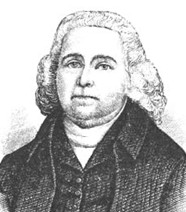
Isaac Backus (1724–1806) stands as one of the most influential Baptist leaders in early American history, particularly known for his tireless advocacy of religious liberty. A pastor, historian, and public spokesman, Backus played a crucial role in shaping the relationship between church and state in the formative years of the United States.
Backus was born in Norwich, Connecticut, into a Congregationalist family during a time when established churches dominated New England religious life. Like many of his generation, he experienced the spiritual awakenings of the First Great Awakening, a movement that emphasized personal conversion and heartfelt religion over formalism. This revival profoundly influenced his thinking and eventually led him to question the legitimacy of state-supported churches.
In 1751, after a period of spiritual struggle and theological reflection, Backus embraced Baptist convictions, particularly believer’s baptism and the independence of the local church. He soon became pastor of a Separate Baptist congregation in Middleborough, Massachusetts, where he would minister for over fifty years. His pastoral work was marked by earnest preaching, careful instruction, and a deep concern for the spiritual welfare of his congregation.
However, Backus’s influence extended far beyond the pulpit. In colonial New England, Baptists and other dissenters were often required to pay taxes to support the established Congregational churches, even if they did not attend them. Backus viewed this system as a violation of conscience and a corruption of true religion. He argued that faith must be voluntary and that civil authorities had no right to compel religious support or practice.
To advance this cause, Backus became a leading figure in the Warren Association, a coalition of Baptist churches formed to promote cooperation and defend religious liberty. Through this body, he helped organize petitions, draft appeals, and represent Baptist concerns before colonial and later state governments. His efforts were marked by persistence and clarity, as he consistently grounded his arguments in both Scripture and principles of natural rights.
One of Backus’s most notable contributions came during the era of the American Revolution. While many Baptists supported the cause of independence, Backus insisted that political freedom must be accompanied by religious freedom. In 1774, he joined a delegation that met with representatives in Philadelphia to present grievances against religious taxation in Massachusetts. Although immediate success was limited, such efforts helped lay the groundwork for broader change.
Backus also made a lasting impact through his writings. His most significant work, A History of New England with Particular Reference to the Baptists, provided a detailed account of Baptist struggles and growth in the region. This multi-volume history not only preserved important records but also articulated a compelling case for religious liberty. It remains a valuable resource for understanding early American religious life.
The principles Backus championed found fuller expression in the years following the Revolution. His advocacy contributed to a growing movement that ultimately led to the disestablishment of state churches in New England. These developments paralleled and reinforced the ideas later embodied in the United States Constitution First Amendment, which guarantees the free exercise of religion and prohibits the establishment of a national church.
In addition to his public work, Backus maintained a reputation for personal humility and integrity. He was not a radical agitator but a steady, principled voice who combined theological conviction with practical action. His life demonstrated that enduring change often comes through patient effort rather than sudden upheaval.
Isaac Backus died in 1806, having witnessed significant progress toward the ideals he had long defended. By the end of his life, the landscape of American religion had been transformed, with greater freedom for diverse denominations and a clearer separation between church and state.
In sum, Isaac Backus was a pivotal figure in the development of American religious liberty. Through his preaching, writing, and advocacy, he helped secure freedoms that are now taken for granted. His legacy endures in the continued vitality of Baptist life and in the broader American commitment to freedom of conscience.
♦ _____ ♦
In Titicut Parish Cemetery, at 41 Plymouth Street, Backus’ granite tomb is pulpit-shaped and holds an open Bible. Under the Bible is a bronze memorial plaque.
Copyrighted and used by permission from David Beale, Baptist History in England and America: Personalities, Positions, and Practices
_____
Image Source/Credit:
• Wikipedia contributors. File:Isaac Backus.jpg – Wikipedia (en.wikipedia.org/wiki/File:Isaac_Backus.jpg)
Related
Sorry, no records were found. Please adjust your search criteria and try again.
Sorry, unable to load the Maps API.