
If you have a copy of The Story of the Great Frieze By Liberty Memorial Association (Kansas City, Mo.) · 1935 please contact me.
♦ _____ ♦
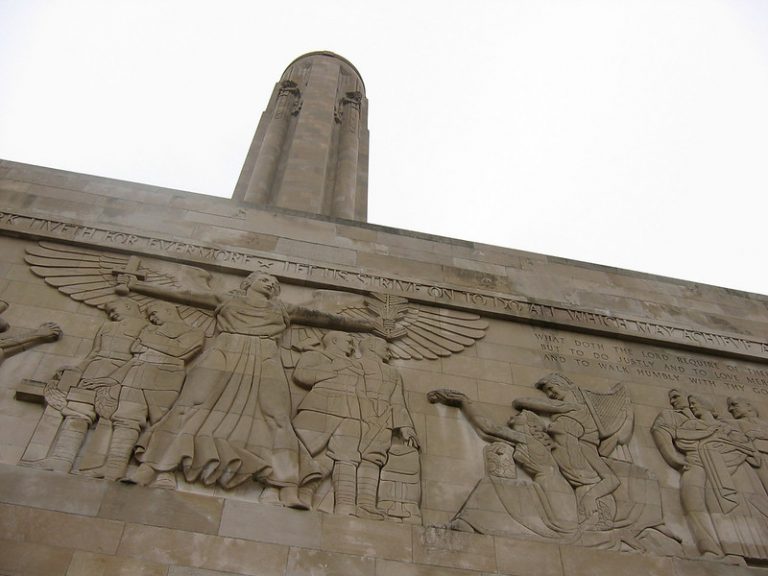
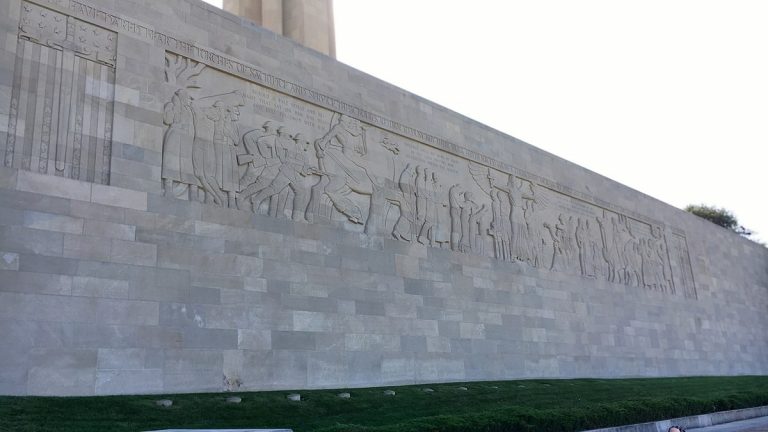
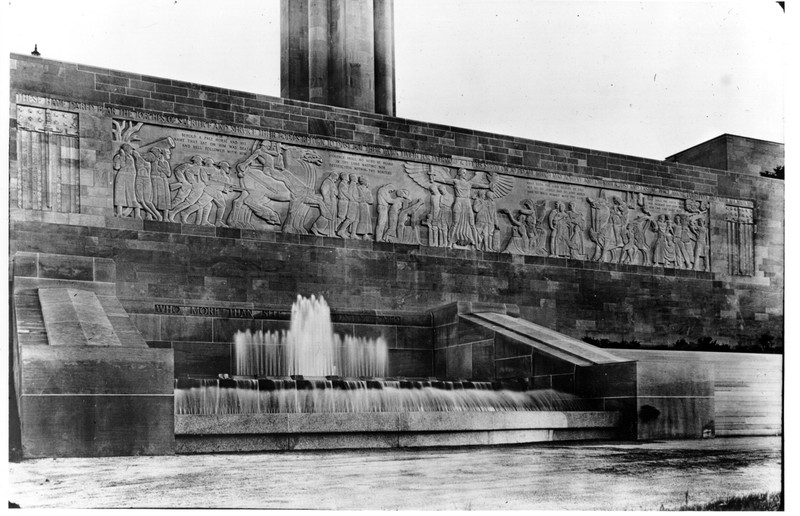
The The Great Frieze in Kansas City stands as one of the most powerful artistic tributes to the legacy of the First World War. Carved into the north wall of the Liberty Memorial—now home to the National World War I Museum and Memorial—this monumental work of art reflects both the tragedy of war and the enduring hope for peace.
Completed in 1935 by sculptor Edmond Amateis, the Great Frieze was created nearly a decade after the dedication of the Liberty Memorial itself. Amateis, who had served in World War I, brought personal experience and emotional depth to the project. His work was not merely decorative but deeply symbolic, intended to tell a story that would resonate with future generations.
The frieze is remarkable in both scale and detail. Measuring roughly 148 feet long and 18 feet high, it ranks among the largest carved stone reliefs of its kind. Its size alone commands attention, but it is the narrative carved into the stone that gives it lasting significance. Designed as a continuous visual story, the frieze unfolds from left to right, guiding the viewer through a progression from war to peace.
At the left side, the imagery is stark and sobering. Figures of soldiers appear alongside the Four Horsemen of the Apocalypse, representing death, destruction, and the chaos of war. This section captures the devastating toll of World War I, a conflict that reshaped nations and left millions dead. The sculpted figures convey movement, tension, and suffering, reminding viewers of the high cost of global conflict.
Moving toward the center, the tone shifts. The frieze depicts citizens and soldiers united in common purpose, reflecting the mobilization of American society during the war. Men and women are shown contributing to the effort, symbolizing cooperation and national resolve. This portion of the work emphasizes unity and sacrifice, suggesting that even in times of hardship, shared purpose can bring people together.
At the heart of the composition stands a central figure representing liberty and peace. Around this figure, soldiers are shown laying down their weapons and returning to civilian life. The imagery here reflects the hope that followed the end of the war—the belief that such sacrifice might lead to a more just and peaceful world. Scenes of homecoming, celebration, and rebuilding reinforce this sense of renewal.
The final section of the frieze looks forward to a future shaped by peace and prosperity. Figures representing family life, abundance, and moral values suggest a return to stability and normalcy. The message is clear: from the devastation of war can come a renewed commitment to peace, if its lessons are remembered.
An inscription running along the frieze underscores this message, honoring those who served and calling on future generations to strive for “a just and lasting peace among ourselves and with all nations.” This sentiment reflects the broader purpose of the Liberty Memorial itself—not only to commemorate the fallen but also to encourage reflection on the causes and consequences of war.
Over the decades, the Great Frieze has remained a central feature of the memorial and a focal point for visitors. It has witnessed ceremonies, commemorations, and moments of national reflection. When the site was restored and reopened in 2006 as the National World War I Museum and Memorial, the frieze continued to serve as a powerful visual introduction to the themes explored within.
The legacy of the Great Frieze lies in its ability to communicate across generations. While rooted in the specific experience of World War I, its themes are universal—conflict and sacrifice, unity and hope, loss and renewal. It stands as both a memorial and a warning, reminding viewers of the consequences of war while pointing toward the possibility of peace.
In an age when the memory of World War I is increasingly distant, the Great Frieze endures as a tangible connection to that history. Through its scale, artistry, and message, it continues to invite reflection on the past and consideration of the future. It is not merely a work of art, but a lasting testament to the human desire to move from destruction toward a more peaceful world.
♦ _____ ♦
The Great Frieze tells a story of one of the deadliest wars in history – that foreshadowed an even deadlier war to come – and that claimed the conditional Biblical promises that would bring blessing to follow.
Behold a pale horse and his name that sat on him was death and hell followed with him – Revelation 6:8
Violence shall no more be heard in thy land wasting nor destruction within thy borders – Isaiah 60:18
What doth the Lord require of thee but to do justly and to love mercy and to walk humbly with thy God – Micah 6:8
Then shall the earth yield her increase and God even our own God shall bless us – Psalm 67:6
_____
Image Source/Credit:
• Dillard, Lacey Elaine. “Untitled.” Flickr (www.flickr.com/photos/breeps/2853758966)
• “The Great Frieze at the World War I Museum and Memorial – Clio.” Clio (theclio.com/entry/163249)
• “Liberty Memorial North Fountains – Clio.” Clio (theclio.com/entry/156256)
Related
Sorry, no records were found. Please adjust your search criteria and try again.
Sorry, unable to load the Maps API.