
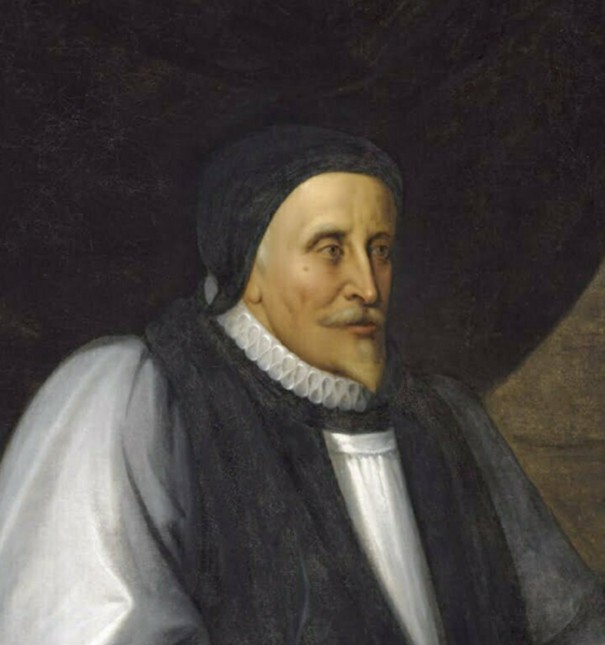
Lancelot Andrewes (1555–1626) was one of the most learned and influential churchmen of early modern England. A leading figure in the development of Anglican theology and a principal contributor to the translation of the King James Bible, Andrewes combined deep scholarship with pastoral devotion, shaping both the language of English Scripture and the identity of the post-Reformation Church.
Andrewes was born in London in 1555 during the turbulent years of the English Reformation. He was educated at the University of Cambridge, where he demonstrated exceptional linguistic ability and a strong command of classical languages, including Hebrew, Greek, Latin, and several modern European tongues. His academic gifts soon marked him out as one of the most promising scholars of his generation.
After completing his studies, Andrewes entered the ministry of the Church of England. He quickly rose through the ecclesiastical ranks, serving in a variety of important clerical and academic positions. Known for his preaching and learning, he was appointed chaplain to Queen Elizabeth I and later served under King James I, who valued his theological expertise and diplomatic skill.
Andrewes’ reputation as a scholar of Scripture led to his appointment as one of the translators of the King James Bible in 1604. This monumental project was commissioned by King James I to produce a new English translation that would unify religious practice and resolve disputes over earlier versions. Andrewes was placed in charge of the “First Westminster Company,” responsible for translating the early books of the Old Testament, including Genesis through Kings.
His work on the translation was marked by precision, reverence, and attention to linguistic detail. Andrewes believed that Scripture should be rendered faithfully and beautifully, preserving both meaning and dignity. The result was a translation that combined accuracy with literary excellence, helping to shape the development of the English language for centuries to come.
Beyond his role in translation, Andrewes was a significant theological thinker. His writings and sermons reflect a deeply devotional approach to Christianity, emphasizing prayer, sacramental worship, and reverence for the mystery of God. Unlike more polemical theologians of his time, Andrewes sought a balanced expression of faith that combined intellectual rigor with spiritual depth.
He was appointed Bishop of Chichester in 1605, later becoming Bishop of Ely and finally Bishop of Winchester. In each of these roles, he was responsible not only for overseeing diocesan affairs but also for maintaining the theological and liturgical standards of the Church. His leadership helped shape the character of early Anglicanism, particularly its emphasis on continuity with historic Christian tradition.
Andrewes also played a role in international diplomacy, serving on commissions that dealt with relations between England and other European powers. His linguistic skills and cultural knowledge made him a valuable representative of the English crown in ecclesiastical matters abroad.
Despite his public responsibilities, Andrewes maintained a disciplined personal life centered on prayer and study. His private devotions, later published as the Preces Privatae, reveal a deeply spiritual man committed to regular meditation and worship. These writings have influenced generations of Anglican clergy and continue to be used in devotional practice today.
Andrewes died in 1626 and was buried in Southwark Cathedral in London. His legacy, however, extends far beyond his lifetime. As a translator of the King James Bible, he helped produce one of the most influential texts in the English-speaking world. As a bishop and theologian, he shaped the liturgical and spiritual life of the Church of England during a formative period in its history.
The impact of Lancelot Andrewes lies in his unique combination of scholarship, devotion, and leadership. He bridged the worlds of academic theology and pastoral ministry, contributing both to the intellectual foundations of Anglicanism and to the enduring beauty of English Scripture. Through his work, he left a lasting mark on language, worship, and Christian thought.
_____
Image Source/Credit:
• Unidentified painter, Public domain, via Wikimedia Commons
Related
Sorry, no records were found. Please adjust your search criteria and try again.
Sorry, unable to load the Maps API.