
The intertwined story of William Carey, Dorothy Plackett—often called “Dolly”—and Church of St. John the Baptist offers a glimpse into the personal and religious world of late eighteenth-century rural England. Though Carey would later become known as the “father of modern missions,” his early life was shaped by ordinary village experiences, relationships, and the religious framework of the established church.
William Carey was born in 1761 in nearby Paulerspury and spent his formative years in Northamptonshire. Like most Englishmen of his time, he was raised within the Church of England. Parish churches such as St. John the Baptist in Piddington formed the center of community life, marking important moments such as baptisms, marriages, and burials. These churches were not only places of worship but also the social and spiritual anchors of village society.
It was within this Anglican setting that Carey’s early adulthood unfolded. In 1781, he married Dorothy Plackett, his employer’s sister-in-law. Dorothy, who was older than Carey and unable to read or write, entered into a marriage that would be marked by both devotion and hardship. Their union was typical of the time in its simplicity, yet it would later be tested by the extraordinary path Carey chose to follow.
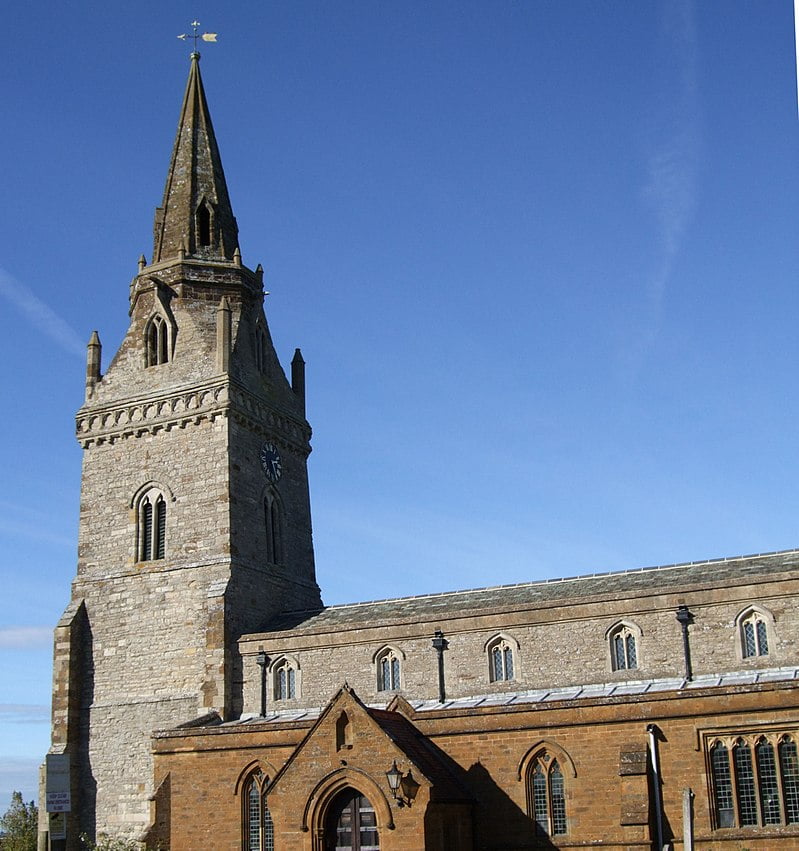
The Church of St. John the Baptist in Piddington is traditionally associated with their marriage, representing the kind of parish setting in which such ceremonies were commonly conducted. Though records may vary in detail, the connection underscores the fact that Carey’s early life—including his marriage—was rooted in the structures of the established church. At that stage, he had not yet fully embraced the Baptist convictions that would later define his ministry.
In the years following their marriage, Carey underwent a significant spiritual transformation. Through personal study of the Bible and interaction with evangelical and dissenting influences, he became convinced of the importance of believer’s baptism and congregational independence. This led him to separate from the Church of England and join the Baptists, a decision that would profoundly alter the course of his life.
For Dorothy, this transition was difficult. Unlike Carey, she did not share the same theological enthusiasm or educational background. The changes in their religious life, combined with the increasing demands of Carey’s ministry, created tension within the household. These challenges would become even more pronounced when Carey began to pursue the idea of overseas missionary work.
In 1793, Carey made the decision to travel to India as a missionary, following the founding of the Baptist Missionary Society. Dorothy initially resisted the move, fearing the dangers and uncertainties involved. Eventually, she accompanied him, but the journey and the conditions they faced in India took a severe toll on her physical and mental health. Her struggles are a sobering reminder of the personal cost often associated with missionary endeavors in that era.
The Church of St. John the Baptist in Piddington thus stands as a quiet witness to the early chapter of this story—a place representing stability, tradition, and the ordinary rhythms of English life. In contrast, the later lives of William and Dorothy Carey would be marked by upheaval, sacrifice, and global influence.
Together, their story reflects both the rootedness and the restlessness of the period: rooted in the familiar structures of parish life, yet restless with a growing desire for spiritual renewal and wider mission. The connection to Piddington’s parish church reminds us that even the most far-reaching movements often begin in the ordinary settings of village life, shaped by relationships and decisions whose full impact is only seen in time.
_____
Image Source/Credit:
• Cj1340, Public domain, via Wikimedia Commons
Related
Sorry, no records were found. Please adjust your search criteria and try again.
Sorry, unable to load the Maps API.