
Hi, my name is Professor Jerry Root. I’ve spent my life studying C.S. Lewis. We’re sitting in the garden of C.S. Lewis’s Oxford home. It was called The Kilns, named after a brick kiln that was right next door to this house. And Lewis purchased the house in 1930 with his brother and a woman named Mrs. Moore, and he lived here till his death in 1963. He died the very day that President Kennedy was assassinated, November 22nd, 1963. Most of his books were written in this home, not all, but most. Some were written at the college, some were written before he moved into this house, but most of his books that you read were written in this house.
His office was just above me. They would entertain here and so on in the senior commons room. As a matter of fact, there’s a rumor. Let’s set this rumor straight right now. There was a man named Humphrey Carpenter who wrote a book on the Inklings, said that Lewis and Tolkien, Tolkien and Lewis were best of friends, that they had a falling out at the end of their life. I’ve met with John Tolkien, Tolkien’s oldest son, and I asked him about that and he said, I didn’t know what Carpenter was talking about when he said that. I would bring my father, J.R.R. Tolkien, to the kilns every week for the whole last year of Lewis’s life so that those two could have two or three hours just to talk together. So that’s a good rumor that we can straighten out right now and set straight in this film. But anyway, so Lewis would meet here. The Inklings, this literary group that Lewis was a part of, they never met here. They met in Lewis’s rooms in Oxford at Magdalen College, and they would also meet at the Eagle and Child pub in the town.
Lewis, who grew up in Belfast, lived most of his life here in England. And even when he taught at Oxford for 29 years, the last nine years of his life, he went to Cambridge University where he taught, but he always kept his residence here. He would leave on Monday morning to go to Cambridge and he’d come back on Friday in the Surrey State. When he married his wife, Joy, this is where they lived. So this is a very significant house in Lewis’ life and more. And I hope one day you can visit it yourself.
C.S. Lewis had been an atheist. In part, it was prompted by the loss of his mother when he was nine years old. People in the church, well-meaning, telling him, pray for your mother, she’ll get better. She didn’t. He began to doubt that there was a God because he seemed to be, even if there was a God, he wasn’t very significant to real life, at least the life that Lewis was living. So consequently, he became an atheist. He then becomes a Christian much later.
A lot of it had to do with his reading, his study. and also the influence of Tolkien on his life. Tolkien and another man named Hugo Dyson. Lewis becomes a Christian and right away he sets off to make his faith known. He produced a book called The Pilgrim’s Regress, An Allegorical Apology for Christianity, Reason, and Romanticism. It’s significant. His first apologetic work was the first book he wrote after he became a Christian, and that book was a work of fiction. It was his only allegory, by the way.
So Lewis was already rhetorically using fiction to make apologetic arguments or at least help people get their imagination around something that eventually they would get their reason around and eventually commit by faith to following Christ. Lewis became known as one of the greatest apologists of the Christian faith, certainly in the last century. And actually, if we look at the 2,000 years of the church, he’s got to be on everybody’s list. During World War II, he was invited to come to the BBC radio in London to give these talks that would later become Mere Christianity and be published. And in the year 2000, when they said, what are the most significant books that have been written in the last hundred years, Lewis had two books in the top 25, Mere Christianity, and he also had Abolition of Man.
The other thing too about this, when Lewis was asked to come to the BBC, this is something a lot of people don’t know, there was a book actually written called C.S. Lewis at the BBC. The guy who was a historian of the BBC wrote it. John Reith was the guy who started the BBC in the late 1920s.
He was trying to come up with a word that he could use to describe what they would call their transmissions, radio transmissions. And he was a Christian. And that morning, he was reading in his devotions in Matthew 13, in the King James Version, and it said that the sower went out to sow his seed, and he sowed his seed broadcast. And Reith says, that’s it. That’s the word we’re going to use.
Broadcast came from the devotions in Matthew 13 of the guy who started the BBC. We hear broadcast all the time. Nobody realizes that’s where it came from. And of course, podcasts would be built off of that. So BBC always had in their charter that they would always have religious broadcasting.
Now I think they do their religious broadcasting about three in the morning, you know, and nobody’s even listening. But still, Lewis was part of that when he did the Mere Christianity. I’ve met people that lived here during World War II that would tune in to the radio each week just to hear Lewis giving his broadcast talks.
That led to, he had written The Problem of Pain, trying to solve the problem of evil and human suffering and reconcile Christianity to that. He wrote another book called Miracles, a brilliant book. Those were his three popular apologetic books. But he wrote 70 essays in Christian apologetics. And he still has huge influence worldwide by virtue of his willingness to make Christianity readable.
And I think the reason why is this. Lewis said that if you want to be convincing, you don’t go face-to-face with the person. You kind of get shoulder-to-shoulder with them. and you define and describe. So he would define things well so there was great clarity. He would describe, he would build his inferences well and reasonably, and then he would depict, he could say it imaginatively, in a way that we can get our minds around it and our hearts around some idea, some concept in the Christian faith. And he would do this even with his books.
He wrote Abolition of Man, It’s propositional, philosophical, and then he wrote that hideous strength to depict if we violate the objectivity and approach to truth as objective, we will end up with the destruction of a society. And what he writes about is so present, it’s what’s going on in our world today. Then he wrote another book called The Four Loves. He depicted it in imaginative form in his novel Till We Have Faces. Even his biography, Surprised by Joy, it’s a limited biography. He just talks about one particular theme, how he moved from atheism to Christianity. But he wrote that biography, more propositional, and then he writes, again, Pilgrim’s Regress, an allegorical apology for Christianity, Reason, and Romance. So now it’s depicted in fiction.
Lewis would often do this, and I think that’s why he’s such a good communicator. He’s firing on so many cylinders. You’ve got him, again, propositionally, reasonably and also imaginatively. Lewis had 31 different words for imagination. Some are corrupt uses of the imagination, some are vibrant and good uses of the imagination, and some round out our grasp of the imagination more fully. And so anyway, I think that he lived in the imagination. He loved story. He said, I’m an Irishman, so naturally I’m a rhetor. And he said, I’m an Irishman. So, you know, he liked to talk and he was an Irishman and he loved to tell stories.
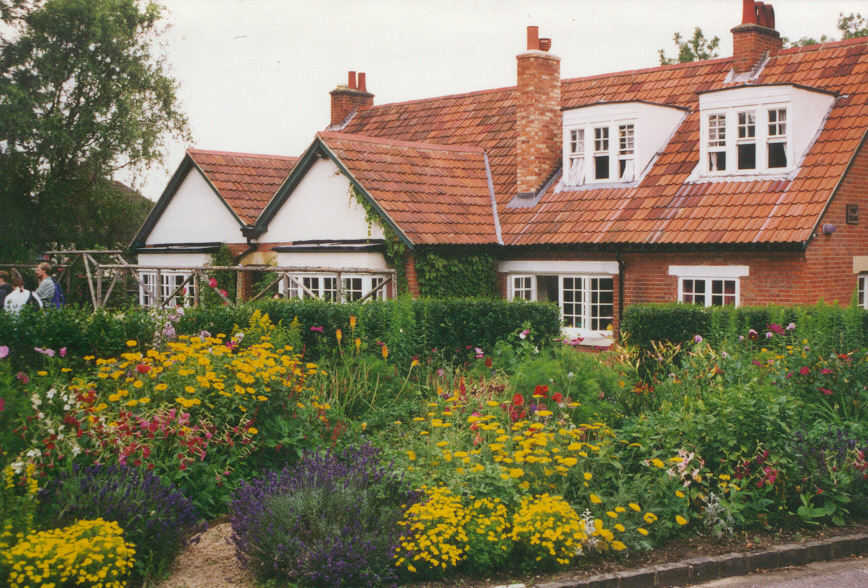
The Kilns, located just outside Oxford, is one of the most cherished literary and historical sites associated with C. S. Lewis. This modest house, surrounded by quiet countryside, served as Lewis’s home for more than three decades and became the setting in which many of his most influential works were written.
Lewis purchased The Kilns in 1930, along with his brother Warren Lewis, shortly after beginning his academic career at Oxford. The house took its name from the brickworks that had once occupied the land, leaving behind clay pits that later filled with water to form small ponds. These natural surroundings gave the property a peaceful, reflective atmosphere, well suited to Lewis’s habits of study and writing.
In the early years, The Kilns was shared with Mrs. Janie Moore, the mother of a close friend of Lewis who had been killed in World War I. Lewis had promised to care for her, and she remained part of the household for many years. The home thus became not only a place of intellectual labor but also one of personal responsibility and companionship.
It was at The Kilns that Lewis produced much of his most important work. Here he wrote theological and apologetic texts such as Mere Christianity and The Problem of Pain, as well as the beloved Chronicles of Narnia. The quiet setting allowed him to maintain a disciplined routine, balancing his duties as a tutor at Oxford with his writing. The house also hosted many conversations with friends and colleagues, including members of the informal literary group known as the Inklings, who met regularly in Oxford to discuss their work.
The Kilns became even more significant in Lewis’s personal life after his marriage to Joy Davidman in 1956. Though their time together was brief due to her illness and death in 1960, the house witnessed a period of deep emotional and spiritual growth for Lewis. His reflections on grief, later expressed in A Grief Observed, were shaped in part by his experiences there.
After Lewis’s death in 1963, The Kilns passed through various hands and for a time fell into disrepair. However, recognizing its importance, efforts were made in the late twentieth century to preserve and restore the property. It was eventually acquired by organizations dedicated to promoting Lewis’s legacy, and careful renovations were undertaken to return the house to something close to its original condition.
Today, The Kilns is maintained as a place of study, reflection, and pilgrimage. Scholars and visitors alike come to experience the environment in which Lewis lived and worked. The house retains much of its original character, offering a glimpse into the daily life of a writer whose works continue to inspire readers around the world.
The legacy of The Kilns lies not only in its association with C. S. Lewis but also in what it represents. It is a reminder that great ideas often emerge from quiet, disciplined lives rooted in ordinary places. From this unassuming home came writings that have shaped Christian thought and imaginative literature for generations.
In its peaceful setting and enduring influence, The Kilns stands as a fitting tribute to a man whose words continue to resonate, inviting readers to consider faith, reason, and the deeper truths of life.
♦ _____ ♦
Wikipedia:
The Kilns, also known as C. S. Lewis House, is the house in Risinghurst, Oxford, England, where the author C. S. Lewis wrote all of his Narnia books and other classics.[1][2] The house itself was featured in the Narnia books.[3] Lewis’s gardener at The Kilns, Fred Paxford, is said to have inspired the character of Puddleglum the Marsh-wiggle in The Silver Chair.[4]
The Kilns was built in 1922 on the site of a former brickworks.[1] The lake in the garden is a flooded clay pit. In 1930, The Kilns was bought by C. S. Lewis, his brother Warren Lewis, and Janie Moore. Maureen Dunbar, Janie Moore’s daughter, also lived there. C. S. Lewis wrote of the house: “I never hoped for the like”. Janie Moore was the mother of Lewis’s university friend Paddy Moore, who had been killed in the First World War.
The house is located in what is now called Lewis Close, south of Kiln Lane.
The Kilns is currently owned and operated by the C.S. Lewis Foundation, which runs it as the Study Centre at the Kilns.[5]
_____
Image Source/Credit (in order):
• Photo jschroe from Kailua-Kona, Hawaii, USA – Lewis’ House CC 2.0
Related
Sorry, no records were found. Please adjust your search criteria and try again.
Sorry, unable to load the Maps API.
1 Review on “The Kilns (Home of C. S. Lewis)”
Jerry Root is a national treasure. I had the joy of being on a tour he hosted from Belfast (Lewis’ birthplace), Cambridge and Oxford. This video is what sitting in the garden of the Kilns was like as Jerry shared his rich knowledge, not only academically, but most importantly, so, so heartfelt. He brought Lewis to life and it’s wonderful to see it captured here on this beautifully produced video.