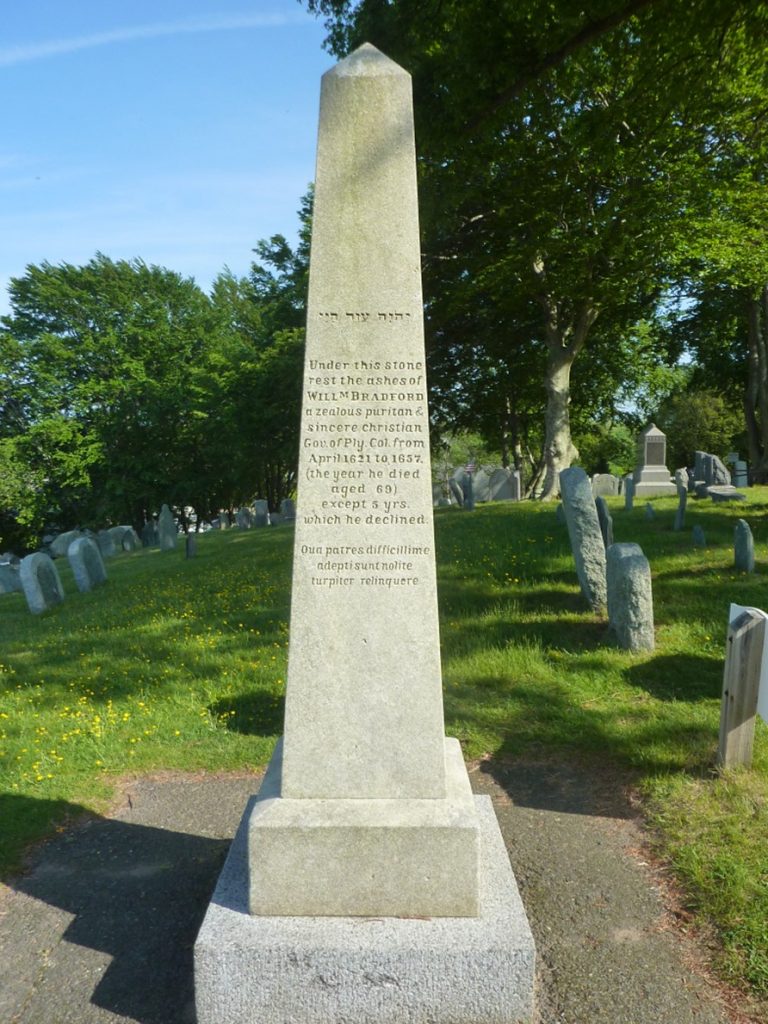
William Bradford stands as one of the most important figures among the Pilgrim Fathers, remembered especially for his role as a signer of the Mayflower Compact and for his long service as governor of Plymouth Colony. His life reflects both the hardships and the determination that marked the early years of English settlement in America.
Born in 1590 in Yorkshire, Bradford was orphaned at a young age and raised by relatives. As a boy, he was drawn to reading the Bible and developed a serious and reflective nature. In his teenage years, he became associated with a group of religious dissenters in Scrooby who rejected the authority of the Church of England. These Separatists sought the freedom to worship according to their understanding of Scripture, even at the cost of persecution.
Facing increasing pressure from English authorities, Bradford joined the group in fleeing to Leiden in 1608. There, he lived for more than a decade, working as a weaver and immersing himself in the life of the community. During this time, he grew in maturity and leadership, gaining the respect of his fellow believers.
In 1620, Bradford was among those who undertook the journey to the New World aboard the Mayflower. The voyage was long and difficult, and when the ship finally reached the coast of North America, it did so outside the boundaries of the area originally intended for settlement. This created uncertainty about authority and governance among the passengers.
It was in this context that the Mayflower Compact was drafted and signed. Bradford was one of the signers of this important document, which established a form of self-government based on mutual agreement. The Compact pledged the settlers to work together for the good of the colony and to create laws for its orderly governance. Though brief, it represented a significant step toward democratic principles and cooperative leadership.
Shortly after the colony was established, its first governor died, and Bradford was chosen to take his place. He would go on to serve as governor for much of the next three decades, guiding the colony through its most difficult years. The early period was marked by severe challenges, including harsh weather, limited supplies, and disease. Many settlers did not survive the first winter.
Bradford’s leadership during these trials was steady and practical. He worked to ensure fair distribution of resources, maintained order, and fostered cooperation among the colonists. His approach combined firm decision-making with a concern for the welfare of the community. Under his guidance, Plymouth Colony gradually stabilized and grew.
In addition to his leadership, Bradford is known for his written account of the colony’s early years, commonly titled Of Plymouth Plantation. This work provides a detailed and thoughtful record of the Pilgrims’ journey, struggles, and faith. It remains one of the most valuable firsthand sources for understanding early colonial history.
William Bradford’s life was marked by perseverance, faith, and a strong sense of responsibility. As a signer of the Mayflower Compact and a long-serving governor, he helped lay the foundations of self-governance and community life in early America. His legacy endures as a reminder of the courage and cooperation required to build a new society under challenging conditions.

_____
Image Source/Credit:
• File:of Plimoth Plantation First 1900.jpg – Simple English Wikipedia, the Free Encyclopedia. 1900 (simple.m.wikipedia.org/wiki/File:Of_Plimoth_Plantation_First_1900.jpg)