The story of John Gano and First Baptist Church in the City of New York offers a vivid glimpse into the growth of Baptist life in colonial and early American history. Together, they represent both the spread of evangelical religion in the northern colonies and the role of faith during the founding era of the United States.
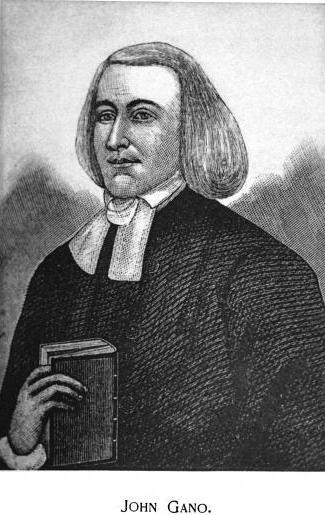
John Gano was born in 1727 in Hopewell, New Jersey, into a family with strong religious convictions. After experiencing a personal conversion, he became a Baptist minister and soon distinguished himself as a powerful and persuasive preacher. His ministry took him across the American colonies, particularly in the Middle Atlantic region, where Baptist churches were growing steadily despite opposition from more established religious traditions.
In 1762, Gano became pastor of the First Baptist Church in the City of New York, a congregation that had been founded earlier in the eighteenth century. The church itself emerged in a setting where Baptists were a minority, as New York’s religious life included Anglicans, Dutch Reformed, and other denominations. Despite this diversity, the Baptist congregation steadily grew, emphasizing believer’s baptism, the authority of Scripture, and congregational independence.
Under Gano’s leadership, the church expanded both in membership and influence. He was known for his clarity in preaching and his firm commitment to Baptist principles. His ministry coincided with a period of increasing tension between the American colonies and Great Britain, and like many ministers of his time, Gano became involved in the political and moral questions of the day.
When the American Revolution broke out, Gano took an active role as a chaplain in the Continental Army. He served faithfully among the troops, offering spiritual encouragement and conducting religious services during a time of great uncertainty. His presence among the soldiers reflected the close connection between religious conviction and the cause of independence in the minds of many Americans.
A well-known tradition—though debated by historians—holds that Gano baptized George Washington during the Revolutionary War. While definitive historical evidence for this event is lacking, the story has been cherished in Baptist circles as a symbol of the movement’s connection to the nation’s founding. Regardless of its historical certainty, it illustrates the respect Gano commanded among his contemporaries.
The war had a significant impact on the First Baptist Church in New York. When British forces occupied the city, many churches were closed or repurposed, and the Baptist congregation was forced to suspend regular meetings. Gano himself left the city during the occupation, continuing his ministry elsewhere. After the war, however, the church was reestablished, and Baptist life in New York resumed with renewed strength.
Gano eventually relocated to Kentucky, where he continued his ministry and helped establish Baptist churches on the frontier. His work there contributed to the rapid spread of Baptist influence in the western territories. He died in 1804, leaving behind a legacy as both a preacher of the gospel and a supporter of American independence.
The impact of John Gano and the First Baptist Church in the City of New York can be seen in several ways. First, they helped establish a strong Baptist presence in a major urban center at a time when the denomination was still gaining recognition. Second, Gano’s service during the Revolution demonstrated the role that ministers could play in shaping the moral and spiritual life of the nation. Finally, the endurance of the New York congregation through war and upheaval reflects the resilience of early Baptist communities.
Together, Gano and the First Baptist Church represent a formative chapter in American religious history. Their story highlights the interplay between faith and public life, as well as the steady growth of a movement that would become one of the largest Protestant traditions in the United States.
_____
Image Source/Credit:
• Public domain, via Wikimedia Commons
Related
Sorry, no records were found. Please adjust your search criteria and try again.
Sorry, unable to load the Maps API.
