
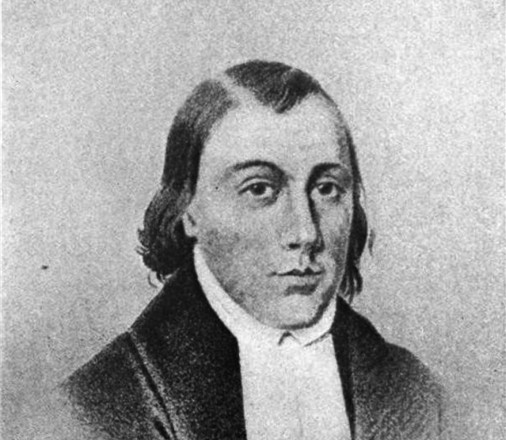
John Blair Smith was a significant figure in the early history of American higher education and Presbyterian leadership, best remembered for his role as the first president of Hampden–Sydney College. His life, though relatively brief, was marked by intellectual ability, religious conviction, and a steady commitment to shaping young men for both ministry and civic responsibility in the formative years of the United States.
Born in 1756 in Pennsylvania, Smith was raised in a devout Presbyterian family. He received his education at the College of New Jersey (Princeton University), an institution well known for its strong ties to Presbyterianism and the training of ministers. After completing his studies, he entered the ministry, where his eloquence and leadership quickly became evident.
In 1779, at the age of just twenty-three, Smith was called to serve as president of Hampden–Sydney College in Virginia. The college itself had been founded only a few years earlier, in 1775, and was closely associated with Presbyterian efforts to promote education in the southern colonies. Smith stepped into leadership during a turbulent period, as the American Revolutionary War was still ongoing, bringing uncertainty and hardship to the young institution.
Despite these challenges, Smith proved to be an effective and stabilizing leader. He worked to strengthen the academic program, reinforce discipline, and maintain the college’s religious character. Under his guidance, Hampden–Sydney developed a reputation for rigorous classical education combined with strong moral and spiritual instruction. Smith believed that education should not only cultivate the intellect but also form the character, a conviction that shaped his approach to leadership.
In addition to his work at the college, Smith was active in the broader Presbyterian Church. He participated in the early organization of the church in America and was respected for his theological insight and pastoral wisdom. His influence extended beyond the campus, as he helped guide the development of Presbyterian institutions during a critical period in their history.
After serving as president of Hampden–Sydney until 1789, Smith accepted a call to pastor a prominent church in Philadelphia. There, he continued his ministry with the same dedication that had marked his academic career. His reputation grew, and he became known as one of the leading Presbyterian ministers of his time.
Tragically, Smith’s life was cut short in 1799 during a yellow fever epidemic that swept through Philadelphia. His death at the age of forty-three was widely mourned, as he had contributed significantly to both education and the church in the early republic.
John Blair Smith’s legacy endures through his foundational role at Hampden–Sydney College and his influence on Presbyterian life in America. As the college’s first president, he helped set a pattern of combining intellectual rigor with moral seriousness, a tradition that has continued for generations. His life serves as a reminder of the important role that faith and education played in shaping the early United States and the institutions that continue to serve it today.
♦ _____ ♦
From Banner of Truth:
This was certainly true at Hampden-Sydney and the President, John Blair Smith, also a Presbyterian pastor of two nearby, small congregations, Briery and Cub Creek, was deeply grieved. He and the members of his churches began to pray for revival in their communities and at the college. In 1788 eighty young men were at the college and none were outwardly professing Christians. It had become vogue to reject the Calvinistic upbringing these young men had received. But two students, William Hill and William Calhoun, found each other and admitted they were concerned for their souls. When Calhoun read Alarm to the Unconverted1, a Puritan classic by Joseph Alleine, he became even more concerned for his soul. The two agreed to pray secretly on Saturdays in the woods, lest other students see them and mock them. But one Saturday they were expecting rain so they decided to pray in the residence hall. Others heard them praying and threatened to break down the door if they persisted. Later that day John Blair Smith heard about the incident and invited these young men (others had since joined their ranks) to come to his study the next week and pray. Within weeks half the student body was gathering for prayer. There was much weeping, repenting, and rejoicing. Revival had come to the student body at Hampden-Sydney and the communities within one hundred miles of there. Blair’s father, Robert, who had been converted forty years before under the preaching of George Whitefield, after hearing of the revival, came for a look.
See also site of his house as president of Hampden-Sydney College
_____
Image Source/Credit:
• Public domain, via Wikimedia Commons
Related
Sorry, no records were found. Please adjust your search criteria and try again.
Sorry, unable to load the Maps API.