

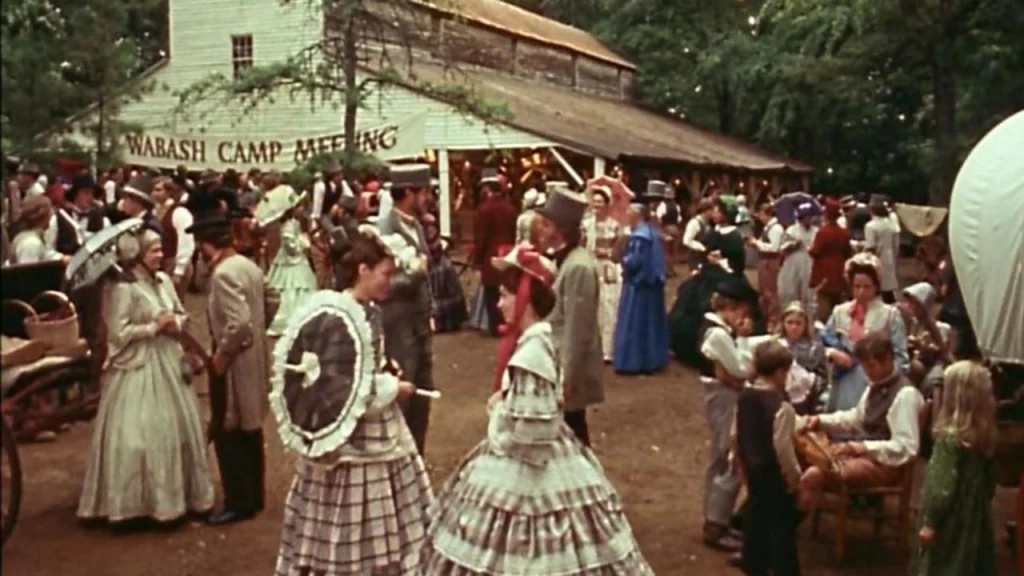
Unusual Films souvenir book, 1978, BJU Archives. Katherine Stenholm directed a crew of 76 and a cast of about 800, and the film includes a musical score by Dwight Gustafson. A large camp meeting scene was filmed at the nineteenth-century Epworth Camp Meeting in Greenwood, South Carolina, and other scenes were shot at Cades Cove and the Pioneer Farmstead in Great Smoky Mountains National Park, the Zebulon Vance birthplace, the “Cradle of Forestry,” Pleasant Hill, Kentucky (Shakertown), Walnut Grove Plantation, and on location at other sites in Kentucky, North Carolina, South Carolina, Tennessee, and Virginia.
♦ _____ ♦
The Epworth Camp Meeting stands as one of the enduring expressions of the camp meeting tradition that helped shape American Methodism. Rooted in the evangelical fervor of the nineteenth century, it reflects a time when religious gatherings were not merely weekly occurrences but extended seasons of preaching, fellowship, and spiritual renewal.
Located near High Point in North Carolina, the Epworth Camp Meeting was established in 1900, at a time when camp meetings were already a well-established feature of Methodist life in the American South. These gatherings typically took place in rural settings, where families would travel—sometimes from great distances—to spend days or even weeks in worship. The name “Epworth” itself honors Epworth, the birthplace of John Wesley, tying the meeting directly to the spiritual heritage of Methodism.
The camp meeting grounds were laid out in a traditional fashion, with a central tabernacle or preaching stand surrounded by simple cottages or tents. Families would occupy these dwellings during the meeting season, creating a temporary but tightly knit community. Life at Epworth followed a steady rhythm—morning prayers, multiple daily sermons, hymn singing, and informal gatherings for testimony and fellowship. The atmosphere was both devotional and communal, blending earnest religious exercise with the simple pleasures of shared life.
Preaching was the heart of the Epworth Camp Meeting. Ministers, often drawn from across the region, delivered sermons that emphasized repentance, conversion, and holy living. This focus reflected the broader Methodist emphasis on personal faith and sanctification. Services were marked by strong emotion and a sense of urgency, as preachers called listeners to respond to the gospel. It was not uncommon for attendees to experience profound spiritual awakenings during these meetings.
Music also played a central role. Congregational singing—often unaccompanied or supported by minimal instrumentation—filled the tabernacle with familiar hymns. These songs, many of them drawn from the rich Methodist tradition, reinforced the themes of the preaching and encouraged participation from all who attended. The shared experience of singing helped bind the community together and gave expression to their collective faith.
Over time, the Epworth Camp Meeting became more than an annual religious event; it became a cherished tradition passed down through generations. Families returned year after year, maintaining cottages and renewing friendships formed over decades. In this way, the meeting fostered a sense of continuity and stability, even as the surrounding world changed.
Like many camp meetings, Epworth faced challenges in the twentieth century. Changing patterns of life, increased urbanization, and the rise of new forms of entertainment all contributed to a decline in the prominence of extended religious gatherings. Yet Epworth endured, adapting while remaining faithful to its original purpose. Improvements to facilities and organization allowed it to continue serving as a place of worship and fellowship.
Today, the Epworth Camp Meeting remains a living link to an earlier era of American Christianity. While modern conveniences have replaced some of the hardships of early camp life, the essential character of the meeting persists. It continues to offer a setting where individuals and families can step away from the pace of everyday life and focus on spiritual matters.
In a broader sense, Epworth represents the lasting influence of the camp meeting movement in American religious history. These gatherings played a vital role in spreading Methodism across the frontier and shaping the spiritual life of communities. The Epworth Camp Meeting, with its long history and continued operation, stands as a testament to the enduring power of that tradition—simple in form, yet profound in its impact.
_____
Image Source/Credit (ALL):
• “Sheffey (1977) | MUBI.” MUBI, 1 Jan. 135AD (mubi.com/en/us/films/sheffey)
Related

Sorry, no records were found. Please adjust your search criteria and try again.
Sorry, unable to load the Maps API.