
The Union Gospel Tabernacle in Nashville, Tennessee—today world-famous as the Ryman Auditorium—stands as one of the most significant cultural and historical buildings in American religious and musical life. Originally built as a place of worship, it later became a premier entertainment venue, earning the title “Mother Church of Country Music.”
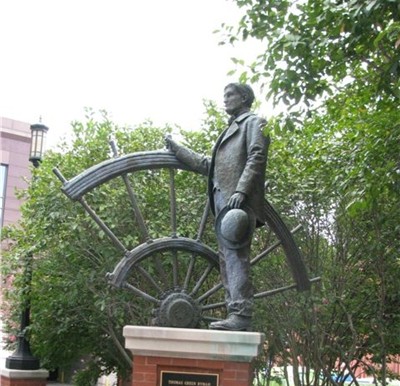
The building was constructed in 1892 through the vision and financial support of riverboat captain Thomas G. Ryman. Ryman originally intended the structure to serve as a large, non-denominational gospel tabernacle for revival meetings in Nashville. At the time, the city was a growing commercial and cultural hub in the American South, and revivalist preaching was a major part of its religious landscape.
The design of the Union Gospel Tabernacle was ambitious. With seating for thousands, it was intended to accommodate large crowds for preaching and worship. The interior was constructed without traditional church ornamentation, reflecting its purpose as a meeting hall rather than a denominational cathedral. Its excellent acoustics, however, made it ideal not only for sermons but also for music, which would later become central to its identity.
For many years, the building hosted religious services, revival meetings, and large gospel gatherings. Prominent evangelists and Christian leaders preached from its platform, and it became a focal point for religious life in Nashville. One of the most notable early influences on its development was evangelist Samuel Porter Jones, whose revival meetings helped establish the city’s reputation as a center of religious enthusiasm.
In 1904, following Thomas Ryman’s death, the building was renamed the Ryman Auditorium in his honor. Over time, its use began to expand beyond strictly religious purposes. As Nashville grew into a center for music and entertainment, the Ryman became a natural gathering place for concerts, political events, and cultural performances.
By the mid-twentieth century, the Ryman Auditorium had become the primary home of the Grand Ole Opry, one of the most influential programs in American country music history. This transition marked a major shift in the building’s identity—from a gospel tabernacle to a national stage for musical performance. The acoustics that once carried sermons now carried the voices of legendary performers, helping shape the sound of modern country music.
Despite this shift, the building retained its spiritual and historical character. Many performers and audiences continued to recognize its origins as a sacred space. The wooden pews, stained-glass windows, and simple architecture preserved the sense of reverence that had defined its early years as a place of worship.
In the late twentieth century, the Grand Ole Opry moved to a new location, but the Ryman Auditorium was preserved and restored as a historic landmark. Restoration efforts carefully maintained its original structure while updating it for modern performances. Today, it serves as a major concert venue, museum, and cultural landmark.
The legacy of the Union Gospel Tabernacle lies in its unique transformation. Few buildings in American history have transitioned so seamlessly from sacred space to cultural icon. It reflects the evolving relationship between religion, music, and public life in the United States.
In conclusion, the Union Gospel Tabernacle—now the Ryman Auditorium—remains a powerful symbol of Nashville’s heritage. From its origins as a revival hall built by Thomas Ryman to its role in shaping American music history, it continues to stand as a place where voices, whether preaching or singing, have resonated across generations.
♦ _____ ♦
In 1885, a heckler came to Sam Jones‘ meetings. Thomas Ryman (1843-1904) was 42, a Nashville steamboat line owner. He had just moved into a new house, and thought little of this Christian evangelist. But the preaching turned his life around, and he talked to Jones about building a tabernacle for the revival. Seven years and $100,000 later (almost $3,000,000 today), the Union Gospel Tabernacle opened in Nashville on May 25, 1890. After Ryman’s death in 1904, and his funeral in the Tabernacle, the building was renamed the Ryman Auditorium. Featuring Presidents Roosevelt and Taft, and entertainers Will Rogers and John Philip Sousa, it became a cultural center. In 1943, the Grand Ole Opry moved to the Ryman Auditorium.
_____
Image Source/Credit:
• Photo: Thomas Green Ryman Marker (www.hmdb.org/PhotoFullSize.asp?PhotoID=218155)
Related
Sorry, no records were found. Please adjust your search criteria and try again.
Sorry, unable to load the Maps API.