
Mount Vernon Congregational Church in Boston, Massachusetts, occupies a meaningful place in the history of American evangelical Christianity, not only for its own ministry but also for its association with individuals whose quiet faith would have far-reaching impact. Among these figures, Edward Kimball stands out as a reminder that influence in religious life is often exercised in simple, personal ways rather than through public prominence.
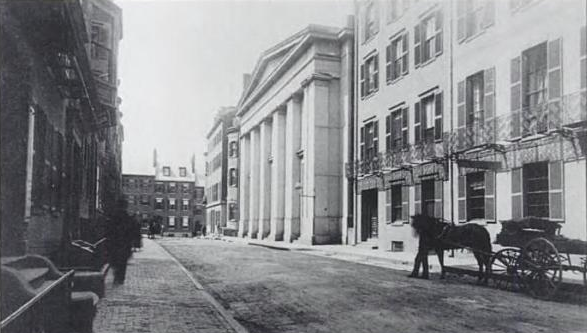
Founded in the early nineteenth century, Mount Vernon Congregational Church was part of the strong Congregationalist tradition in New England. Situated in Boston’s Beacon Hill area, the church served a growing urban population during a time of social and cultural change. It emphasized biblical preaching, personal conversion, and active engagement with the community—hallmarks of evangelical life in that era. Under the leadership of pastors such as Edward Norris Kirk, the church became a vibrant center of worship and outreach.
Within this setting, Edward Kimball served as a Sunday school teacher, a role that might have seemed modest but proved to be of great consequence. Kimball was not a famous preacher or theologian. Instead, he was known for his sincere faith and his concern for the spiritual well-being of the young men in his class. His approach reflected the values of Mount Vernon Congregational Church, where personal responsibility for sharing the Christian message was encouraged among all members, not just clergy.
Kimball’s lasting significance is tied to a single, well-known event. In 1855, he felt compelled to speak directly with one of his students, a young shoe salesman named Dwight L. Moody. Moody, who had recently come to Boston from rural Massachusetts, showed little initial interest in religious matters. Yet Kimball, concerned for his soul, went to the store where Moody worked and spoke with him personally about faith in Christ.
This simple act of courage and obedience had profound consequences. Moody soon experienced a conversion that would set him on a path to becoming one of the most influential evangelists of the nineteenth century. Through his preaching in the United States and Britain, Moody reached millions of people, established educational institutions, and helped shape the course of modern evangelicalism. In this way, Kimball’s quiet witness at Mount Vernon Congregational Church became a pivotal moment in a much larger story.
The connection between Kimball and the church illustrates the importance of local congregations in nurturing faith and encouraging personal ministry. Mount Vernon was not merely a place for formal worship; it was a community where individuals were equipped and inspired to live out their beliefs in practical ways. The church’s emphasis on Sunday school instruction, lay involvement, and evangelistic outreach created an environment in which someone like Kimball could have a meaningful impact.
Although Mount Vernon Congregational Church eventually declined and no longer exists as an active institution, its legacy endures through the lives it touched. The story of Edward Kimball serves as a powerful example of how ordinary acts of faithfulness can lead to extraordinary results. It also highlights the interconnected nature of religious influence, where one person’s effort can shape another’s life in ways that extend far beyond what might be imagined.
Today, the memory of Mount Vernon Congregational Church and Edward Kimball continues to inspire those who value personal witness and community-based faith. Their story underscores a timeless principle: that lasting impact is often rooted not in public recognition, but in quiet obedience and genuine concern for others. Through the life of Kimball and the ministry of the church, one sees how a single moment, faithfully acted upon, can echo across generations.
_____
Image Source/Credit:
• Author unknown, Public domain, via Wikimedia Commons
Related
Sorry, no records were found. Please adjust your search criteria and try again.
Sorry, unable to load the Maps API.