
Angus Library and Archive, housed within Regent’s Park College, is one of the most important repositories for the study of Baptist history and Protestant Nonconformity in the world. Located in Oxford, the library serves as a vital resource for scholars, students, and researchers interested in the development of dissenting religious traditions, particularly within Britain and beyond.
The origins of the Angus Library can be traced to the nineteenth century, when Baptist leaders recognized the need to preserve their historical records and theological writings. The library is named after Joseph Angus, a prominent Baptist minister and educator who served as principal of Regent’s Park College (then known as Regent’s Park College, London) in the mid-nineteenth century. Angus was deeply committed to theological education and the careful study of Scripture, and his legacy is reflected in the library that bears his name.
Regent’s Park College itself has a long history as a center for Baptist training. Originally founded in 1810 in London, the college later moved to Oxford in 1927, becoming a Permanent Private Hall of the University of Oxford. With this move came the consolidation of important collections of books, manuscripts, and archival materials, many of which form the core of the Angus Library today.
The library’s holdings are extensive and diverse. It contains printed books, pamphlets, manuscripts, church records, and personal papers related to Baptist life and wider Nonconformist history. These materials span several centuries, offering insight into the theological debates, missionary efforts, and social developments that have shaped Protestant dissent. Among its most valuable resources are early printed works from the seventeenth and eighteenth centuries, as well as records from local congregations that document everyday church life.
One of the distinguishing features of the Angus Library is its focus on the Baptist tradition. It holds significant collections related to key figures such as William Carey and Charles Haddon Spurgeon, as well as materials connected to the Baptist Missionary Society. These resources provide valuable insight into the development of global missions, evangelical theology, and the growth of Baptist communities around the world.
At the same time, the library’s scope is not limited to Baptists alone. It also includes materials relating to other Nonconformist groups, reflecting the broader context of religious dissent in England. This makes it an important center for the study of religious liberty, church-state relations, and the social history of Protestantism.
The impact of the Angus Library lies in its role as a guardian of historical memory. By preserving documents that might otherwise have been lost, it enables scholars to reconstruct the past with greater accuracy and depth. Its collections have supported countless academic studies, biographies, and historical works, contributing to a richer understanding of religious history.
In addition to its scholarly importance, the library serves an educational function within Regent’s Park College and the wider Oxford community. Students training for ministry, as well as those pursuing academic research, benefit from direct access to primary sources that illuminate the traditions they study.
Today, the Angus Library and Archive continues to grow, acquiring new materials and adapting to modern methods of cataloging and preservation. While maintaining its historical focus, it also engages with contemporary scholarship, ensuring that its collections remain relevant to current research.
In sum, the Angus Library and Archive stands as a vital institution for the study of Baptist and Nonconformist history. Through its careful preservation of the past, it provides a foundation for ongoing learning and reflection, linking present generations with the rich and complex heritage of Protestant dissent.
♦ _____ ♦
In 1810, the London Baptist Education Society (est. 1752) led in the founding of Stepney Academy, in East London. Moving to the center of Regent’s Park, London, in 1855, Stepney Academy became Regent’s Park College, a constituent College of the University of London. In 1927, Regent’s Park College moved to Oxford, and since 1957, it has been a Permanent Private Hall of the University of Oxford. The Angus Library and Archive at Regent’s Park College holds priceless treasures of Baptist history. Henry Jacob, founder of the J-L-J Church, received his BA and MA degrees from Oxford’s St. Mary Hall College. Jacob also served as music director at Oxford’s Corpus Christi College.
Copyrighted and used by permission from David Beale, Baptist History in England and America: Personalities, Positions, and Practices
_____
Image Source/Credit:
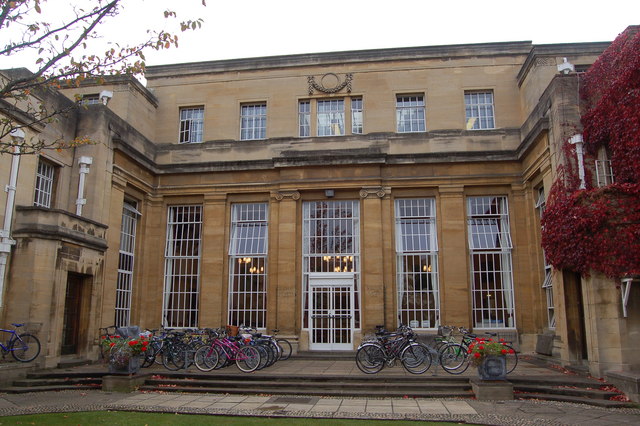
• Roger Davies / Refectory at Regent’s Park College, Oxford
Related
Sorry, no records were found. Please adjust your search criteria and try again.
Sorry, unable to load the Maps API.