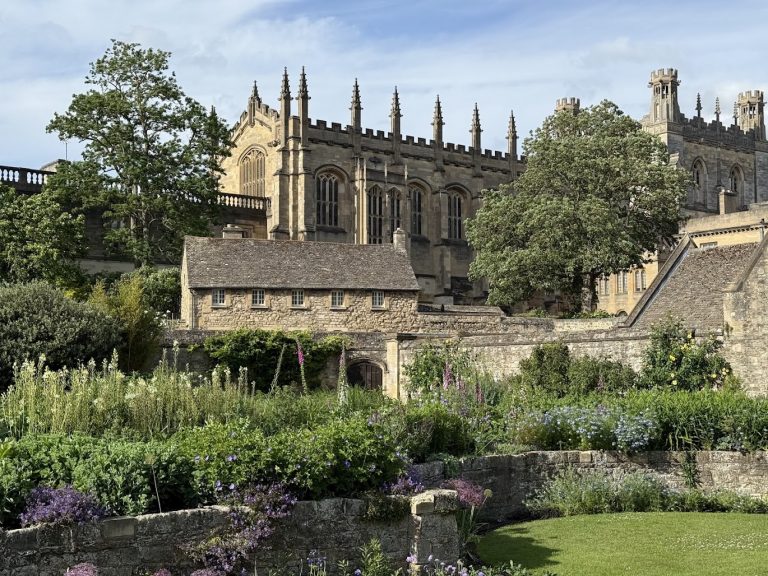
The “Holy Club” at Christ Church College in Oxford occupies an important place in the history of evangelical Christianity, particularly as the seedbed of what would later become the Methodist movement. Though the name “Holy Club” was originally intended as a term of mockery, it has since come to represent a sincere and disciplined effort among a small group of students to pursue a life of serious Christian devotion.
The origins of the Holy Club date to the late 1720s, when John Wesley returned to Oxford and joined a small group of like-minded individuals committed to spiritual growth and accountability. Among them was his brother, Charles Wesley, along with several other students. While John Wesley became the recognized leader, the group operated as a close fellowship rather than a formal organization.
The members of the Holy Club were distinguished by their rigorous approach to Christian living. They established a structured routine that included daily prayer, regular study of the Bible and classical Christian writings, and frequent participation in the sacrament of Holy Communion. They also engaged in acts of charity, visiting prisoners, caring for the poor, and teaching children. Their commitment to discipline and order led their fellow students to mockingly refer to them as “Methodists,” a name that would later be embraced by the movement they inspired.
At a time when religious practice in England was often marked by formality and routine, the Holy Club sought a more earnest and heartfelt expression of faith. Their emphasis on personal holiness, accountability, and practical service reflected a desire to live out Christian teaching in a consistent and visible way. While their methods were sometimes viewed as excessive or overly zealous, they nonetheless demonstrated a seriousness that would have lasting influence.
The experience of the Holy Club also played a crucial role in shaping the spiritual journeys of its members. For John Wesley in particular, this period was formative, though he later came to recognize that his efforts at disciplined living, while valuable, did not yet bring him the assurance of salvation he sought. That realization would eventually lead to his well-known conversion experience in 1738, which became a turning point in his ministry.
The legacy of the Holy Club extends far beyond its brief existence at Oxford. It laid the groundwork for the Methodist revival of the eighteenth century, which spread throughout Britain and across the Atlantic. The movement emphasized preaching, small group fellowship, and social concern—elements that were already present in the practices of the Holy Club.
Today, the memory of the Holy Club is closely associated with Christ Church College and the broader history of Oxford University. It serves as a reminder that significant movements often begin with small gatherings of individuals committed to shared convictions. What began as a modest student fellowship would grow into a worldwide movement that has influenced millions.
In its history and legacy, the Holy Club stands as a testament to the power of disciplined faith, community, and service. It reflects a moment when a handful of students, seeking to live faithfully, helped to spark a renewal that would shape the course of Christian history.
♦ _____ ♦
The Holy Club was an organization at Christ Church, Oxford, formed in 1729 by brothers John and Charles Wesley, who later founded Methodism.[1][2][3] The brothers and associates, including George Whitefield, met for prayer, Bible study, and pious discipline.
_____
Image Source/Credit (in order):
• Photo by the author
Related
Sorry, no records were found. Please adjust your search criteria and try again.
Sorry, unable to load the Maps API.