Favorite
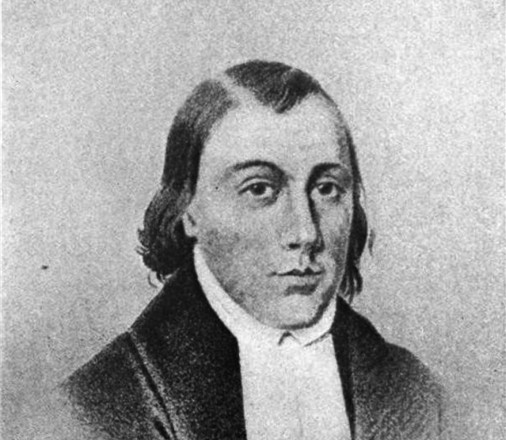
John Blair Smith was a significant figure in the early history of American higher education and Presbyterian leadership, best remembered for his role as the first president of Hampden–Sydney College. His life, though relatively brief, was marked by intellectual ability, religious conviction, and a steady commitment to shaping young men for both ministry and civic responsibility in the formative years Read more...
Favorite
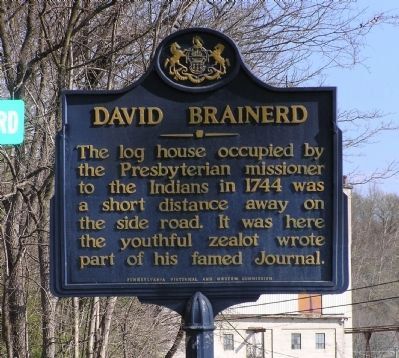
The David Brainerd Log House is a modest yet historically significant site associated with David Brainerd, one of the most influential missionary figures of early American history. Located near Easton, the log house stands as a reminder of Brainerd’s labors among Native American communities during the mid-eighteenth century. David Brainerd was born in 1718 in Connecticut and came of age Read more...
Favorite
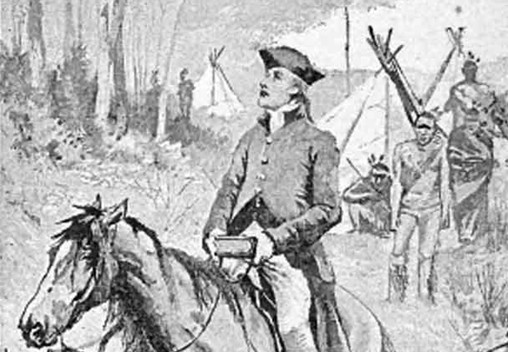
David Brainerd (1718-1747) died at age 29, but inspired missionaries such as William Carey and Jim Eliot. He was a struggling farmer but during the Great Awakening on July 12, 1739, “the Lord… brought me to a hearty desire to exalt him, to set him on the throne, and to ‘seek first his Kingdom,’ i.e., principally and ultimately to aim Read more...
Favorite
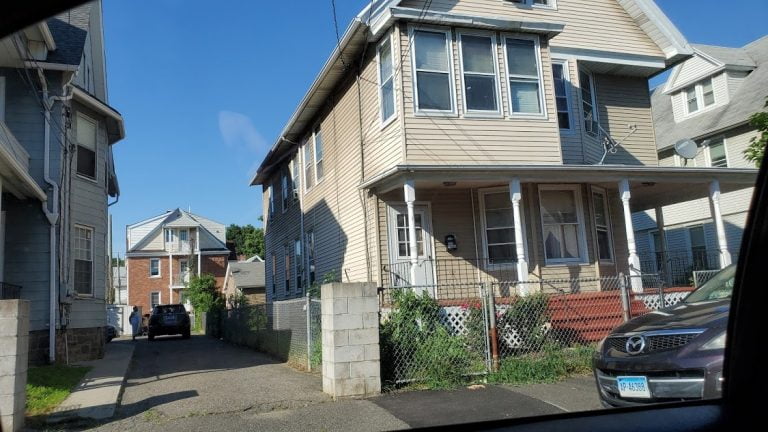
Wikipedia Crosby and Rider moved to 226 Wells Street, Bridgeport, Connecticut in summer 1906 because of Rider’s cancer.[297] Carrie died of intestinal cancer in July 1907, and Phoebe Knapp died on July 10, 1908.[91] Weeks later, Ira Sankey died having just sung “Saved by Grace”, one of Crosby’s most popular compositions.[298] On May 2, 1911, Crosby spoke to 5,000 people at the opening meeting of the Read more...
Favorite
I left Wisconsin for a visit to Myanmar (ancient Burma), where throughout the entire country the legacy of Adoniram Judson (see Plymouth, MA) is visible. During my trip, I read the biography of Judson, To The Golden Shore. When it mentioned an individual with ties to Wisconsin, I had to learn more, and started digging thru the archives. Over a Read more...
Favorite
It was a five mile walk along the CB&Q railroad track, but the teenager, who also worked long hours at a coal mine, had heard about the Salvation Army meetings in Canton and decided he wanted to see what it was all about. Meetings at that time often lasted until 11 p.m., but after walking the five miles home after Read more...
Favorite
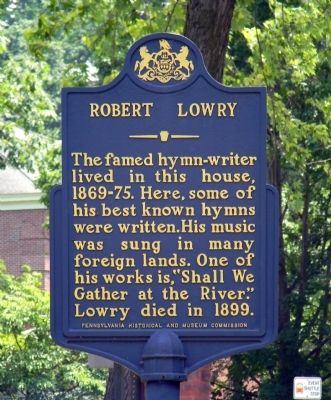
Rev. Robert Lowry was born in Philadelphia, Pennsylvania on March 12, 1826 and at age 22 entered the University of Lewisburg (now Bucknell University). After graduating at age 28 he served as pastor in West Chester, PA; New York City; Brooklyn; and then returned to Lewisburg, where he was a professor and received an honorary doctorate. Monument Text: The Read more...
Favorite
Hymn History: We Three Kings of Orient Are Author: John Henry Hopkins Jr. “A clergyman who combined literary ability with musical composition, writing both words and tunes for his hymns”(Wikipedia) The Origin of the Hymn “We Three Kings of Orient Are” The Christmas carol We Three Kings of Orient Are is one of the most recognizable and enduring Read more...
Favorite
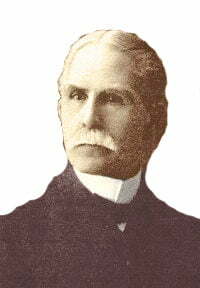
From FindaGrave: Hymn Composer. The author of over 2,000 hymns which are still available in print, he is remembered his widely popular songs “What a Wonderful Savior!,” “Enough for Me,” “Is Thy Heart Right With God?,” “Are You Washed in the Blood?,” “No Other Friend Like Jesus,” “Is Your All on the Altar?,” and “I Must Tell Jesus.” He also Read more...
Favorite
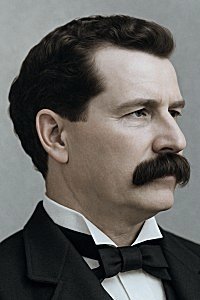
Hymn History: When the Roll is Called Up Yonder Author: James Milton Black “Well, I trust when the roll is called up yonder, she’ll be there.”(Spoken by James Milton Black when a girl was absent from his Sunday school class) The Origin of the Hymn “When the Roll is Called Up Yonder” The hymn When the Roll Is Read more...
Favorite
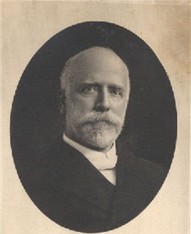
Reuben Archer Torrey, also known as R.A. Torrey, worked with Dwight L. Moody in Chicago, and became superintendent of what is now Moody Bible Institute, then-Chicago Evangelization Society. In 1894 he was pastor of Chicago Avenue (now Moody) Church. Heading to the West Coast, Torrey was dean of the Bible Institute Of Los Angeles (BIOLA), and in 1915 he was Read more...
Favorite
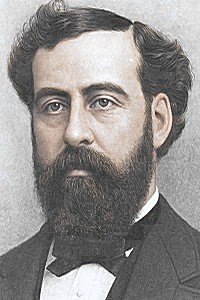
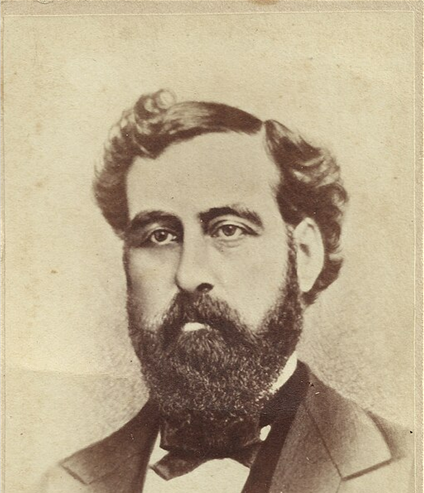
Although it is in a cemetery, this is not the grave of Phillip P. Bliss, rather his earthly remains are in the mass grave in Ashtabula, OH. However, because his home was in Rome, Pennsylvania, the cemetery features a cenotaph (a monument built to honor someone whose remains are elsewhere) to P. P. Bliss. Hymns by Philip Bliss found Read more...
Favorite
Image Credit: Photo: Philip P. Bliss Marker. www.hmdb.org/PhotoFullSize.asp?PhotoID=155306. The marker reads: The great singing evangelist and gospel song writer was born July 9, 1838, in a log house which stood a little distance from here. He lived and worked on the farm and in nearby lumber camps until the age of 16. _____ Hymn History: Hallelujah, What a Savior! Read more...
Favorite
Milton Stewart (1838-1923) was described in the 1924 American Biography as: A Christian layman who gave the greater part of a vast fortune and the best thought of a keen and prescient mind to the advancement of the Kingdom to which he yielded devoted allegiance. Milton Stewart furthered great practical and religious projects in a manner distinctively his own, frequently Read more...

Favorite
On our road trip filming the first season of Our Christian Heritage TV, we had just interviewed a Philip Bliss impersonator, who shared the life and songs of the second most famous Christian hymnwriter. Philip Bliss (1838-1876), wrote many songs in our hymnals, including “Almost Persuaded,” “Wonderful Words of Life,” “Let the Lower Lights Be Burning,” “I am so glad Read more...
Favorite
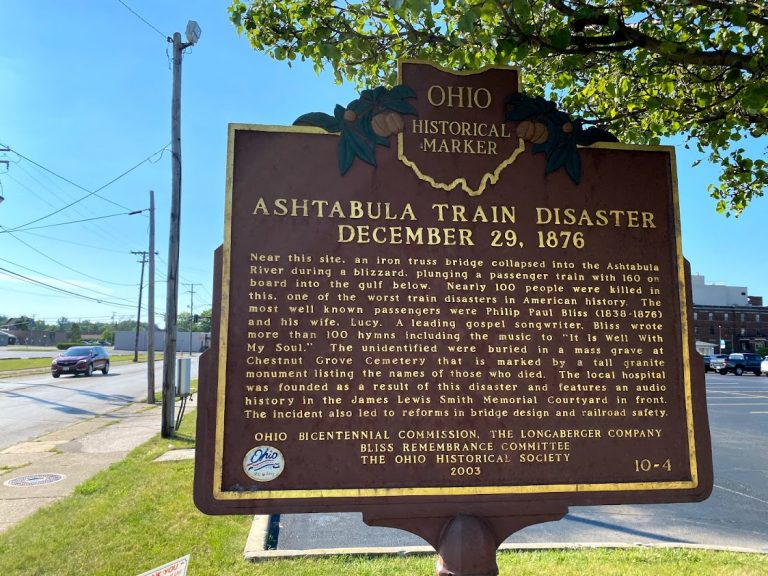
Watch a short video about Phillip Bliss filmed on location From the Marker: “Near this site, an iron truss bridge collapsed into the Ashtabula River during a blizzard, plunging a passenger train with 160 on board into the gulf below. Nearly 100 people were killed in this, one of the worst train disasters in American history. The most well Read more...
Favorite
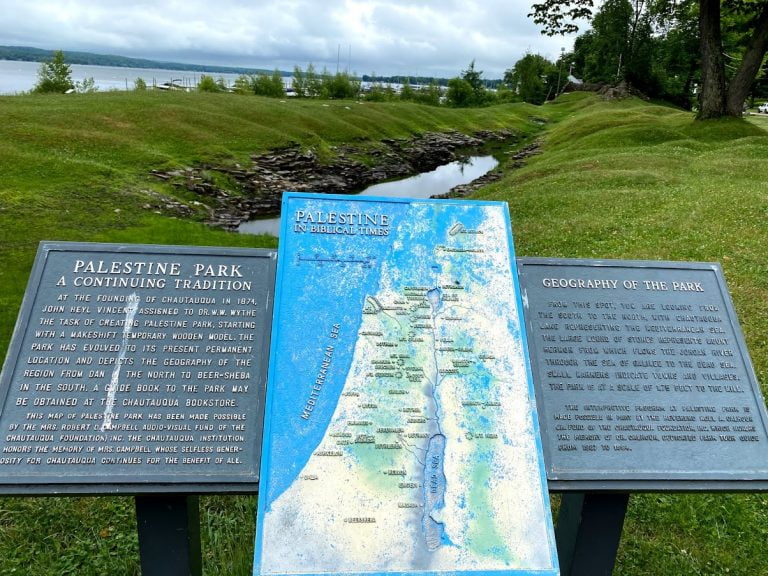
Palestine Park is a unique historical and educational attraction located within the grounds of the Chautauqua Institution in western New York State. Designed in the late nineteenth century, the park is a full-scale model of the Holy Land as it was understood in biblical geography, offering visitors a physical representation of the landscapes described in Scripture. The park was developed Read more...
Favorite
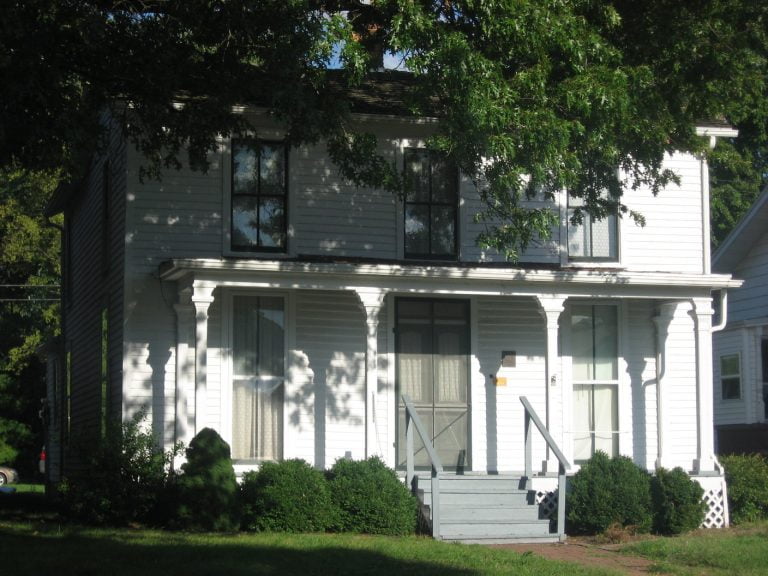
Three-time Democrat Nominee for President, William Jennings Bryan, was born in the small town of Salem, Illinois. Myron Lloyd and Jim Koehler from the William Jennings Bryan Boyhood Home discuss his life on Our Christian Heritage. Owned and operated by the City of Salem, Illinois, this home was constructed in 1852 for Illinois State Senator Silas Bryan. In 1860, Silas’ Read more...
Favorite
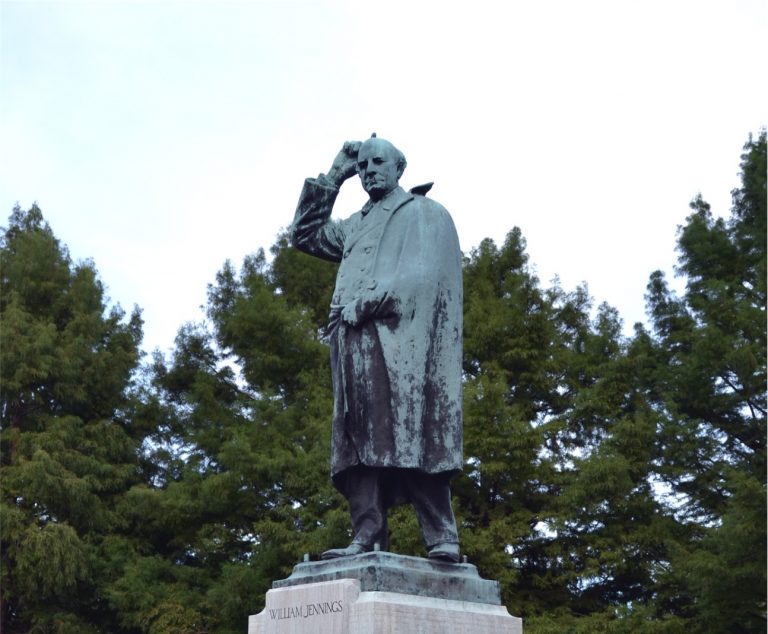
William Jennings Bryan Park, along with the nearby statue and historical marker dedicated to William Jennings Bryan, forms an important commemorative landscape in Lincoln. These sites preserve the memory of one of America’s most influential orators and political figures of the late nineteenth and early twentieth centuries, honoring both his public achievements and his deep connections to Nebraska. The park Read more...
Favorite
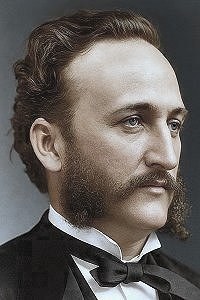
Ira D. Sankey (1840–1908), often remembered as the “sweet singer of Methodism,” experienced a conversion that profoundly shaped not only his own life but also the direction of gospel music in the late nineteenth century. His spiritual turning point was neither dramatic in outward spectacle nor sudden in timing; rather, it was the result of steady influence, personal reflection, and Read more...