Favorite
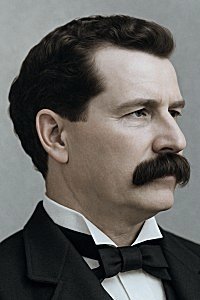
James Milton Black (1856-1938) is widely known as the author of the words and music to the popular gospel song When the Roll is Called Up Yonder. He was, however, a very private person whose failure to leave much documentation about his work has frustrated musicologists for decades. No photograph of him suitable for large-size reproduction in gospel song histories, Read more...

Favorite
Reuben Archer Torrey, also known as R.A. Torrey, worked with Dwight L. Moody in Chicago, and became superintendent of what is now Moody Bible Institute, then-Chicago Evangelization Society. In 1894 he was pastor of Chicago Avenue (now Moody) Church. Heading to the West Coast, Torrey was dean of the Bible Institute Of Los Angeles (BIOLA), and in 1915 he was Read more...
Favorite
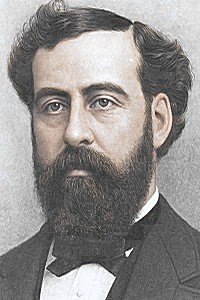
Although it is in a cemetery, this is not the grave of Phillip P. Bliss, rather his earthly remains are in the mass grave in Ashtabula, OH. However, because his home was in Rome, Pennsylvania, the cemetery features a cenotaph (a monument built to honor someone whose remains are elsewhere) to P. P. Bliss. Hymns by Philip Bliss found Read more...
Favorite
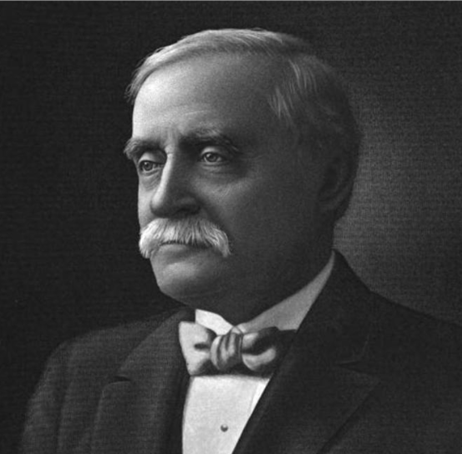
Milton Stewart (1838-1923) was described in the 1924 American Biography as: A Christian layman who gave the greater part of a vast fortune and the best thought of a keen and prescient mind to the advancement of the Kingdom to which he yielded devoted allegiance. Milton Stewart furthered great practical and religious projects in a manner distinctively his own, frequently Read more...

Favorite
On our road trip filming the first season of Our Christian Heritage TV, we had just interviewed a Philip Bliss impersonator, who shared the life and songs of the second most famous Christian hymnwriter. Philip Bliss (1838-1876), wrote many songs in our hymnals, including “Almost Persuaded,” “Wonderful Words of Life,” “Let the Lower Lights Be Burning,” “I am so glad Read more...
Favorite
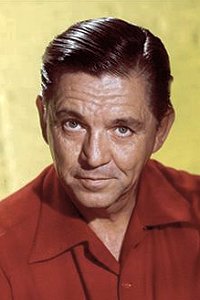
Born in Kellyville, Texas, Stuart Hamblen made his way to Hollywood. A “singing cowboy” – he wrote the hit song “I won’t go hunting Jake (but I’ll go chasing women)” that placed #3 in the US for 1950. At Billy Graham’s 1949 Los Angeles Crusade, the “original juvenile delinquent” and alcoholic was converted, quit doing alcohol commercials, gambling, and horse Read more...
Favorite
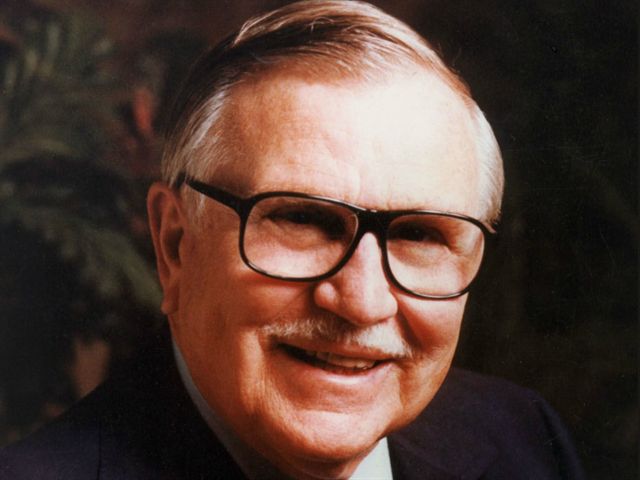
Heard daily across America and around the world, J. Vernon McGee’s Thru The Bible radio broadcasts are still aired and listened to by many. Former pastor of Church of the Open Door, Los Angeles, chairman of the Bible department at BIOLA, and posthumously inducted into the NRB Hall of Fame. Exact Grave site not marked – but is Radiant Read more...
Favorite
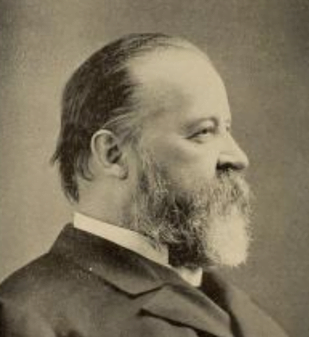
A Presbyterian pastor with Presbyterian pastor ancestors, he was a pastor in St. Louis for 32 years. A friend of D.L. Moody and a mentor to Charles Scofield, Brookes led the premillennial dispensational movement through the Niagara Bible Conferences. The Brookes Bible Institute nearby is named in his honor. The Bellefontaine Cemetery is one of the few to have Read more...
Favorite
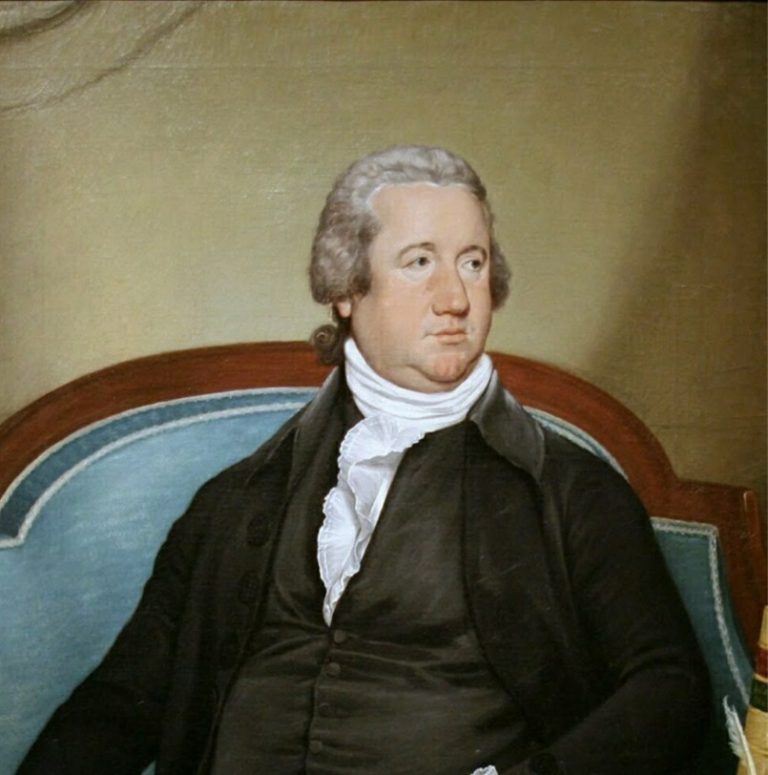
Frederick Muhlenberg stands as one of the steady, formative figures of Lutheranism in early America. Though he later became widely known for his service in public life, his roots were firmly planted in the church. As a Lutheran pastor in colonial America, he carried forward the spiritual and cultural heritage brought from Germany while helping shape a distinctly American Lutheran Read more...
Favorite
Hymn History: Bringing in the Sheaves Author: Knowles Shaw “His nickname was ‘The Singing Evangelist.’” (Graham McKay) The Origin of the Hymn “Bringing in the Sheaves” Few hymns capture the spirit of Christian labor and joyful harvest quite like “Bringing in the Sheaves.” Its simple, earnest call to sow in faith and reap in joy has encouraged countless believers Read more...
Favorite
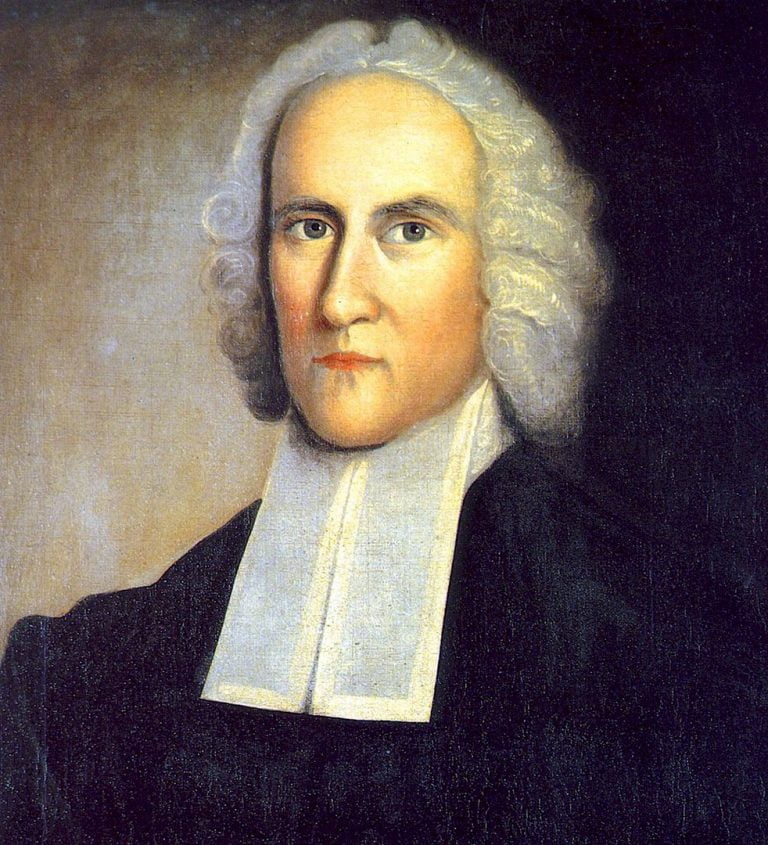
Join Randy as we go on location to Princeton Cemetery, just outside of Princeton University, to the grave of America’s founding pastors. We’ll see the tomb of Aaron Burr, the graves of Jonathan Edwards (Sinners in the Hands of an Angry God), Samuel Davies (see Polegreen), and John Witherspoon. From Christian Hall of Fame: American theologian and philosopher, Jonathan Edwards, Read more...
Favorite
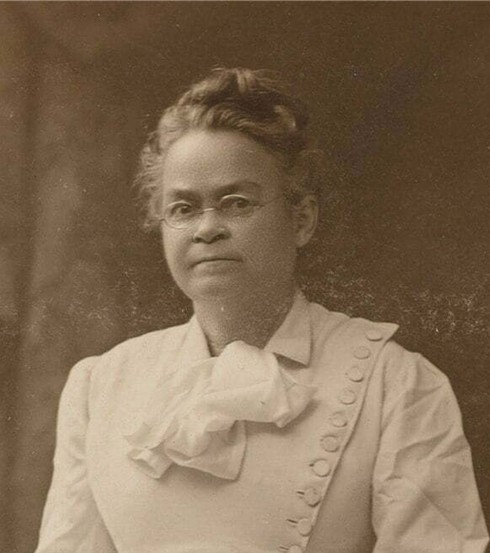
From Wikipedia Carrie Amelia Nation (forename sometimes spelled Carry;[1] November 25, 1846 – June 9, 1911) was an American activist who was a radical member of the temperance movement, which opposed alcohol before the advent of Prohibition. She is noted for attacking alcohol-serving establishments (most often taverns) with a hatchet. Nation was also concerned about tight clothing for women; she refused to wear a corset and urged women not Read more...
Favorite
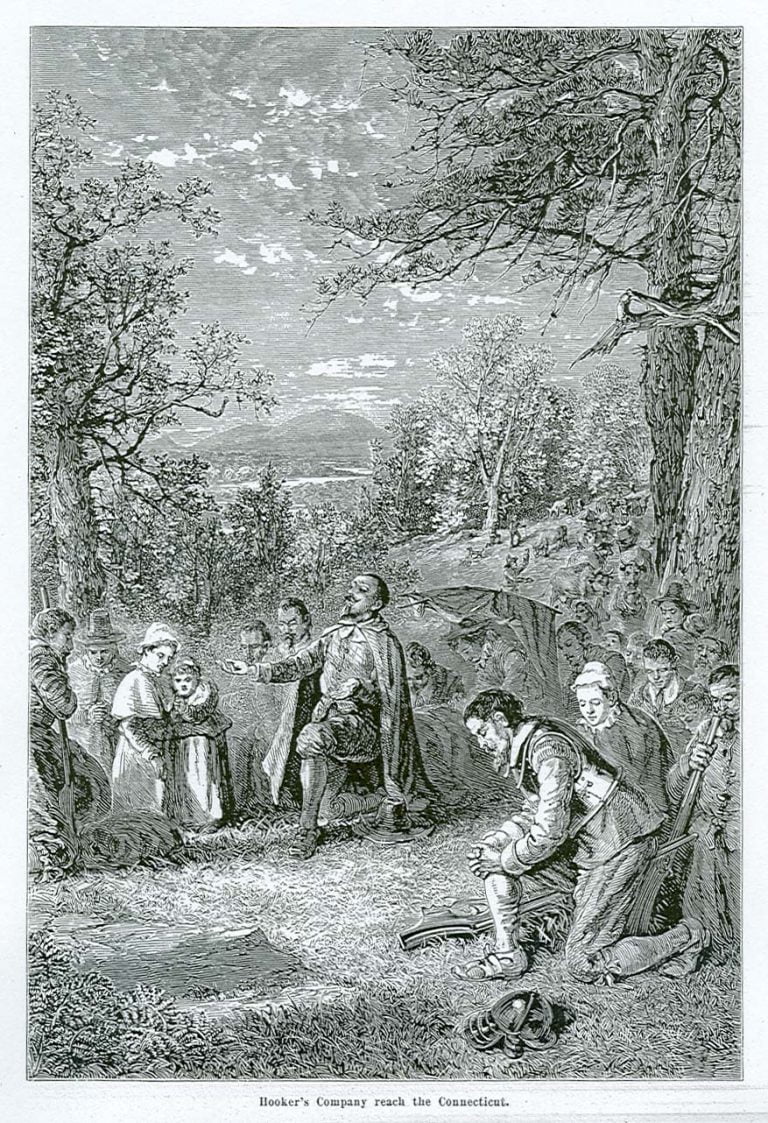
Thomas Hooker (see his statue nearby) would continue to minister until his death in 1647. He was buried in the “Ancient Burying Ground” near the original site of the church. In 1739, First Church would move to its current spot, adjacent the Ancient Burying Ground, where it is now known as Center Church. The marker by his grave reads: Thomas Read more...
Favorite
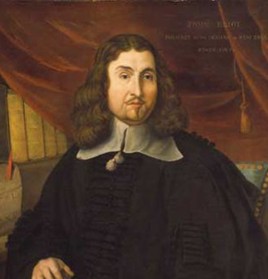
From Wikipedia: John Eliot (c. 1604—21 May 1690) was a Puritan missionary to the American Indians who some called “the apostle to the Indians”[1][2][3] and the founder of Roxbury Latin School in the Massachusetts Bay Colony in 1645. Produced the first Bible published in America. Featured Image Credit: Roxbury Latin School, Public domain, via Wikimedia Commons Read more...
Favorite
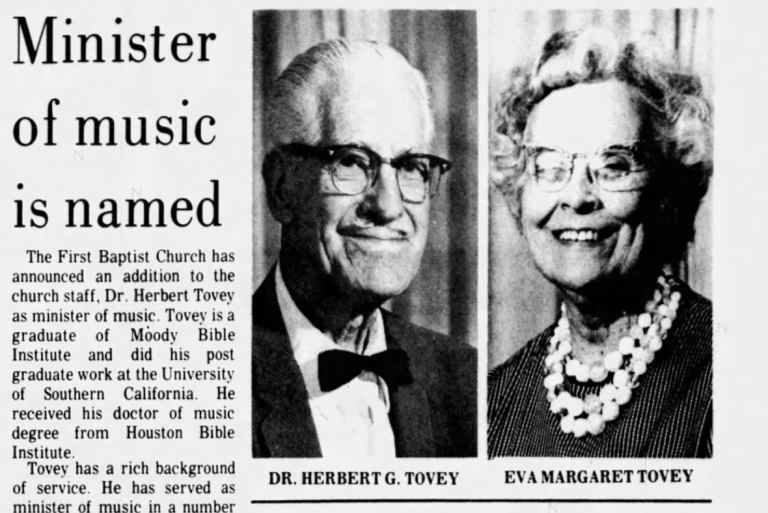
At 26, Herbert G. Tovey wrote the song “Give Me a Passion for Souls” – out of 1,500 songs published under his Sacred Music Foundation, this was the most popular. 1 Give me a passion for souls, dear Lord, A passion to save the lost; O that Thy love were by all adored, And welcomed at any cost. Refrain: Jesus, Read more...
Favorite
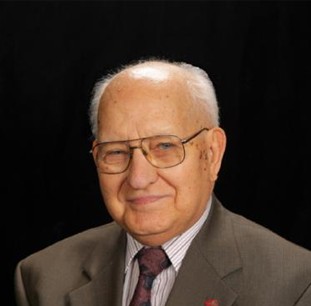
From GFA Missions: On completion of his assignment at the leprosarium, Dr. and Mrs. Dreisbach returned to the U.S., made preparation to proceed on to Africa, and in 1948 began full-time missionary working in Nigeria, West Africa. In their early years in Africa, Dr. Dreisbach was superintendent of three large provincial leprosy hospitals in northern Nigeria. Being in an Read more...
Favorite
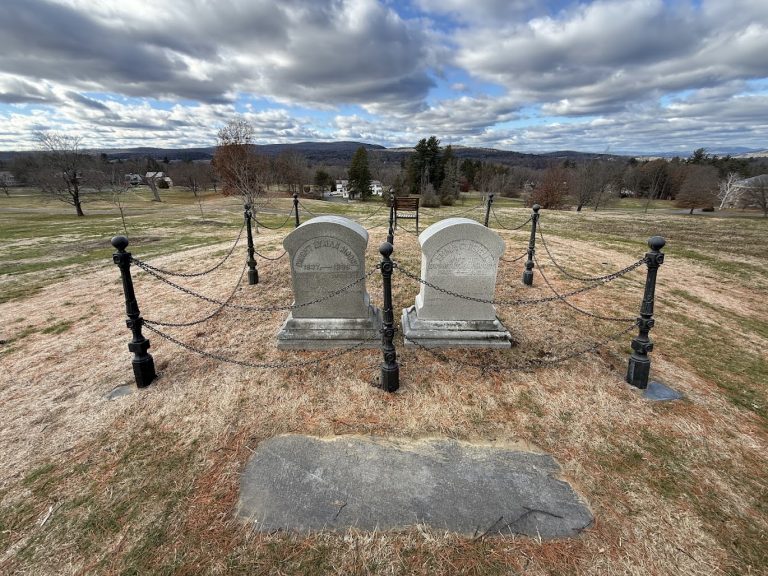
Dwight Lyman Moody (1837-1899) was born in Northfield, Massachusetts, the seventh of nine children. The death of his father at age four hurt the family financially, and Moody was sent out to work. At 17 he worked for his uncle in his shoe store in Boston (turn back a few pages to hear how Edward Kimball paid him a visit Read more...
Favorite
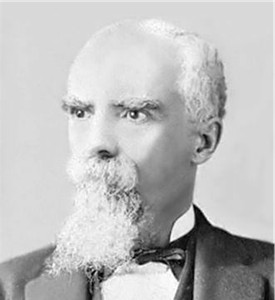
Watch Douglas Whitley as E.M. Bounds: From Wikipedia: Edward McKendree Bounds (August 15, 1835 – August 24, 1913) prominently known as E.M. Bounds, was an American author, attorney, and member of the Methodist Episcopal Church South clergy. He is known for writing 11 books, nine of which focused on the subject of prayer. Only two of Bounds’ books were published before he died. After his death, Rev. Claudius (Claude) Read more...
Favorite
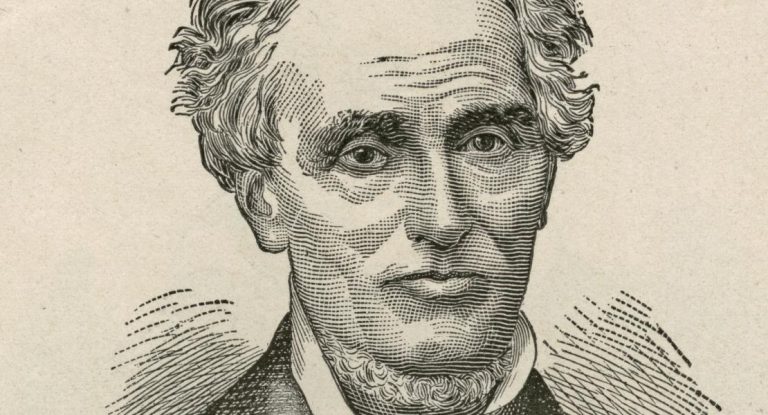
From Wikipedia: During his 40-year ministry, Peck contributed to the establishment of 900 Baptist churches, saw 600 pastors ordained and 32,000 were added to the Baptist faith. He died in Rock Springs, Illinois, where he was first buried. His body was reinterred at Bellefontaine Cemetery, St. Louis.[8] These other Baptists include: Adiel Sherwood, founder of the Georgia Baptist Convention Jonathan Goble, Read more...
Favorite
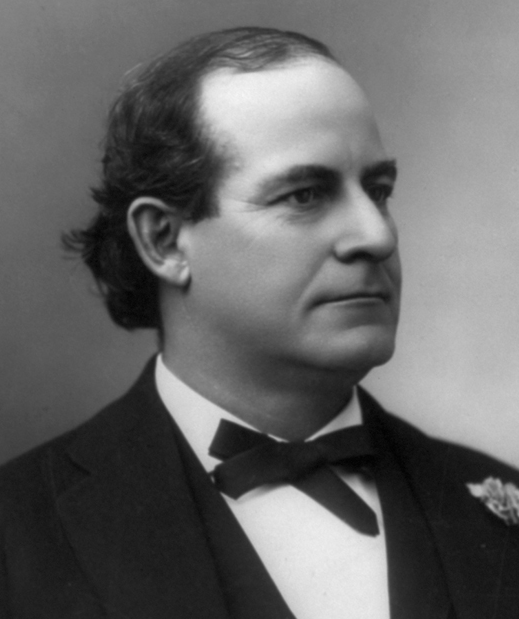
The Boy Orator of the Plains, Three time Democrat nominee for President, and the Lawyer of the Scopes Trial. Image Credit: James E. Purdy, Public domain, via Wikimedia Commons Read more...