Favorite
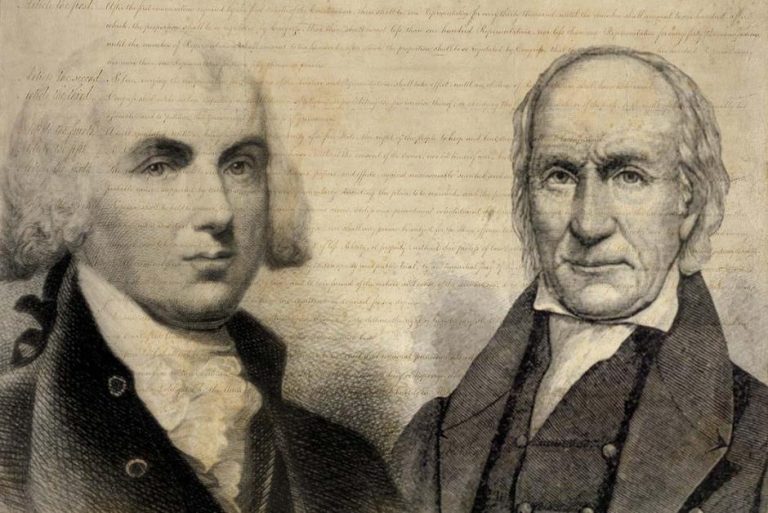
The meeting between John Leland and James Madison stands as a notable moment in the early history of American religious liberty. Though surrounded by some elements of tradition and later retelling, the encounter symbolizes a real and consequential alliance between Baptist advocates of religious freedom and the political leaders who would shape the United States Constitution. John Leland, a prominent Read more...

Favorite
At Williams College (Congregational), a twelve-foot-high marble monument, called the Haystack Prayer Meeting Memorial, commemorates “The Birthplace of American Foreign Missions 1806,” out of which came Baptists Adoniram Judson and Luther Rice. See the section, “Haystack Prayer Meeting at Williams College (1806),” in Chapter 17. Copyrighted and used by permission from David Beale, Baptist History in England and America: Personalities, Positions, and Read more...
Favorite
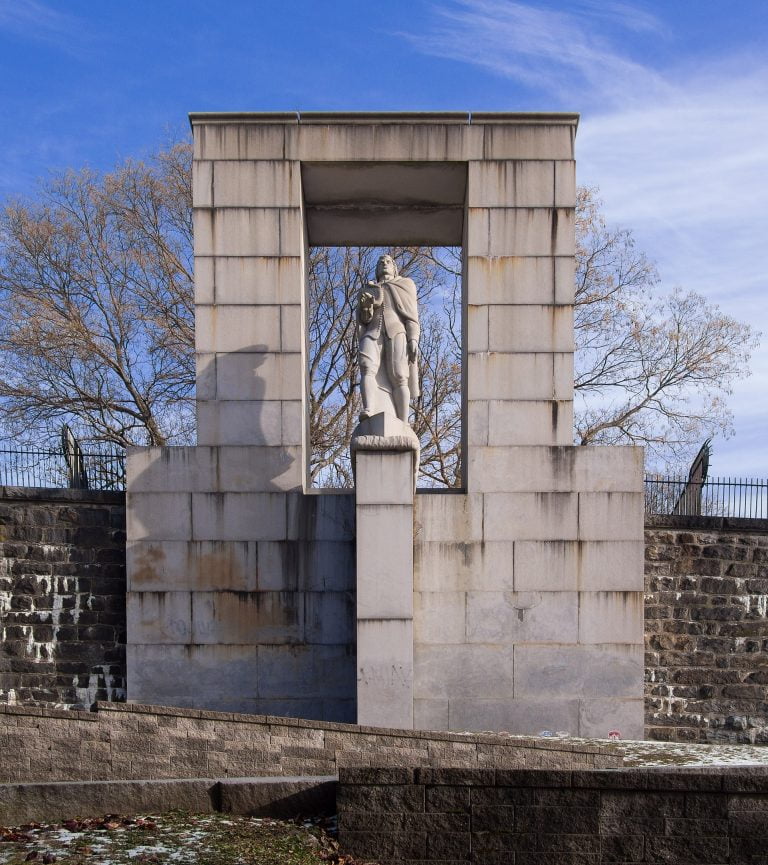
The Roger Williams National Memorial preserves one of the most meaningful historic sites in early American religious history: the resting place and memorial statue of Roger Williams. Both the statue and the story of his ashes reflect not only the life of a remarkable man but also the enduring ideals of liberty of conscience and separation of church and state. Read more...
Favorite
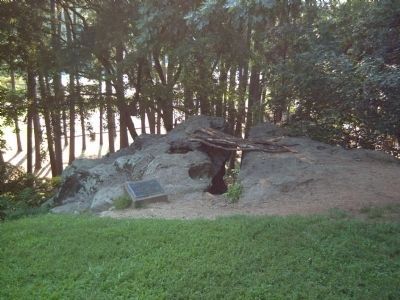
Marked by a tall obelisk at 1500 Washington Avenue, is the grave of George Washington’s mother. Near the obelisk, an inscription on Meditation Rock says of her, “Here Mary Ball Washington prayed for the safety of her son and country during the dark days of the Revolution.” Mary’s home is at 1200 Charles Street. Copyrighted and used by permission from David Read more...
Favorite
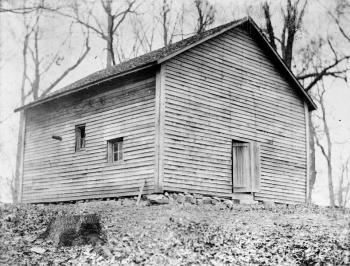
Shubal Stearns (1706–1771) was one of the most influential figures in the spread of Baptist life in the American South during the eighteenth century. His leadership at Sandy Creek Baptist Church helped spark a powerful revival movement that reshaped the religious landscape of the southern colonies and left a lasting legacy on American Christianity. Stearns was born in Boston, Massachusetts, Read more...
Favorite
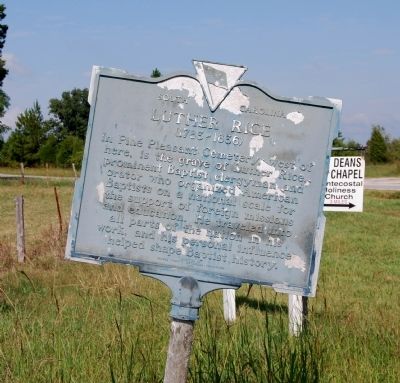
Luther Rice (1783–1836) was a pivotal figure in the early development of Baptist missions and institutions in the United States. Though less widely known than some of his contemporaries, his influence was profound, particularly in organizing support for global missions and in helping to establish what would become one of the leading Baptist universities in America. Rice was born in Read more...
Favorite
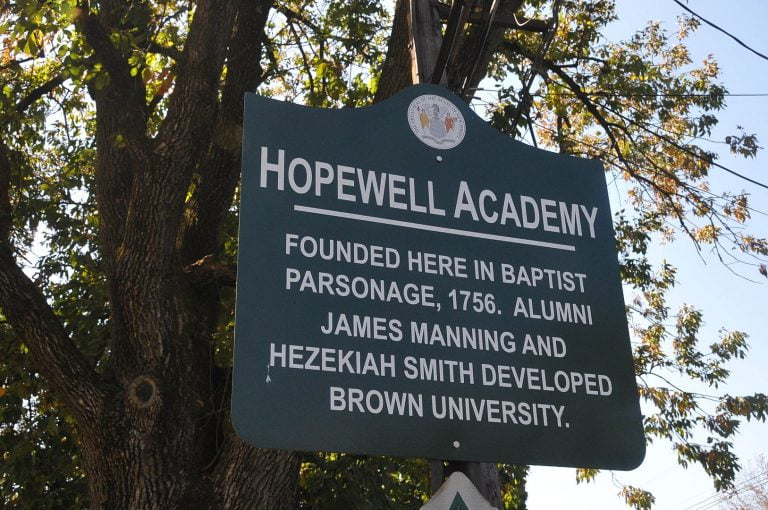
Hopewell Academy was one of the earliest and most influential educational institutions established by Baptists in colonial America. Founded in 1756 in Hopewell, the academy played a significant role in shaping both religious leadership and higher education in the colonies, leaving a legacy that extended far beyond its modest beginnings. The academy was established under the leadership of Isaac Eaton, Read more...
Favorite
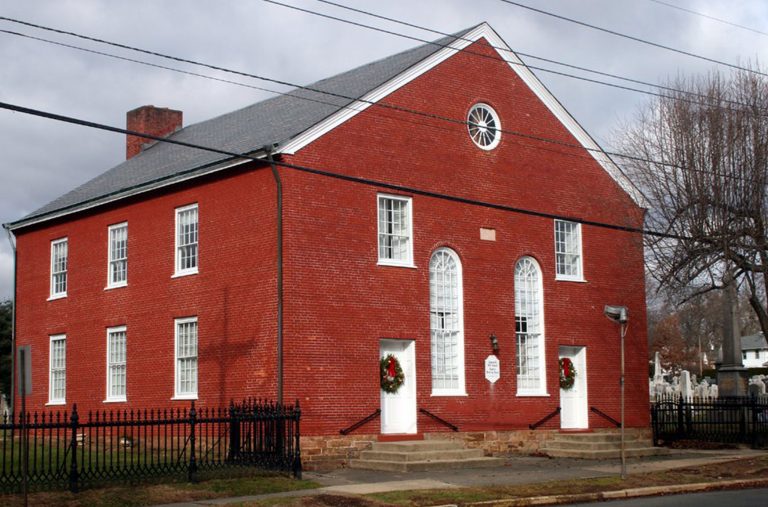
Hopewell Baptist Church is one of the oldest Baptist congregations in New Jersey, with roots reaching back into the early eighteenth century. Its history reflects the growth of Baptist life in the Middle Colonies and its connection to the broader movement for religious liberty in early America. The church was founded in 1715 in the rural community of Hopewell, during Read more...
Favorite
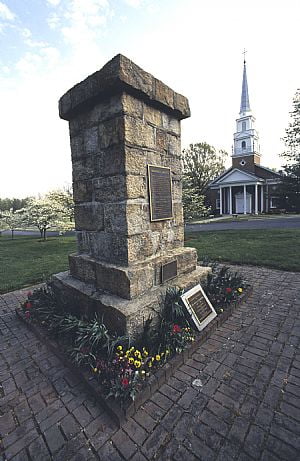
On Washington Avenue, stands the Thomas Jefferson Religious Freedom Monument, made from stones sent from churches across the country. It commemorates Jefferson’s Virginia Religious Freedom Statute, promising that “no man shall… suffer on account of his religious opinions or belief.” The Statute became the basis for the religion clause of the First Amendment. copyrighted and used by permission from David Beale, Baptist History Read more...
Favorite
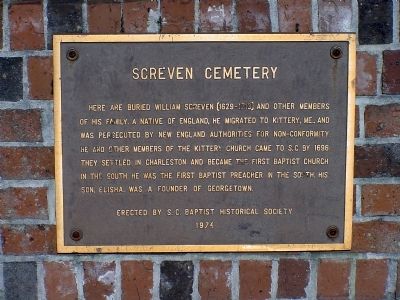
The Screven Family Cemetery in Georgetown is one of the oldest and most historically significant burial grounds in the American South. Though modest in size and appearance, it preserves the memory of a family deeply connected to the early religious and civic development of the region, particularly in the rise of Baptist life in the southern colonies. The cemetery dates Read more...
Favorite
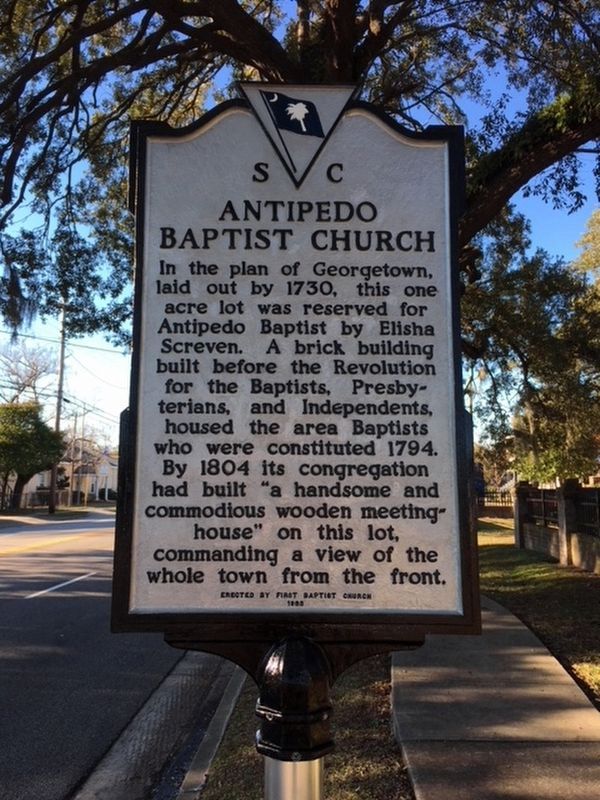
In the 700 block of Church Street, the remains of Edmund Botsford (1745-1819), early pastor of Antipedo Baptist (later First Baptist) Church, lie buried in the Old Baptist Cemtery. A marker was placed at Botsford’s grave in 2004. Copyrighted and used by permission from David Beale, Baptist History in England and America: Personalities, Positions, and Practices The Cyclopedia of Biblical, Read more...
Favorite
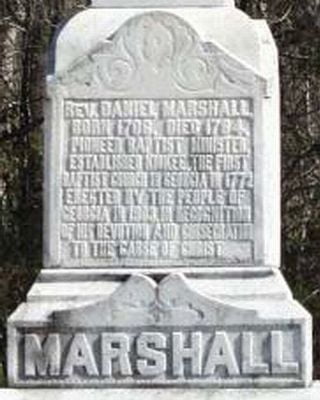
Daniel Marshall (1706–1784) stands as one of the most important pioneer figures in the spread of Baptist Christianity in the American South. A man of humble beginnings but deep conviction, Marshall helped carry the message of evangelical faith into regions where it had scarcely been known, leaving a lasting imprint on the religious life of Georgia and beyond. Daniel Marshall Read more...
Favorite
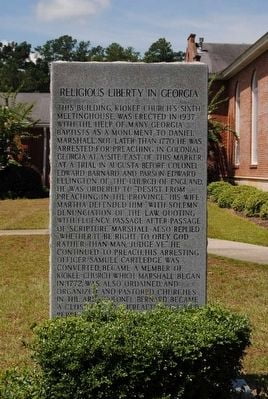
From the marker: This building, Kiokee Church’s sixth meeting house, was erected in 1937 with the help of many Georgia Baptists as a monument to Daniel Marshall. Not later than 1770, he was arrested for preaching in Colonial Georgia at a site east of this marker. At a trial in Augusta before Colonel Edward Barnard and Parson Edward Ellington of Read more...
Favorite
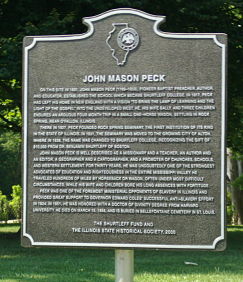
Pioneer missionary, John Mason Peck (1789-1858), saturated Missouri and Illinois with the gospel, evangelizing, organizing churches, and establishing the Baptist movement in the West. At Southern Illinois University Dental School, this memorial plaque highlights his life and legacy: On this site in 1831, John Mason Peck (1789-1858), pioneer Baptist preacher, author, and educator, established the school which became Shurtleff Read more...
Favorite
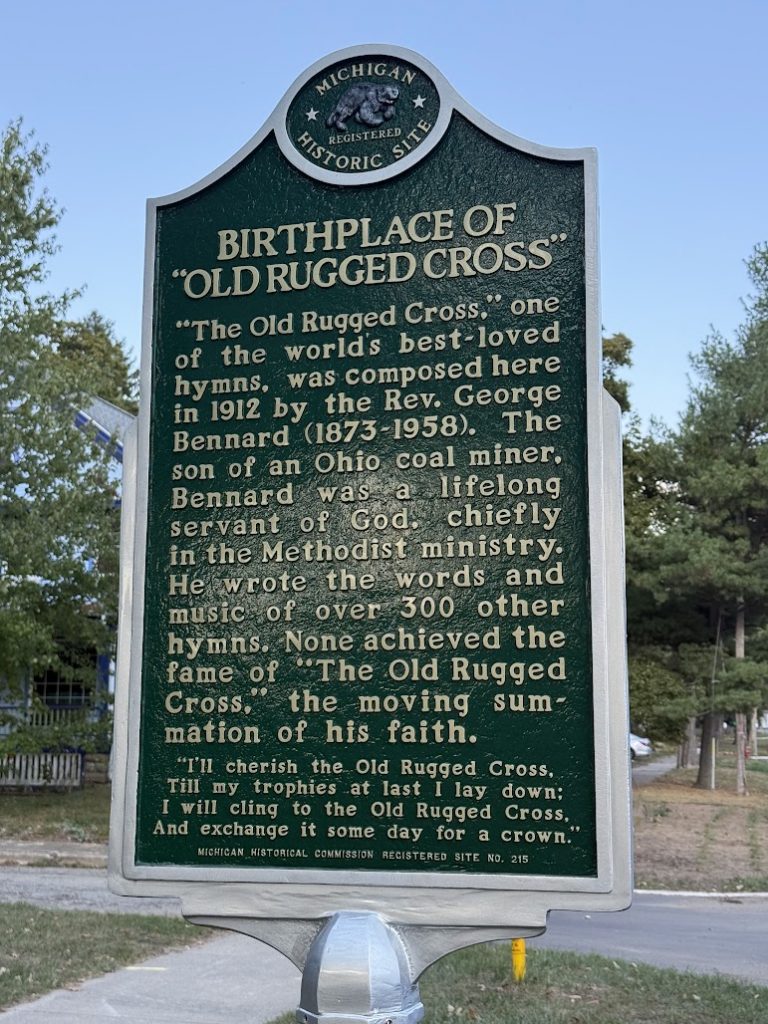
The Old Rugged Cross is one of the most beloved – and most claimed hymns! Our Christian Heritage has been to the Old Rugged Cross church on Pokagon, MI where it was first performed in its entirety and we’ve interviewed the couple that restored the church. We’ve also been to Sturgeon Bay, WI where the Friends Church is that it Read more...
Favorite
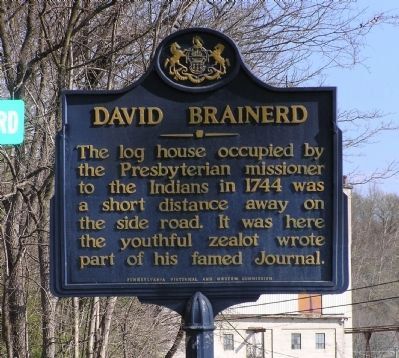
The David Brainerd Log House is a modest yet historically significant site associated with David Brainerd, one of the most influential missionary figures of early American history. Located near Easton, the log house stands as a reminder of Brainerd’s labors among Native American communities during the mid-eighteenth century. David Brainerd was born in 1718 in Connecticut and came of age Read more...
Favorite
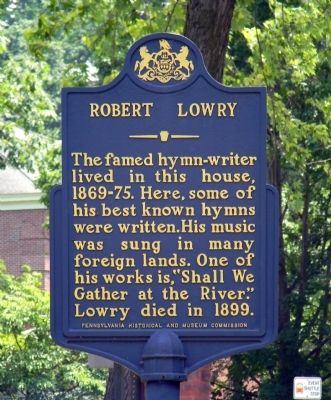
Rev. Robert Lowry was born in Philadelphia, Pennsylvania on March 12, 1826 and at age 22 entered the University of Lewisburg (now Bucknell University). After graduating at age 28 he served as pastor in West Chester, PA; New York City; Brooklyn; and then returned to Lewisburg, where he was a professor and received an honorary doctorate. Monument Text: The Read more...
Favorite
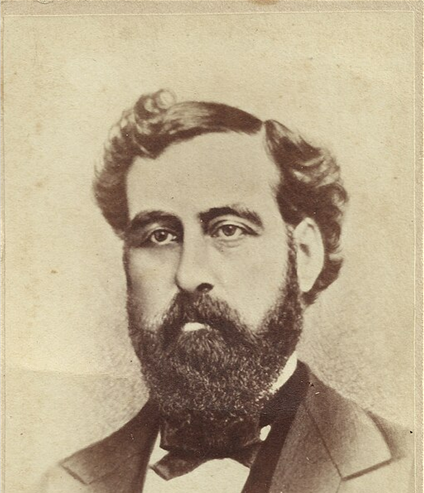
Image Credit: Photo: Philip P. Bliss Marker. www.hmdb.org/PhotoFullSize.asp?PhotoID=155306. The marker reads: The great singing evangelist and gospel song writer was born July 9, 1838, in a log house which stood a little distance from here. He lived and worked on the farm and in nearby lumber camps until the age of 16. _____ Hymn History: Hallelujah, What a Savior! Read more...
Favorite
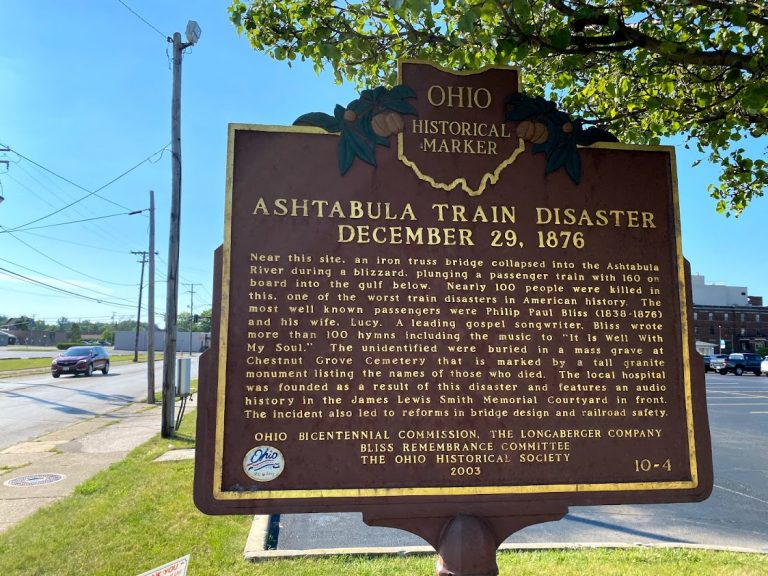
Watch a short video about Phillip Bliss filmed on location From the Marker: “Near this site, an iron truss bridge collapsed into the Ashtabula River during a blizzard, plunging a passenger train with 160 on board into the gulf below. Nearly 100 people were killed in this, one of the worst train disasters in American history. The most well Read more...
Favorite
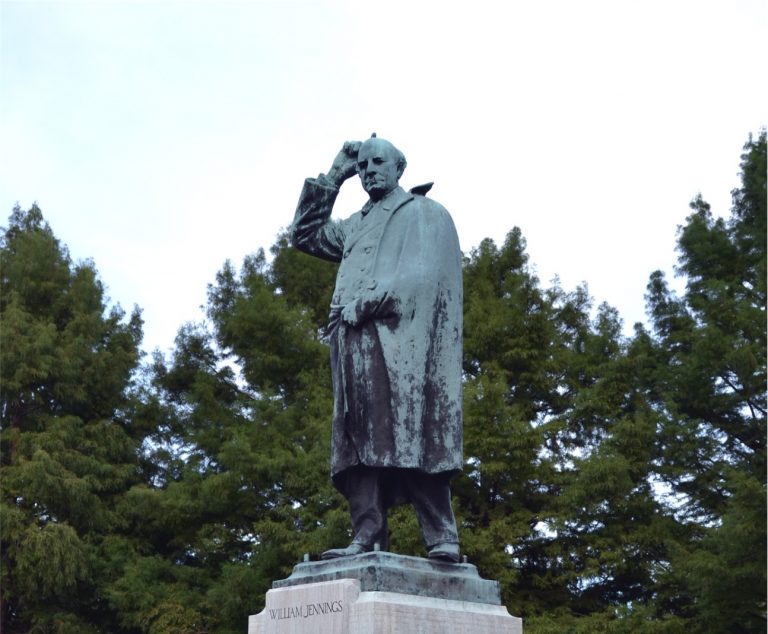
William Jennings Bryan Park, along with the nearby statue and historical marker dedicated to William Jennings Bryan, forms an important commemorative landscape in Lincoln. These sites preserve the memory of one of America’s most influential orators and political figures of the late nineteenth and early twentieth centuries, honoring both his public achievements and his deep connections to Nebraska. The park Read more...