Favorite
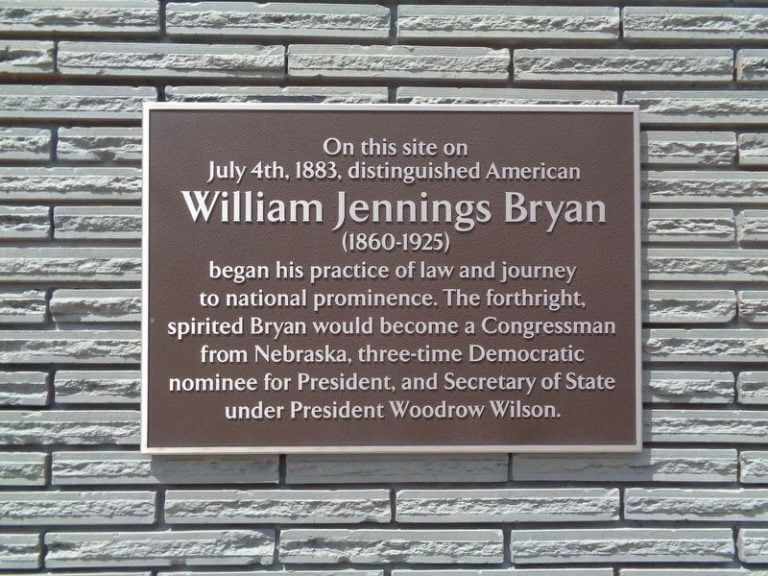
William Jennings Bryan began practicing law in Jacksonville, Illinois, in 1883. After graduating from law school at Union College of Law (now part of Northwestern University), Bryan moved to Jacksonville, where he opened a law practice. There he partnered with a local attorney and quickly became involved in both legal work and public speaking. His time in Jacksonville was formative. Read more...

Favorite
The story of William Jennings Bryan and his famous “Cross of Gold” speech is most often associated with the dramatic scene at the 1896 Democratic National Convention in Chicago. Yet, like many great speeches, its power was not born in a single moment. Bryan had developed and delivered earlier versions of his argument in towns across the Midwest, including a Read more...
Favorite
The Mayflower Compact stands as one of the most significant founding documents in early American history. Signed aboard the ship Mayflower in November 1620, it established a basic framework for self-government among English settlers who had arrived on the shores of what is now Massachusetts without a formal governing charter. Though brief in length, the Compact carried lasting influence, shaping Read more...
Favorite
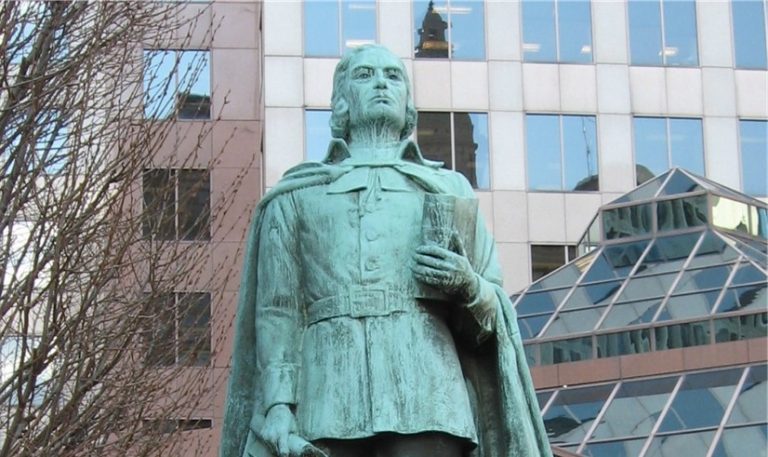
Thomas Hooker was born in Leicestershire, England, and graduated from Cambridge with a Master’s in 1611, the year the translators produced the Authorized (King James) Bible. Hooker pastored in Surrey starting in 1620, and then in Chelmsford in 1626. But in 1629, because of his Puritan sympathies he was forced to flee to Rotterdam, and then in 1633, following the Read more...
Favorite
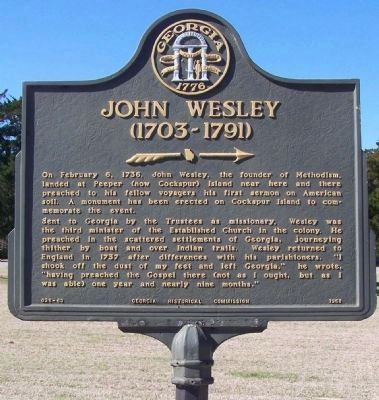
John Wesley (1703-1791) was an Oxford graduate, an Anglican priest, and led the “Holy Club” where they prayed for three hours a day to try to be a better Christian. He even became a missionary to the Native Americans in Georgia. On October 14, 1735, John and his brother Charles Wesley departed England for Savannah aboard the Simmonds. On February Read more...
Favorite
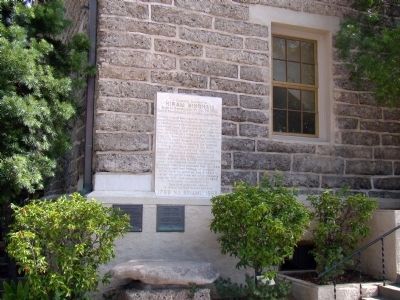
Inscription: A Centennial Memorial of Hiram Bingham. Born in Bennington, Vt., Oct. 30, 1789. Died in New Haven, Ct., Nov. 11, 1869, Aged 80 Years. This slab is placed here in grateful remembrance of a pioneer Missionary by descendants of Hawaiians (aided by his Children) among whom he preached Christ for more than twenty years. He preached the first sermon every delivered Read more...
Favorite
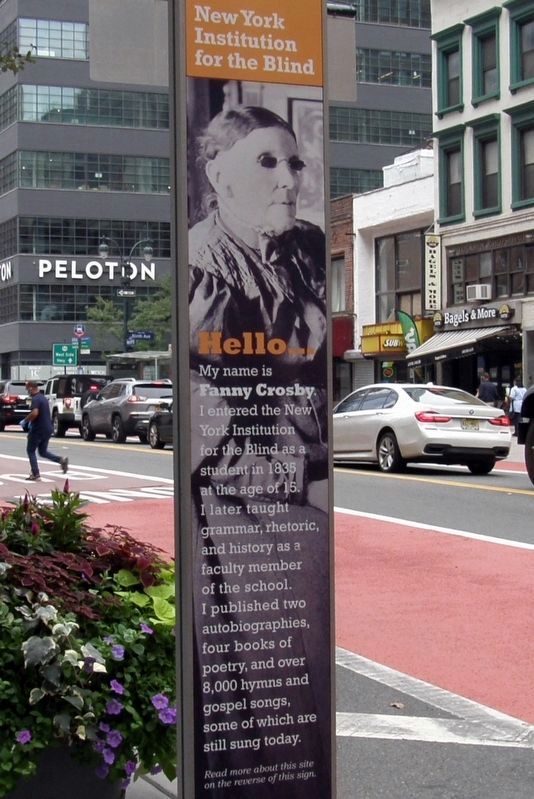
Fanny Crosby remains one of the most beloved figures in American hymnody, and her life is closely tied to the New York Institution for the Blind, where she spent many formative years as both a student and a teacher. This institution played a crucial role in shaping her intellectual, spiritual, and creative development, ultimately helping to prepare her for a Read more...
Favorite
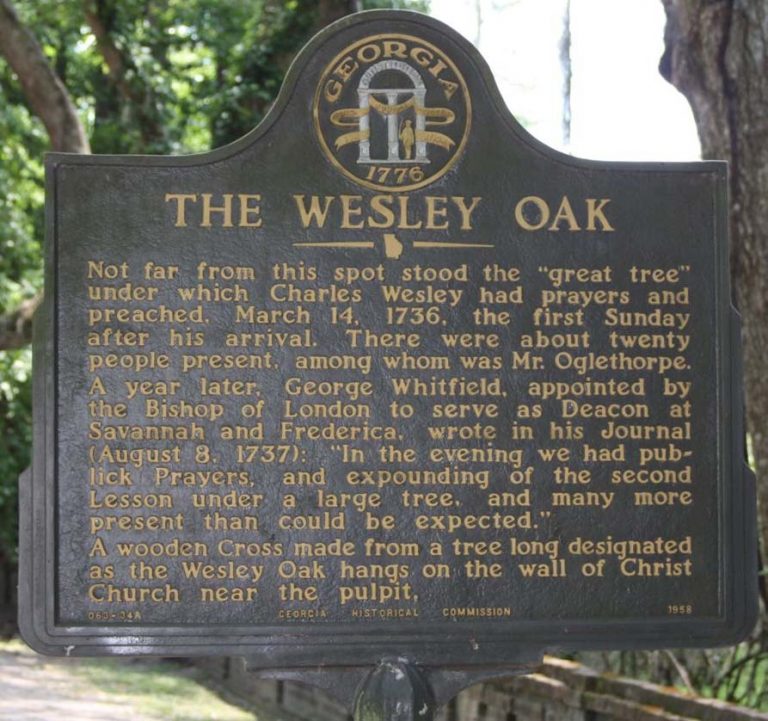
The Wesley Oak on St. Simons Island, Georgia, is a historic and symbolic landmark associated with the early ministry of John Wesley during his time in colonial America. Though less widely known than other sites connected to Wesley’s life, this venerable tree represents an important chapter in his spiritual development and in the beginnings of Methodism’s connection to the New Read more...
Favorite
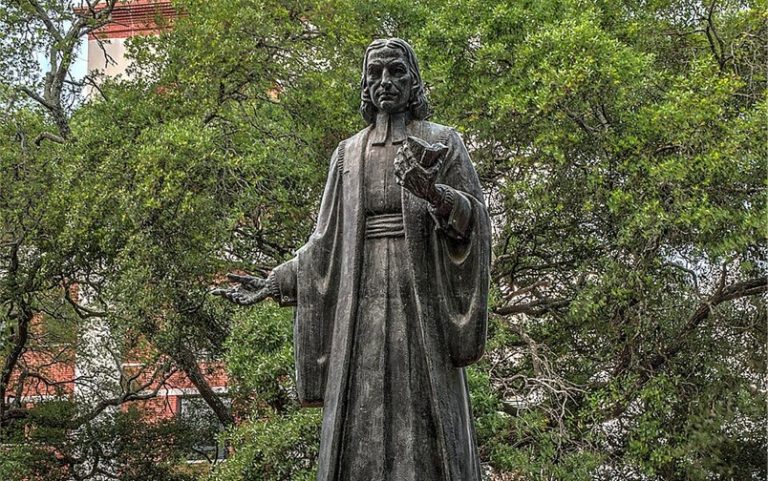
Back in Savannah, from May 9, 1736 to November 27, 1737, John would preach in the Court House (this was prior to the ‘separation of church and state’). His parsonage was near where his statue is in downtown Savannah (GPS: 32.079200, -81.088900) The Methodist Church has recorded these monuments into a “Wesley Trail” of sorts, including the first Methodist church Read more...
Favorite
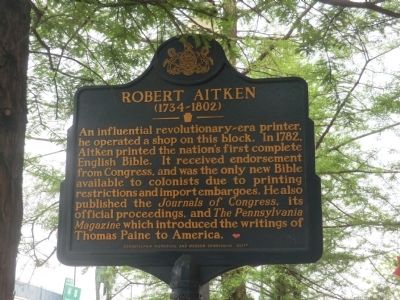
The King James Version of the Bible required the authorization of the King to print (hence the name Authorized Version). The King wanted the colonists dependent on England, and so did not give permission to the colonists to print the Bible, thus all Bibles were imported from England. During the Revolution, the British cut off the supply of Bibles. On Read more...
Favorite
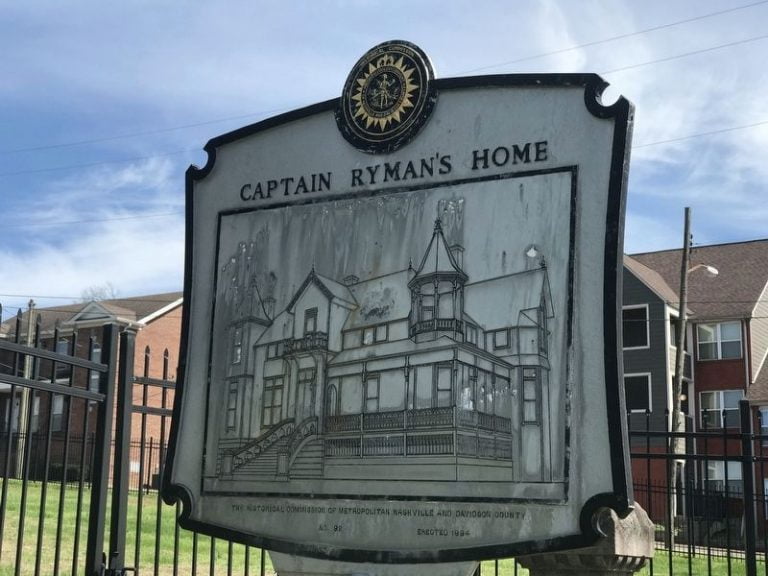
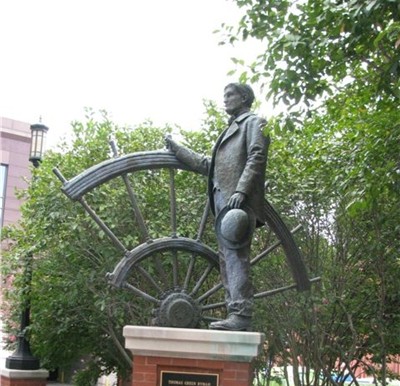
Thomas Green Ryman (1841–1904) was a Tennessee riverboat captain and businessman whose legacy extends far beyond commerce and navigation. He is best remembered as the founder of what became the Ryman Auditorium, one of the most important cultural landmarks in American music history. Originally conceived as a gospel meeting hall, the building that bears his name became a central stage Read more...
Favorite
The Union Gospel Tabernacle in Nashville, Tennessee—today world-famous as the Ryman Auditorium—stands as one of the most significant cultural and historical buildings in American religious and musical life. Originally built as a place of worship, it later became a premier entertainment venue, earning the title “Mother Church of Country Music.” The building was constructed in 1892 through the vision and Read more...
Favorite
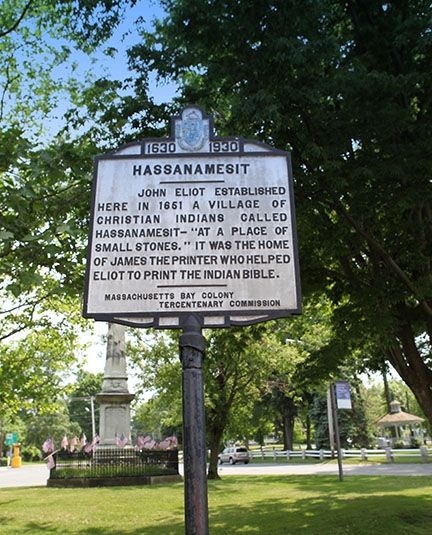
Hassanamesit was one of the most important “Praying Indian” towns established in seventeenth-century New England. Located in what is now Grafton, Massachusetts, it played a significant role in the early interactions between Native American communities and English colonists, particularly in the context of Christian missionary efforts and colonial expansion. The name Hassanamesit comes from the Nipmuc language and is often Read more...
Favorite
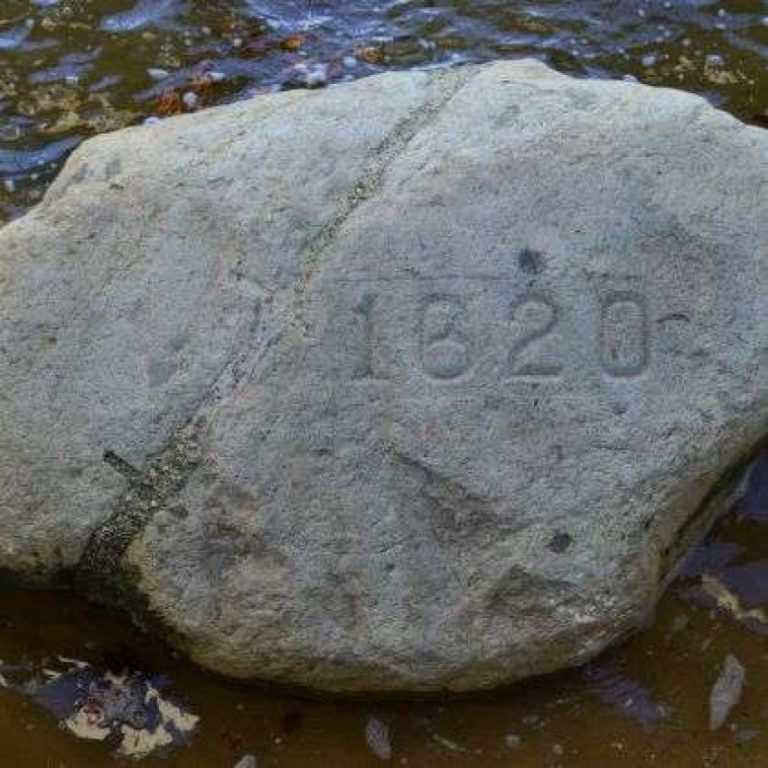
Plymouth Rock is one of the most famous historical landmarks in the United States, traditionally identified as the landing site of the Pilgrims in 1620. Located along the waterfront in Plymouth, Massachusetts, it has become a powerful symbol of the founding of one of the earliest English settlements in North America and of the broader story of American origins. According Read more...
Favorite
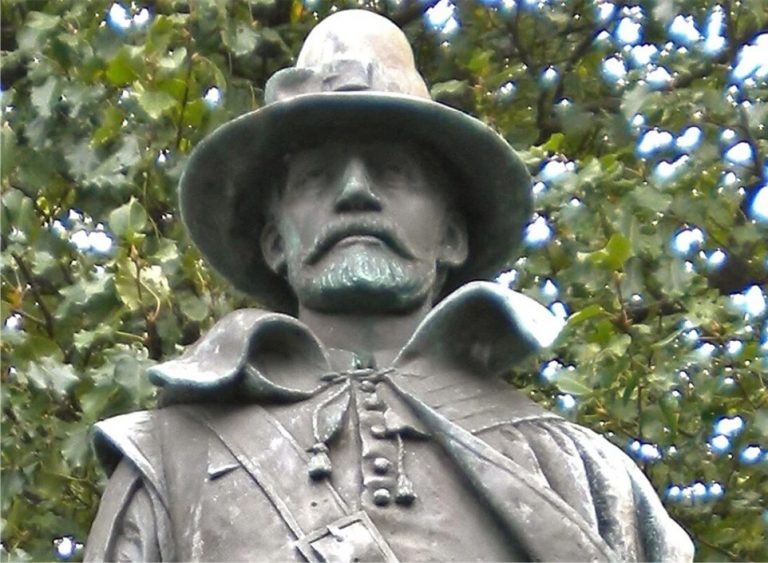
The William Bradford Statue in Plymouth, Massachusetts, stands as a tribute to one of the most important leaders of early colonial America, William Bradford. Overlooking Plymouth Harbor, the statue commemorates Bradford’s role as governor of the Plymouth Colony and his enduring influence on the development of self-governance and religious life in the New World. Erected in the late nineteenth century, Read more...

Favorite
Moses Tunda Tatamy (c. 1690–1760), often known simply as Moses Tatamy, was a prominent Native American leader, interpreter, and mediator of the Lenape (Delaware) people during a period of profound change and tension in colonial Pennsylvania. His life reflects the complexities of cross-cultural interaction in early America, as well as the challenges faced by Native leaders seeking to navigate relationships Read more...
Favorite
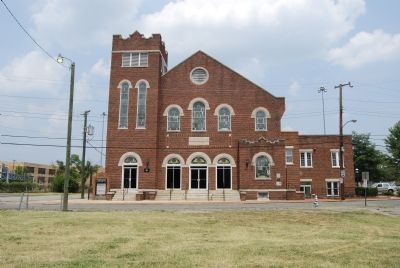
Much of John Jasper’s childhood and teenaged years were spent working at both Peachy Plantations, one located in Fluvanna County and the other near the city of Williamsburg. At the age of twenty-five, he was sold to Samuel Hargrove, “a devout member and deacon of the First Baptist Church of Richmond.” (www.preaching.com) His relationship with Hargrove would forever change the Read more...
Favorite
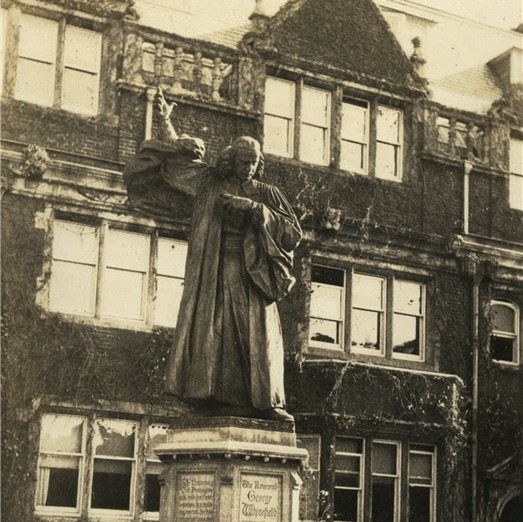
From the UPenn website: Religious figure George Whitefield was born in 1714 in Gloucester, England. He was most known for being an evangelist in America who was part of the Great Awakening and one of the founders of Methodism (George Whitefield, n.d.). The Great Awakening was the religious revival of Christianity that impacted English colonies in America (Great Awakening, 2019). Read more...
Favorite
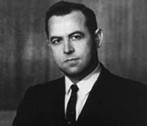
Jack Hyles (1926–2001) was one of the most prominent and controversial figures in twentieth-century American fundamentalist Christianity. As longtime pastor of the First Baptist Church of Hammond, Indiana, Hyles became known for building one of the largest independent Baptist congregations in the United States, as well as for his emphasis on evangelism, bus ministry, and aggressive church growth. His life Read more...
Favorite
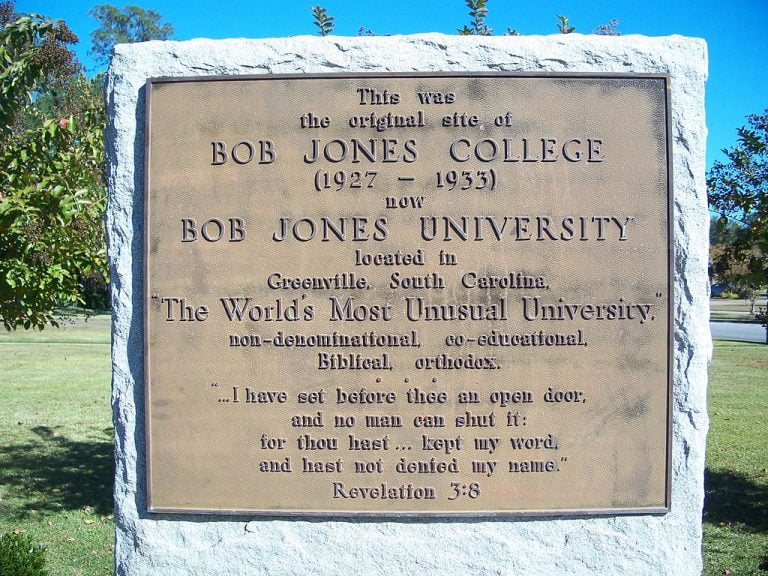
Bob Jones College was a fundamentalist Christian institution founded in 1927 with a clear purpose: to provide higher education grounded firmly in conservative Protestant beliefs. Established during a time of significant theological and cultural change in the United States, the college emerged as part of a broader effort to defend traditional Christian doctrines against the rising influence of modernism in Read more...