Favorite
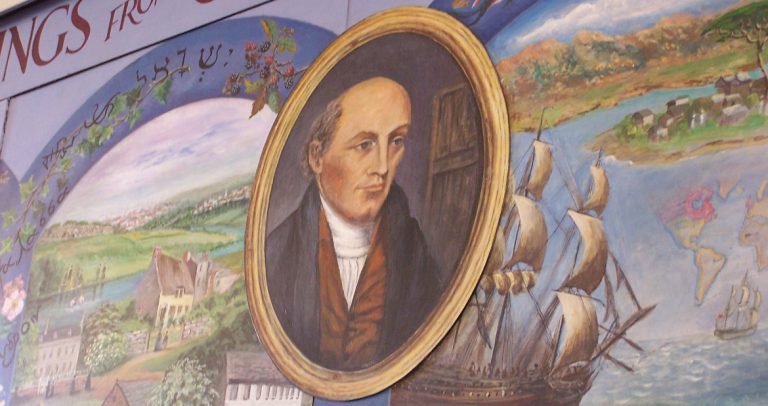
In 1787, William Carey received ordination into his first pastorate, the Moulton Baptist congregation, later named Carey Baptist Church. At Carey’s ordination, John Ryland Jr. asked the questions, John Sutcliff preached the charge, from 2 Timothy 4:5, and Andrew Fuller preached a challenge to the members. The congregation was soon compelled to reconstruct and enlarge their small brick building to thirty feet Read more...
Favorite
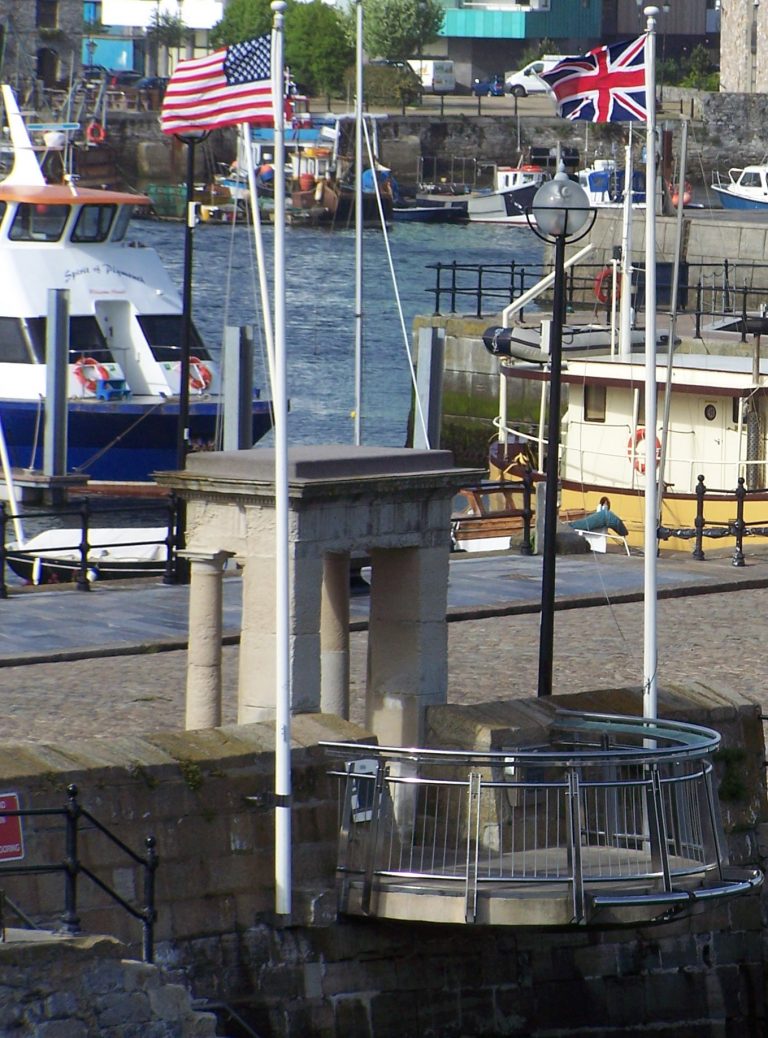
Visit the Mayflower Memorial at the Barbican, from where the Pilgrims, in 1620, departed for the New World. Visit the Mayflower Museum just down the street. copyrighted and used by permission from David Beale, Baptist History in England and America: Personalities, Positions, and Practices Plaque: On the 6th of September, 1620, in the Mayorality of Thomas Fownes, after being “kindly entertained Read more...
Favorite
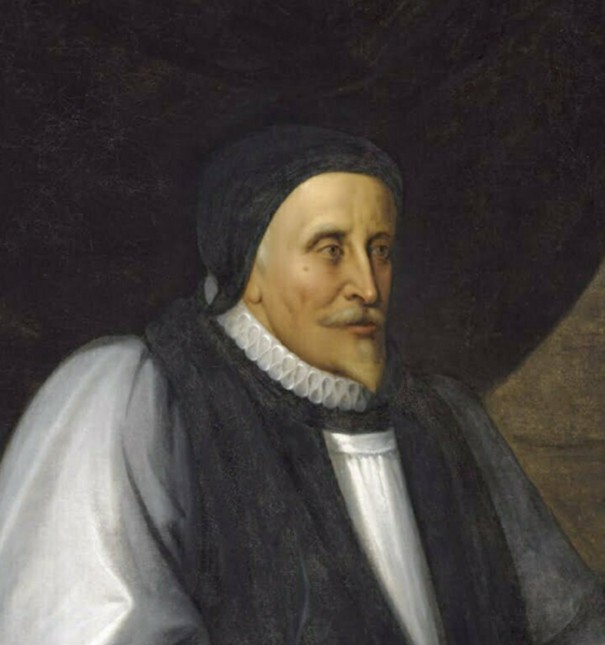
Inside the nearby Southwark Cathedral is the tomb of Bishop Lancelot Andrewes, a translator of the King James Bible. Be sure to see the John Harvard Chapel. Near the Southwark Cathedral is a full-sized reconstruction of the warship, Golden Hinde, used by Sir Francis Drake when he circumnavigated the world in 1577-80. copyrighted and used by permission from David Beale, Baptist History in Read more...
Favorite
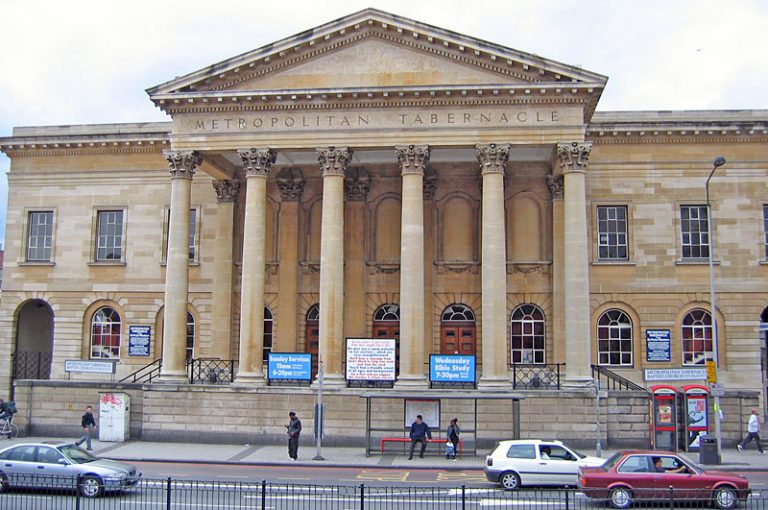
Watch Douglas Whitley as Spurgeon: Metropolitan Tabernacle, where Charles Spurgeon once served, is at the junction of Elephant and Castle Streets (Southwark). copyrighted and used by permission from David Beale, Baptist History in England and America: Personalities, Positions, and Practices Featured Image Credit: Oast House Archive / Metropolitan Tabernacle, Elephant & Castle, London Read more...
Favorite
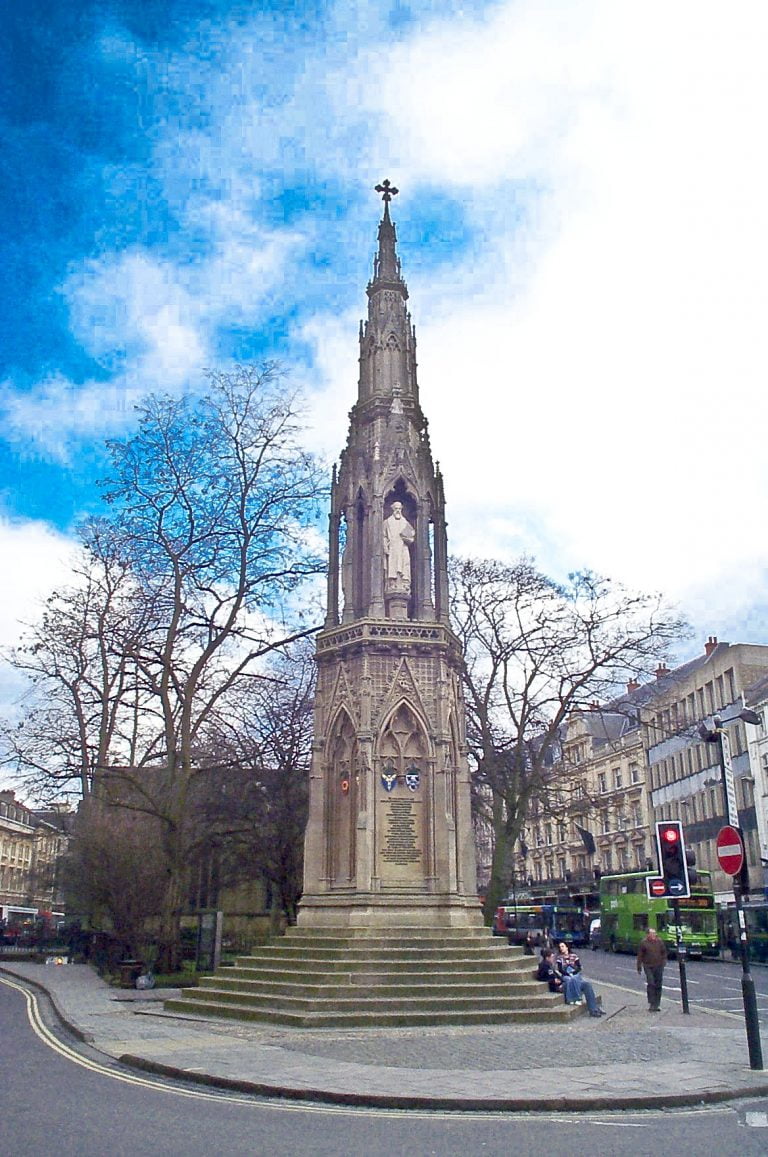
See the Martyrs Memorial, a stone monument, near Balliol College, at the intersection of St. Giles, Magdalen, and Beaumont Streets. The Memorial commemorates Oxford’s Reformer-martyrs, Thomas Cranmer, Nicholas Ridley, and Hugh Latimer. The earlest Baptists were products of the Reformation. copyrighted and used by permission from David Beale, Baptist History in England and America: Personalities, Positions, and Practices 5 Minutes in Read more...
Favorite
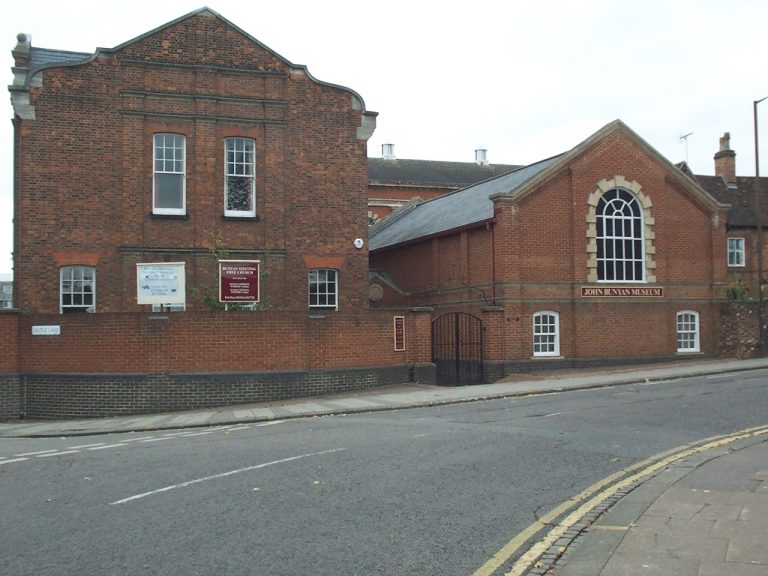
Situated on Mill Street, the Bunyan Meeting House and its Bunyan Museum preserve priceless memorabilia of John Bunyan’s life and times. The present Bunyan Meeting was built in 1849-50. copyrighted and used by permission from David Beale, Baptist History in England and America: Personalities, Positions, and Practices Featured Image Credit: Simon Speed, Public domain, via Wikimedia Commons Read more...
Favorite
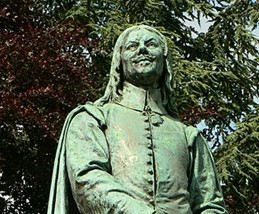
A bronze statue of Bunyan stands at the north end of High Street. copyrighted and used by permission from David Beale, Baptist History in England and America: Personalities, Positions, and Practices Featured Image Credit: RichTea, CC BY-SA 2.0 <https://creativecommons.org/licenses/by-sa/2.0>, via Wikimedia Commons Read more...
Favorite
In 1789, William Carey and his family moved into a cottage across the street from Leicester’s Harvey Lane Baptist Church, which he shepherded to the time of their departure to India in 1793. The Harvey Lane building no longer exists. When Harvey Lane Baptist outgrew its building, in 1845, the congregation moved to Belvoir Street and changed its name to Read more...
Favorite
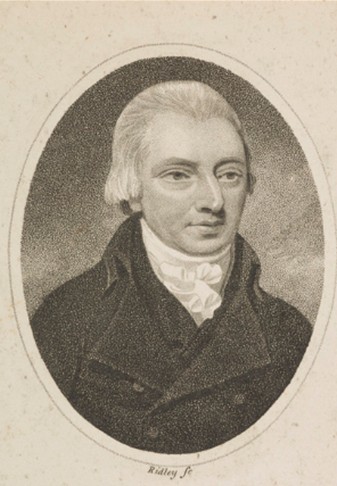
The Baptist church at Thrapston, Northamptonshire, was once shepherded by Reynold Hogg (1752-1843), one of the founders of the Baptist Missionary Society (1792). With the construction of the present building, in 1787, a small, Congregationalist-Separtist group opened its doors for worship. In 1790, Reynold Hogg became their preacher. In 1797, they organized into a Baptist church and ordained Hogg as Read more...
Favorite
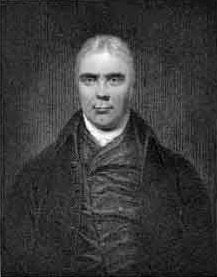
Watch Our Christian Heritage’s feature on Andrew Fuller From 1782 to the end of his life, Andrew Fuller (1754-1815) served the pastorate of the Baptist Church in Kettering. By 1786, the congregation was compelled to enlarge their chapel. With increasing growth, by 1804-5, they enlarged it again – this time to seat nine hundred persons. They replaced that building with Read more...
Favorite
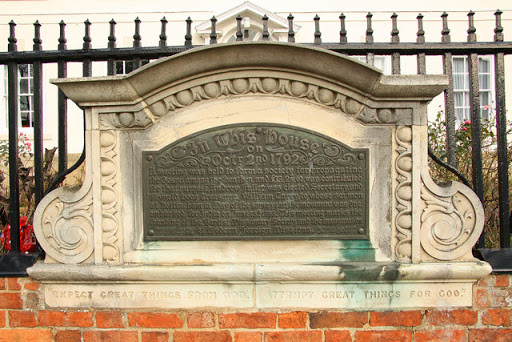
As faithful members of Andrew Fuller’s church, Beeby and Martha Wallis used their home as an inn for traveling evangelists. Many still call it the “Gospel Inn.” Situated on Lower Street, in the heart of Kettering town center, the historic Wallis House is now the “Carey Mission House,” the featured attraction of “Martha Wallis Court,” a residential facility of the Read more...
Favorite
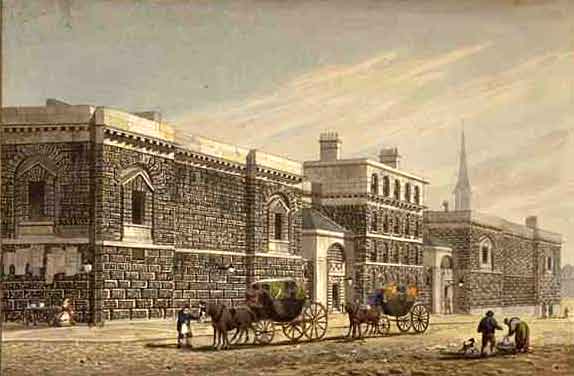
In the back of Amen Court, in the shadow of St. Paul’s Cathedral, stands the only surviving wall of Newgate Prison, where many Baptists suffered and died. copyrighted and used by permission from David Beale, Baptist History in England and America: Personalities, Positions, and Practices Famous Prisoners according to Wikipedia John Bradford, religious reformer – burned at the stake at Read more...
Favorite
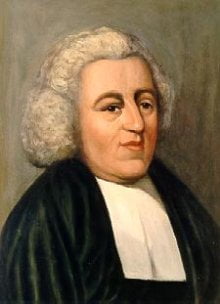
Sutcliff’s neighbors in Olney included the local minister of the Church of England, John Newton (1725-1807), author of “Amazing Grace.” Hymn writer and poet, William Cowper (1731-1800), was a member of Newton’s parish, and, at the time of Sutcliff’s arrival, Newton and Cowper were composing their popular “Olney Hymns.” Visit John Newton’s church and tombstone, and the Cowper and Newton Museum and Gardens. Read more...
Favorite
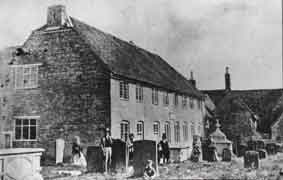
In 1775, John Sutcliff (1752-1814) commenced his pastorate at Olney Baptist Church, which continues to the present day. In 1785, young William Carey placed himself under the tutelage of Sutcliff and under the watch-care of the Olney church where he held membership. After Carey preached his first sermon to the Olney congregation, the unanimous conclusion was that the young man needed Read more...
Favorite
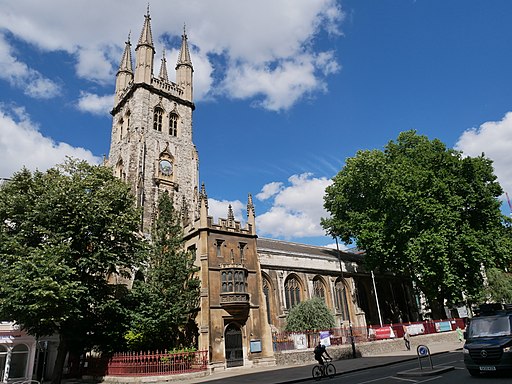
Inside the Church of St. Sepulchre without Newgate, at Holborn Viaduct, a hand bell known as the Execution Bell, resides in a glass case, situated near the entrance of a blocked-up tunnel that once connected the church with Newgate Prison. At midnight prior to execution days, the church’s bellman would walk through the tunnel and into the prison. Standing outside Read more...
Favorite
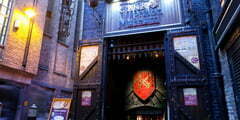
On London’s Clink Street, the Clink Museum stands at the ruins of this infamous prison, where John Greenwood, Henry Barrow, and Francis Johnson (of the “Ancient Church”), along with Henry Jacob, and John Lathrop (forerunners of Particular Baptists), all suffered incarceration, during 1587-1634. copyrighted and used by permission from David Beale, Baptist History in England and America: Personalities, Positions, and Practices Read more...
Favorite
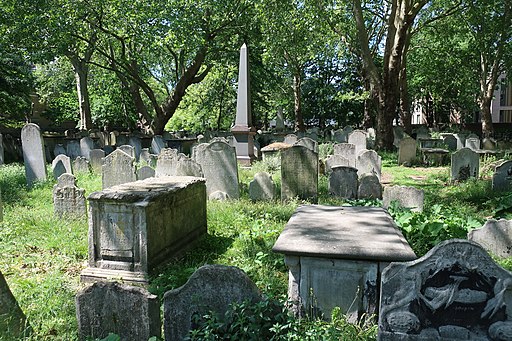
Bunhill Fields, at 38 City Road, was the Burying Ground for Dissenters. Here stand the tombs of key players in Baptist history: John Rippon, Joseph Ivimey, John Gill, and John Bunyan. Important Baptists whose tombstones here have been destroyed over time include Henry Jessey, Hanserd Knollys, William Kiffin, and Vavasor Powell. See also the tombstones of notable non-Baptists, such as Read more...
Favorite
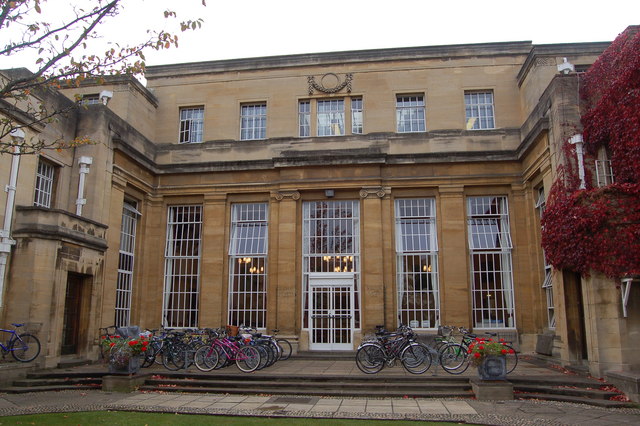
In 1810, the London Baptist Education Society (est. 1752) led in the founding of Stepney Academy, in East London. Moving to the center of Regent’s Park, London, in 1855, Stepney Academy became Regent’s Park College, a constituent College of the University of London. In 1927, Regent’s Park College moved to Oxford, and since 1957, it has been a Permanent Private Read more...
Favorite
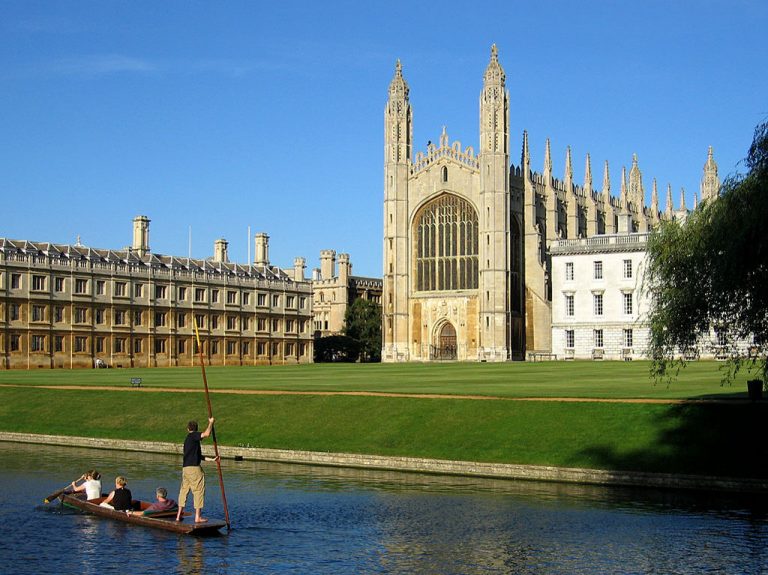
At the University of Cambridge, Christ’s College graduates included Francis Johnson of the Ancient Church and John Smyth of Gainsborough. John Lathrop, second pastor of London’s J-L-J Church, was a Queens’ College graduate. Lathrop’s successor, Henry Jessey, earned his BA and MA degrees at St. John’s College. London Baptist, Hanserd Knollys, received his training at St. Catherine’s Hall. Roger Williams, Read more...
Favorite
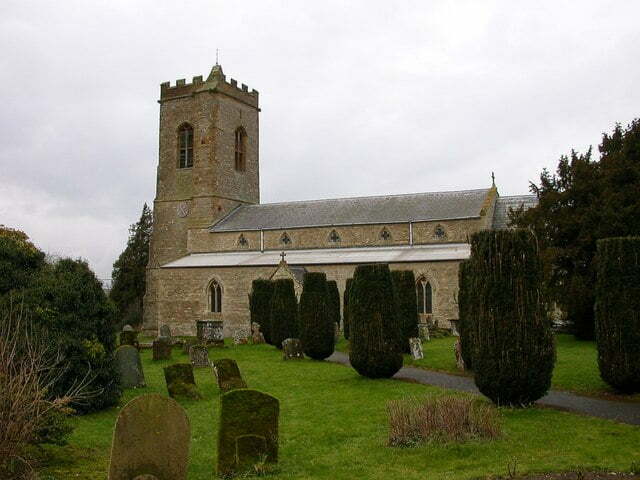
In the porch of St. James Church (Anglican), a plaque commemorates William Carey, missionary to India and father of Baptist foreign missions. A few feet away, just to the right of the porch, the grave of William’s father, Edmund Carey, carries this inscription: “Reader, time is short, prepare to meet thy God.” The Carey cottage, William Carey’s birthplace, stood on what is Read more...